Best Treats for Quaker Parrots: 5 Vet-Informed Picks for a Heart-Healthy Bird
Contents
You bring home a bag of colorful seed mix, and your Quaker parrot dives straight for the sunflower seeds. Every single time. The rest of the mix sits untouched at the bottom of the bowl. It’s a familiar scene for anyone living with a monk parakeet. They are smart, they are stubborn, and they know exactly what they want. The problem is that what they want—usually fat-heavy seeds—is not what their bodies need.
| 1st Pick | 2nd Pick | 3rd Pick | 4th Pick | 5th Pick |

|

|
|

|

|
| Abizoo Abizoo Cockatiel & Conure Birds Foods Treats… | Vitakraft Vitakraft Super Fruit Cocktail Parrot and Cockatiel… | Kaytee Kaytee Yo Dips Strawberry/Banana Flavor Yogurt Dipped… | Wild Harvest Wild Harvest Fruit Kabobs for All Birds,… | Vitakraft Vitakraft Crunch Sticks Conure Treat Apple &… |
| See on Amazon | See on Amazon | See on Amazon | See on Amazon | See on Amazon |
Quaker parrots have a genetic predisposition to high cholesterol and heart disease. That makes treat selection a bigger deal than it is for some other species. The right treat can support feather health, provide mental stimulation, and help with training. The wrong one can quietly contribute to a shortened lifespan. Finding that balance between something your bird actually enjoys and something that won’t clog its arteries takes a bit of research.
After digging through the options and checking ingredient lists, I’ve settled on five treats that cover different needs. There’s a daily supplement for picky eaters, a fruit blend for training, a yogurt dip for bonding, a foraging toy for boredom, and a crunchy stick for beak exercise. Each one earns its place for a specific reason. I’ll walk you through them, then cover portion control, toxic foods, and a couple of DIY recipes you can make at home.
Here is a quick look at how the five picks compare:
| Features | Abizoo Seed Blend | Vitakraft Fruit Mix | Kaytee Yo Dips | Wild Harvest Kabobs | Vitakraft Crunch Sticks |
|---|---|---|---|---|---|
| Primary Type | Seed & herb supplement | Dried fruit blend | Yogurt-dipped seeds | Fruit & veg kabob | Baked treat with wood core |
| Key Health Focus | Digestion & feathers | Vitamins & antioxidants | Bonding & appetite | Foraging enrichment | Beak exercise & vitamins |
| Best Use Case | Daily food topper | Training rewards | Special bonding time | Cage toy & snack | Chewing & mental stimulation |
| Fat Level Concern | Moderate (seed base) | Low | High (yogurt) | Low | Moderate |
| Foraging Potential | Low | Low | Low | High | Medium |
Abizoo Cockatiel & Conure Blend
1st Pick
Abizoo
Abizoo Cockatiel & Conure Birds Foods Treats…
- Feather Health & Color Enhancer for Cockatiels & Conures | Natural Bird Food Topper Elevate your cockatiel and conure’s plumage: C…
- Omega-3 Hydrating Seed Treats for Lovebirds & Parakeets | Molting Season Must-Have Must-have for molting lovebirds and parakeets:…
- Gentle Digestive Support Supplement for Quaker Parrots | Sensitive Stomach Formula | No Irritants Gentle care for Quaker parrots w…
If your Quaker is a selective eater who picks out the good stuff and ignores the rest, this topper is worth a look. The Abizoo blend is designed to be sprinkled over regular food, not served as a meal on its own. That makes it a sneaky way to add nutrition without starting a negotiation over what’s in the bowl. It’s a good fit for owners who have tried multiple brands and still have a bird that turns up its beak.
The ingredient list is where this one stands apart. Calendula is there for feather color, and the chili seed meal provides protein. Chia and flax seeds bring Omega-3s, which help with dry skin during molting. The digestive support comes from alfalfa and citrus pectin, which is a thoughtful addition for a species prone to loose droppings when stressed. Bee pollen adds B-vitamins for immune support. For a small bird, a 6-ounce bag lasts a long time.
There is a trade-off. It’s still a seed-based product, so it carries more fat than a pure fruit or vegetable treat. You need to measure it carefully and account for it in your bird’s daily diet. Also, the blend includes moringa and honeysuckle, which some birds may not recognize as food right away. Expect a few days of suspicious staring before your Quaker decides it’s safe to eat.
- 6 oz (approx. 170 g) resealable bag
- Contains chia, flax, alfalfa, calendula, and bee pollen
- No preservatives, additives, or artificial stimulants
- Designed as a food topper, not a standalone meal
- Supports digestive health and feather condition
Best for: Owners dealing with a picky Quaker who needs a nutrient boost without a food fight.
Vitakraft Super Fruit Cocktail
2nd Pick
Vitakraft
Vitakraft Super Fruit Cocktail Parrot and Cockatiel…
- NATURAL GOODNESS FOR YOUR FEATHERED FRIEND: Made with premium dried pineapple, papaya, banana, and raisins, this wholesome fruit b…
- PERFECT FOR TRAINING & BONDING: Use these flavorful fruit bites to reward good behavior, encourage trust, and build a lasting bond…
- RICH IN VITAMINS & MINERALS: Packed with natural vitamins, minerals, and antioxidants, this fruit mix supports overall health, vib…
This is the treat you reach for when you need a reliable training reward. The Vitakraft Super Fruit Cocktail is a mix of dried pineapple, papaya, banana, and raisins. It’s naturally sweet, which Quakers love, but it doesn’t have the heavy fat profile of seeds. For a bird that is motivated by food, these little pieces are gold. You can break them into tiny fragments for training sessions, which is a great way to make a single serving last.
What makes this blend practical is its versatility. You can serve it as a stand-alone snack, mix it into a chop recipe, or use it to hide a pill if your vet ever prescribes medication. The dried fruit holds its texture well, so it doesn’t turn into a sticky mess in the cage. Vitakraft has been making pet food for a long time, and this product reflects that experience. The fruit pieces are consistent in size and quality.
The downside is that dried fruit is concentrated sugar. Even though it’s natural sugar, it’s still sugar. For a Quaker with a cholesterol issue, this should be a treat, not a staple. The 20-ounce bag is generous, so you’ll need to store it properly to keep it from getting hard or attracting pantry moths. A sealed container in a cool, dry place works best.
- 20 oz bag of dried pineapple, papaya, banana, and raisins
- No artificial colors or flavors
- Good source of natural vitamins and antioxidants
- Easy to break into small training pieces
- Works as a snack or a food mix-in
Best for: Training sessions and bonding time where you need a high-value, low-fat reward.
Kaytee Yo Dips Strawberry Banana
3rd Pick
Kaytee
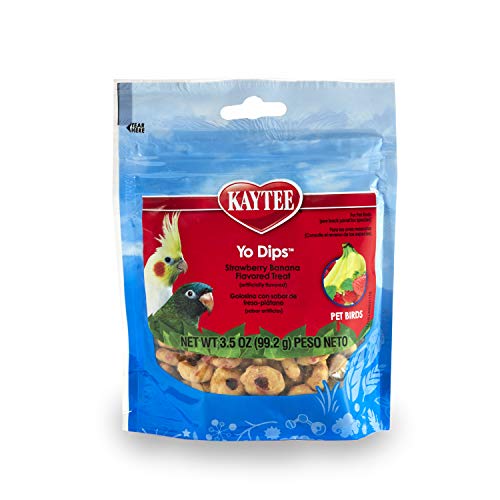
Kaytee Yo Dips Strawberry/Banana Flavor Yogurt Dipped…
- Yogurt Flavored Treat
- Ideal For Bonding And Playtime
- Resalable Bag Retains Freshness
Sometimes you need a treat that feels special. The Kaytee Yo Dips are yogurt-flavored seed treats that turn snack time into an event. They come in a strawberry-banana flavor that most birds find irresistible. If your Quaker has been off its food due to stress or a minor illness, these dips are often enough to stimulate appetite. They are also a solid choice for hand-taming a nervous bird.
The texture is what sets these apart. The yogurt coating is firm but not hard, so it crumbles easily. That makes it a good option for older birds or those with beak issues who struggle with tough seeds. The resealable bag is a small touch, but it matters because the coating can soften if exposed to air. Keeping them fresh means keeping them crunchy.
Here’s the honest catch: yogurt is dairy, and birds don’t digest dairy well. This is a treat, not a dietary component. The sugar content is also higher than the other options on this list. Use it sparingly—maybe a few pieces a week as a special reward. It’s not the right choice for a Quaker already diagnosed with high cholesterol or obesity.
- 3.5 oz resealable bag
- Strawberry-banana yogurt flavor
- Soft crunch texture, easy for older birds
- Good for appetite stimulation and bonding
- High sugar content, use in moderation
Best for: Special bonding moments and coaxing a picky or stressed bird to eat.
Wild Harvest Fruit Kabobs
4th Pick
Wild Harvest
Wild Harvest Fruit Kabobs for All Birds,…
- HEALTHY & TASTY TREAT: Made with real carrot, cherry and cranberry for a delicious and nutritious snack.
- FOR ALL BIRDS: Kabobs are specially formulated for all types of pet birds.
- EDIBLE SKEWER: Fruit kabobs are 100% edible.
Boredom is a real problem for Quaker parrots. They are intelligent birds that need mental stimulation, or they start developing bad habits like screaming or feather plucking. The Wild Harvest Fruit Kabobs solve that by combining a snack with a toy. Each kabob has real carrot, cherry, and cranberry pieces threaded onto an edible skewer. Your bird has to work to get the food off, which mimics natural foraging behavior.
This is a great option for a bird that eats too fast. Instead of gulping down a bowl of food, your Quaker has to slow down and manipulate each piece. The edible skewer is a nice touch—it’s safe if your bird chews it down. The 6-count pack gives you enough to rotate through the week, and each kabob is individually sized for a small to medium bird.
The limitation is that these are not a complete food. They are a snack, and a fairly low-calorie one at that. Some birds lose interest if the fruit pieces are too hard. You might need to soften them slightly in water if your Quaker is not a confident chewer. Also, the kabobs can make a bit of a mess as your bird pulls pieces off and drops them.
- Pack of 6 individual kabobs
- Real carrot, cherry, and cranberry pieces
- 100% edible skewer
- Encourages foraging and slows down fast eaters
- Resealable packaging for freshness
Best for: Adding enrichment to the cage and keeping a busy Quaker entertained.
Vitakraft Crunch Sticks Conure
5th Pick
Vitakraft
Vitakraft Crunch Sticks Conure Treat Apple &…
- NUTRITIOUS COATING WITH ADDED VITAMINS: Each Crunch Stick is dipped in a nutrient-rich coating that provides your conure with Vita…
- TRIPLE-BAKED FOR SATISFYING CRUNCH: Crafted with a triple-baked process, these treats offer long-lasting texture and enjoyment, gi…
- INCLUDES NATURAL CHEW CENTER: When the outer treat is gone, a natural wood chew center keeps the fun going, providing hours of eng…
For a bird that loves to chew, the Vitakraft Crunch Sticks are a satisfying outlet. These are triple-baked sticks with a fruit flavor coating, and they come with a natural wood core in the center. The outer layer provides a crunchy challenge, and once that’s gone, the wood gives your Quaker something to keep working on. It’s a two-stage treat that extends the fun.
The vitamin coating is a practical addition. It includes Vitamin A, D3, E, and B1, which are all important for feather health and immune function. The built-in cage clip makes it easy to hang the stick securely, so it doesn’t end up on the cage floor covered in debris. This is a solid choice for a young, energetic Quaker that needs an outlet for its beak.
The trade-off is that these are baked, which means they have a moderate fat content from the grains and coating. They are not as healthy as fresh vegetables, but they are a better option than plain seed sticks. The apple and orange flavor is mild, so it won’t overwhelm a sensitive bird. One stick can last several days depending on how aggressively your bird chews.
- Pack of 2 sticks
- Triple-baked for long-lasting crunch
- Natural wood chew center
- Coated with Vitamins A, D3, E, B1, and Riboflavin
- Includes cage clip for easy hanging
Best for: Active chewers who need a durable, vitamin-fortified treat for beak exercise.
How We Chose These Products
I started with the Quaker parrot’s specific health risks. This species is prone to atherosclerosis and high cholesterol, so the first filter was fat content. Any treat that relied heavily on sunflower seeds or peanuts was ruled out. The remaining contenders had to offer either a nutritional benefit or a clear behavioral advantage, like foraging or training value.
I also considered real-world usability. A treat that requires complicated prep or doesn’t hold up in a cage is not helpful. Each pick had to pass a simple test: would I actually use this with my own bird? That meant checking resealability, portion control, and how messy the treat gets during feeding. The five products here are the ones that balanced health, convenience, and bird appeal.
Buying Guide: What Really Matters
When you are scanning the pet aisle, the first thing to check is the fat percentage. Quaker parrots do not need high-fat seeds in their diet. Look for treats where the first ingredients are vegetables, fruits, or high-quality grains. If the bag lists multiple types of seeds before anything else, put it back. Your bird’s heart will thank you.
Portion control is the other major factor. A treat should never make up more than 10% of your bird’s daily food intake. For a Quaker, that is roughly a teaspoon of seeds or a few small pieces of fruit per day. Weighing your bird weekly and tracking how many treats you give can prevent gradual weight gain that sneaks up over months.
Finally, think about what the treat is for. Is it for training? Then you need something small and easy to break into pieces. Is it for enrichment? Then a foraging toy or a hanging kabob is better. Is it for bonding? Then a hand-fed treat like a yogurt dip works well. Matching the treat to the job makes it more effective and prevents waste.
Our Top Recommendation
For most Quaker parrot owners, the Abizoo Cockatiel & Conure Blend is the best overall choice. It addresses the two biggest problems Quaker owners face: picky eating and digestive sensitivity. The seed base is moderate in fat, but the inclusion of digestive aids and feather-supporting ingredients makes it a functional supplement rather than just a snack. It’s the most versatile product in this list.
If you are looking for a training treat, the Vitakraft Super Fruit Cocktail is the runner-up. It’s low-fat, naturally sweet, and easy to portion. For owners on a tight budget, the Wild Harvest Fruit Kabobs offer the best value because they double as a toy, stretching your money further. Choose based on your primary need, but you can’t go wrong starting with the Abizoo blend.
Frequently Asked Questions
How many treats can I give my Quaker parrot each day?
Keep treats to about 10% of the total daily diet. For a Quaker, that’s roughly one teaspoon of seeds or a few small pieces of fruit. If you are using seeds for training, break them into tiny fragments so a single sunflower seed counts as multiple rewards. Monitor your bird’s weight weekly and adjust if you notice any gain.
My Quaker only eats seeds and ignores pellets. How do I transition?
Start by mixing a small amount of moistened pellets into the seed bowl. Over two weeks, gradually increase the pellet ratio while decreasing the seeds. You can also grind pellets into a powder and sprinkle it over the Abizoo topper to mask the taste. Avoid sudden changes, as Quakers can go on a hunger strike. Patience and consistency are key.
Are yogurt-based treats safe for Quaker parrots?
They are safe in very small amounts, but not ideal. Birds lack the enzyme to digest lactose properly, so dairy can cause loose droppings or stomach upset. Treats like the Kaytee Yo Dips are fine as an occasional bonding reward, but they should not be a regular part of the diet. If your bird has a sensitive stomach, skip them entirely.
What foods are toxic to Quaker parrots?
Avocado, chocolate, caffeine, alcohol, and anything with high salt or sugar are toxic or harmful. Apple seeds and cherry pits contain cyanide compounds and should be removed before offering fruit. Onions and garlic in large amounts are also problematic. When in doubt, stick to bird-safe vegetables like carrots, broccoli, and leafy greens. Always wash fresh produce before serving.