Proven Parrot Training Secrets: Get Your Bird Talking Like Never Before
Contents
You’ve played the same YouTube video of a talking African grey fifty times. Your bird sits there, preens, and gives you nothing but a head tilt. Maybe you’ve tried repeating “Pretty bird” for weeks with zero results. You’re not alone, and more importantly, your bird isn’t broken.
Most parrot owners fail at teaching speech because they skip the groundwork. They jump straight to word repetition without building trust, reading body language, or understanding how a parrot’s voice box actually works. This guide walks through the entire process—from bonding to troubleshooting—so you can finally hear that first word.

Arfubye
Arfubye 16-63 Inch Height Adjustable Bird Perch…
- Nut Pre-Buried Design: The use of aluminum nuts, inlaid in the middle of the pepper wood poles, solving the problem of unstable co…
- Height Adjustable: The height of bird perch stand can be adjusted arbitrarily from 16 inches to 63 inches, freeing your bird from…
- Metal Structure: The bracket part of the parrot perch floor is mde of high-quality metal and high-quality plastic, which is sturdy…
You’ll learn the science behind mimicry, the exact training loop that works, and how to fix specific problems like whispering or biting. I’ve also included realistic timelines by species so you know what to expect. No fluff, just what works.
Before you start a single session, think about where the training will happen. A good setup matters. The Arfubye adjustable parrot training perch gives you a dedicated spot outside the cage. You can set it from 16 to 63 inches tall, which helps you match your bird’s eye level—a small detail that makes a big difference in how comfortable they feel. The natural pepper wood also gives their feet a healthy grip while they focus on you instead of a wobbly cage top.

Why Your Parrot Isn’t Talking Yet (The Science of Mimicry)
Here’s what most people get wrong: parrots don’t “talk” like humans. They don’t have vocal cords. Instead, they have a syrinx—a specialized organ at the base of their trachea where it splits into the lungs. Muscles around the syrinx vibrate to produce sound, and parrots control those muscles with remarkable precision.
This means a parrot isn’t thinking about words the way you do. They’re reproducing a sequence of sounds they find interesting or rewarding. Think of it like a musician learning a riff by ear. The parrot hears a pattern, practices it, and eventually matches it. That’s why tone, context, and repetition matter more than the actual word you choose.
There’s also a neurological component. Parrots have a specialized song system in their brains, similar to songbirds, but with an extra layer that allows for vocal learning throughout their lives. They’re wired to learn new sounds, but only when the conditions are right. Stress, boredom, or a lack of social bonding shuts that system down.
So if your bird isn’t talking, the first question isn’t “What word should I teach?” It’s “Is my bird relaxed, bonded, and motivated?” Answer that first, and everything else gets easier.
The Non-Negotiable First Step: Trust and Bonding
You can’t train a bird that’s scared of your hand. Trust is the foundation, and it takes time. A new bird might need two weeks just to feel safe in your presence. That’s normal.
Start by sitting near the cage and reading aloud or talking softly. Let the bird watch you without any pressure. Move slowly. Don’t stare directly at them for long periods—in parrot body language, a fixed stare is a threat. Blink often and look away occasionally.
Once they’re calm with you nearby, offer treats through the bars. Sunflower seeds, small pieces of apple, or millet spray work well. Watch how they react. If they take the treat, you’re making progress. If they hiss or back away, slow down.
Next comes the step-up command. Place a perch or your finger gently against their lower chest and say “step up.” Don’t push. Let them decide to move. Reward the moment they comply. This builds the habit of choosing to interact with you, which is exactly what you need for speech training.
Reading Your Bird’s Body Language
Before you ever say a training word, learn to read your bird’s mood. A relaxed bird has smooth feathers, a calm stance, and eyes that pin (pupils dilating and contracting) with interest, not fear. A scared bird flattens its feathers, leans away, or pants. A bird that’s ready to bite will often pin its eyes, fan its tail, or raise its wings slightly.
Training only works when the bird is in a calm, curious state. If you see signs of stress, end the session. Push through, and you’ll teach your bird that training time is scary, not fun. That association is hard to undo.
One more thing: learn your bird’s “happy noise.” Many parrots make a soft clicking or purring sound when content. That’s your green light. If you hear it during a session, keep going.
Setting Up the Perfect Training Environment
Location matters more than most people think. A noisy living room with the TV on is a disaster for training. Your bird will struggle to hear you, and they’ll be distracted by every movement. Instead, pick a quiet room with a door you can close. The kitchen often works well, provided there’s no cooking happening.
Put the training perch at chest level. If the bird is above your eye line, they feel dominant. If they’re on the floor, they feel vulnerable. Chest level puts you on equal footing, which encourages cooperation.
Remove mirrors and toys from the immediate area. They’re distractions. Keep one favorite treat bowl nearby, but don’t let the bird graze during the session. The treat needs to come from you, every time.
The Best Times of Day for Training
Morning is prime time for most parrots. They’re rested, hungry, and naturally vocal after a night of sleep. A 10-minute session before breakfast works wonders. Evening can work too, but only if your bird isn’t already tired or cranky.
Watch your bird’s natural rhythm. Some birds are chatty at noon, others at dusk. Match your sessions to their peak alertness. You’ll get more progress in one 10-minute morning session than in an hour of forced evening repetition.
Consistency beats duration. Five minutes every day is better than thirty minutes once a week. Parrots learn through repetition over time, not through marathon sessions.
The Core Method: Word Selection and Delivery
Start with a word that has hard consonants and vowel sounds. “Hello,” “pretty,” and “step up” are classics for a reason. They’re easy to pronounce and have a clear rhythm. Avoid words with soft sounds like “shh” or “th” at first—they’re harder for a bird to replicate.
Say the word clearly, with enthusiasm, in a slightly higher pitch than your normal speaking voice. Parrots naturally gravitate toward high-pitched sounds because they resemble the contact calls they use with their flock. You don’t need to squeak, but a happy, animated tone gets better results than a flat, monotone one.
Say the word three to five times, then pause and look at your bird expectantly. That pause is crucial. It gives them a chance to process and attempt a response. If they make any sound that resembles the target word—even a mumble—reward immediately with a treat and praise. You’re shaping behavior, not waiting for perfection.
The “Model/Rival” Technique
This method uses a second person as a “rival” for your bird’s attention. Here’s how it works. You and a partner sit facing the bird. Your partner holds a favorite treat and says the target word clearly. You, the “rival,” try to take the treat. Your partner says “no” and gives the treat to the bird instead. Then you switch roles.
The bird watches this interaction and learns that saying the word leads to a reward. The social dynamic makes it more engaging than a simple recording. It’s particularly effective with African greys and Amazons, who are highly social and competitive by nature.
You can also use a mirror as a poor man’s model/rival. Place a small mirror near the bird during training. Some birds will practice talking to their reflection when you’re not around. It’s not as effective as a live human, but it can reinforce what you’re teaching.
The 3-Step Repetition Loop (Say, Reward, Repeat)
Here’s the core loop that actually builds speech. Follow it exactly.
- Say the target word clearly, three times, with a short pause between each repetition.
- Reward any attempt at vocalization, even if it sounds nothing like the word. A treat and a cheerful “good bird!” work best.
- Repeat the word once more, then move on to a different activity. End on a positive note, never after a failure.
That’s it. The magic is in the consistency, not the complexity. Do this for five minutes every morning, and you’ll see progress within a few weeks for most species.
One mistake I see constantly: owners repeat the word twenty times in a row without pausing. That’s just noise. The bird tunes it out. The pause is what creates anticipation and attention.
Also, don’t reward silence. If the bird just stares at you, don’t give the treat. Wait for any vocal effort. This teaches them that talking gets the reward, not just sitting there.
Troubleshooting: Why Training Fails (And How to Fix It)
Most training failures aren’t about the bird being dumb. They’re about mismatched timing, wrong rewards, or environmental stress. Let’s diagnose the common problems.
The Whisperer, The Biter, and The Distracted Bird
The Whisperer: Your bird mumbles the word so quietly you can barely hear it. This usually means they’re not fully confident yet. Don’t push for volume. Reward the whisper, and gradually, as they gain confidence, they’ll speak up. If you punish or ignore the whisper, you’ll shut them down entirely.
The Biter: Biting during training is a clear signal that you’ve moved too fast or misread their body language. Stop the session immediately. Don’t yell or punish—that confirms their fear. Go back to trust-building for a few days. Offer treats without asking for anything in return. Reintroduce training slowly, and watch for the stress signals I mentioned earlier.
The Distracted Bird: If your bird can’t focus for more than a few seconds, the environment is wrong. Check for windows, moving shadows, or sounds you can’t hear. Move to a smaller, quieter room. Also consider the time of day. A bird that’s distracted in the afternoon might be perfect in the morning.
One more issue: hormonal cycles. During breeding season (spring for most species), birds get territorial and distracted. Training often regresses. That’s normal. Back off, maintain your bond, and resume training after the hormones settle. The same goes for molting—your bird feels itchy and uncomfortable, so patience is key.
| Problem | Likely Cause | Fix |
|---|---|---|
| Bird whispers | Low confidence | Reward every attempt, keep sessions short |
| Bird bites during training | Fear or overstimulation | Stop, go back to trust-building, check body language |
| Bird ignores you entirely | Too many distractions | Move to a quiet room, train at peak alertness |
| Bird talks only when alone | Shyness or learned behavior | Practice with model/rival, reward in front of you |
| Bird regresses suddenly | Hormones or molting | Wait it out, maintain routine, don’t punish |
Advanced Tricks: Contextual Speech and Phrases
Once your bird has mastered a few single words, you can move to contextual speech. This means teaching your bird to associate a word with an action or object. It’s more impressive and more useful than random mimicry.
For example, every time you give your bird a piece of apple, say “apple.” Do this consistently for weeks. Eventually, your bird will say “apple” when they see the fruit or want a treat. The same works for greetings. Say “hello” every time you enter the room, and “bye bye” when you leave. Your bird will learn the context of arrival and departure.
You can also teach short phrases by chaining words your bird already knows. If they know “pretty” and “bird,” start saying “pretty bird” as one unit. Reward the combined phrase, not just the individual words.
Be careful with this power. A bird that learns “whatcha doin’?” will say it every time you walk past. A bird that learns a curse word will say it at the worst possible moment—like when your mother-in-law visits. Choose phrases you’re happy to hear on repeat for the next twenty years.
Realistic Timelines by Species (Budgie vs. Grey vs. Amazon)
Every species has a different aptitude for speech. Here’s what you can realistically expect.
- Budgies (Parakeets): Surprisingly good talkers. Small voices, but they can learn dozens of words. Expect the first word in 1-3 months with daily training. They often talk more clearly when they have a companion budgie to chatter with.
- Cockatiels: Better whistlers than talkers. They can learn a few words, but their strength is melodies. Don’t be disappointed if your cockatiel prefers to whistle “The Addams Family” theme instead of saying “hello.”
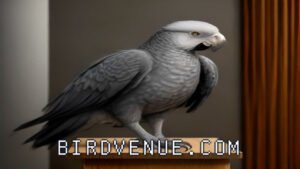
- African Greys: The gold standard. They can learn hundreds of words and use them contextually. First words often appear in 6-12 months, but their vocabulary grows steadily for years. They’re also more sensitive to stress, so bonding is critical.
- Amazons: Excellent talkers with loud, clear voices. They learn quickly but can be stubborn. Expect first words in 3-6 months. They thrive on social interaction and will talk more when they’re the center of attention.
- Eclectus: Good talkers, but they have a softer, more melodic voice. First words in 4-8 months. They’re sensitive to diet and environment, so keep things stable.
These timelines assume daily training and a healthy, bonded bird. If your bird is older or came from a neglectful situation, add a few months. Patience isn’t just a virtue here; it’s a requirement.
For more on how parrots achieve human-like speech, check out this detailed breakdown of the mechanics.
The Dos and Don’ts of Audio Aids and Recordings
Recordings can help, but they’re a supplement, not a replacement. A recording of your voice repeating a word for an hour can reinforce what you’ve taught in person. But it can’t build the social connection that makes training work.
If you use a recording, keep it short. A 5-minute loop of a single word is plenty. Play it during the day when you’re not in the room. Don’t leave it on all day—your bird will tune it out, and you’ll just be creating background noise.
One critical warning: never record yourself saying something you don’t want your bird to repeat. Birds learn from recordings just as well as live speech. If you record a practice session and accidentally curse when the bird bites you, you’ve just taught them a new phrase. I’ve seen it happen.
Also, avoid using videos of other birds talking. Your bird might learn the other bird’s voice, not yours. That’s confusing for them and less useful for you. Stick to your own voice or a high-quality recording of a single speaker.
Final Checklist for a Talking Parrot
Here’s what to keep in mind as you work through this process. Print it out, stick it on your fridge.
- Build trust first. No trust, no talking. Period.
- Train in a quiet room, at chest level, during your bird’s peak alertness.
- Use the 3-step loop: say the word, reward any attempt, repeat once.
- Keep sessions to 5-10 minutes, daily, at the same time.
- Watch body language. Stop if your bird shows stress.
- Use the model/rival technique with a partner for better engagement.
- Be patient with hormonal cycles and molting. Training regresses, then recovers.
- Choose words and phrases you’re happy to hear forever.
- Use recordings as a supplement, not a substitute.
Remember, every bird is an individual. Some pick up words in a week, others take a year. The joy isn’t just in the talking—it’s in the bond you build along the way. A bird that trusts you completely is a reward in itself.
For more on building that foundational bond, read this guide on positive reinforcement bonding.
Frequently Asked Questions (FAQs)
At what age should I start training my parrot to talk?
Start as early as possible, but don’t panic if you have an adult bird. Baby parrots (weaned to 1 year old) are sponges for new sounds. Adult birds can learn too, but they may have existing habits or fears to overcome. The key is the bond, not the age. A 10-year-old rescue parrot can learn to talk if they trust you.
Why does my parrot only talk when I’m not in the room?
This is common. Your bird is practicing in a safe space, without the pressure of performing for you. It’s actually a good sign—they’re learning. To bridge the gap, stand just outside the room where they can see you, and reward them when they talk. Gradually move closer. Eventually, they’ll associate talking with your presence and the reward that follows.
Can I teach my parrot to talk using a mirror?
You can, but it’s a double-edged sword. A mirror can provide social stimulation and encourage practice. But some birds become obsessed with their reflection and ignore you entirely. If you use a mirror, keep it small and remove it during training sessions. If you notice your bird spending more time with the mirror than with you, take it away.
What if my bird only learns curse words?
You’ve taught them a word with strong emotional content. Birds are drawn to sounds that get a big reaction. To fix it, don’t react when they say it. No laughing, no yelling, no eye contact. Then, heavily reward a different, acceptable word. It takes time, but they’ll eventually drop the curse word if it stops being fun.
Does my bird need another bird to learn to talk?
No, but it can help. A companion bird provides social motivation and a model for vocalization. However, two birds often prefer to chatter with each other in their own language rather than mimic human speech. If your goal is human speech, a single, bonded bird is usually the better setup. You become their flock, and they’re more likely to mimic you.