Finches vs Warblers: Key Differences Birders Should Know
Contents
You’re scanning a tangle of shrubs along a park edge in April. A small bird flits from branch to branch, and you catch a flash of yellow. Finch or warbler? Both are small, both are active, and both can show yellow patches that catch your eye. If you’ve fumbled this call before, you’re in good company. Even experienced birders hesitate when a bird gives you only a split-second view.
The good news: once you know what to look for, the two groups separate quickly. This guide gives you a field-ready cheat sheet built around things you can actually see — beak shape, posture, flight style, and behavior — rather than textbook taxonomy you’ll never recall in the moment. You’ll walk away with specific cues for spring, fall, and those confusing female and juvenile plumages.
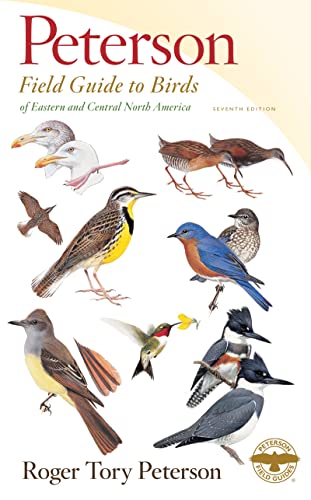
If you’re serious about getting these IDs right, a good field guide helps more than any app. The Peterson Field Guide To Birds Of Eastern & Central North America has updated range maps that show exactly when finches and warblers overlap in your area. It’s the kind of book you keep in the car for those unexpected stops.
Why Birders Confuse Finches and Warblers
The confusion isn’t laziness — it’s a genuine identification problem. Both groups are passerines (perching birds) in the same size range. Both move constantly. Both can be yellow. And in spring, both show up in the same scrubby habitats at the same time.
The real issue is that most people learn finches from feeder photos and warblers from migration warbler hunts. Those two contexts rarely overlap. At a feeder, a goldfinch looks obvious. In a willow thicket, a Wilson’s warbler looks like a goldfinch with a bad haircut. The field marks you learned for each bird don’t transfer because you’ve never seen them side by side.
So let’s fix that. The differences below aren’t subtle — they’re structural. Once you see them, you can’t unsee them.
The #1 Difference: Beak Shape and What It Tells You
Look at the beak first. This single feature separates the groups with about 90% reliability, even in bad light.
Finches have conical beaks — thick at the base, triangular in profile, built for crushing seeds. An American Goldfinch’s beak looks like a small ice cream cone. A House Finch’s beak is shorter and stubbier but still clearly cone-shaped. This is a granivorous (seed-eating) adaptation, and it’s unmistakable once you’ve seen a few.
Warblers have thin, pointed beaks — delicate, almost needle-like. They’re insectivorous, and their beaks are designed for picking caterpillars off leaves and snatching flies out of the air. A Yellow-rumped Warbler’s beak is about half the depth of a goldfinch’s, and it tapers to a fine point.
Here’s the trick: watch the bird’s head profile. A finch’s head looks like it flows into a triangle. A warbler’s head looks like it ends in a tiny spear. It takes about ten seconds of practice to see this, and then it’s automatic.
Size, Shape, and Posture: A Side-by-Side Field Comparison
Beak is the fastest cue, but size and shape confirm it. These are the structural differences you’ll notice before the bird even turns its head.
Body proportions and tail length
Finches are chunkier. They have fuller chests, thicker necks, and shorter tails relative to their body length. A goldfinch looks like a small, compact ball with wings. A warbler is longer and slimmer, with a more elongated body and a tail that seems to extend past the body’s end by a noticeable margin.
For a concrete number: an American Goldfinch runs about 4.5–5 inches long. A Yellow-rumped Warbler is similar, 4.7–5.5 inches. But the goldfinch carries more of that length in the body; the warbler carries it in the tail. When you see them perched, the warbler looks stretched, the finch looks round.
Perching and feeding posture
Finches sit upright on feeders and branches, often with a stiff, alert posture. They hop deliberately from branch to branch, checking seeds. Warblers lean forward more, with a horizontal posture, and they’re constantly in motion — pivoting, lunging, tail flicking.
Watch the tail. Warblers pump and flick their tails almost constantly, especially when they stop. Finches hold their tails still. This is a behavioral tell you can use at fifty yards with binoculars, even when you can’t see the beak clearly.
Plumage and Molt: Beyond the Breeding Male
Most field guides show you a brilliant breeding male — a scarlet tanager, a Blackburnian warbler in flaming orange. Then you go outside in September and see a bird that looks like a washed-out olive sparrow. That’s the trap.
Female and juvenile confusion points
Female finches and female warblers both tend toward dull olive, gray, and yellow-brown. A female American Goldfinch in winter is a plain grayish bird with faint wing bars — it looks nothing like the yellow male you know. A female Yellow-rumped Warbler in fall is streaky gray-brown with a hint of yellow at the flanks.
The beak still saves you. The female goldfinch has the same conical seed-cracker. The female warbler has the same thin insect-probe. When in doubt, wait for the bird to turn its head sideways — the beak profile is your answer.
Seasonal color changes (goldfinch molt vs. warbler fall plumage)
American Goldfinches are unique among finches in that they molt completely in late summer, trading their bright yellow breeding plumage for a dull olive-gray winter coat. So in October, a goldfinch looks like a completely different bird. Warblers also molt, but they keep more structural color — a fall Blackpoll Warbler still shows its pale legs and thin beak, and many retain yellow undertail coverts.
The practical takeaway: in fall, don’t rely on color at all. Use beak shape, posture, and behavior. Color will lie to you; structure won’t.
Behavior and Flight: The Quickest Way to Tell Them Apart
If the bird is moving, you don’t need to see it perched to make the call. Flight and foraging styles are diagnostic.
Flight patterns (undulating vs. direct)
Finches fly in a pronounced undulating pattern — a series of shallow arcs, like a roller coaster in miniature. They flap in bursts, then close their wings and drop slightly, then flap again. Goldfinches especially show this bouncy flight. Once you see it, you’ll recognize it at a distance.
Warblers fly more directly. Their flight is faster and more level, with a steady wingbeat and less vertical oscillation. When a warbler crosses an opening, it goes straight across. A finch crossing the same opening will bounce.
Foraging style (acrobatic vs. methodical)
Warblers are acrobats. They hover to grab insects, hang upside down to probe leaf undersides, and make quick sallying flights to catch flying bugs. Watch a Yellow-rumped Warbler on a beach — it runs along the sand picking at flies, something no finch would do.
Finches are methodical. They work through seed heads, stripping them methodically, and they cling to stems with a stable posture. They don’t hover. If you see a small bird hovering at a branch tip, it’s almost certainly a warbler — or a kinglet, but that’s a separate problem for another day.
Habitat and Migration: Where and When You’ll See Them
Finches and warblers overlap more than you might think, but their core habitats differ. Finches favor open areas with seed-bearing plants — weedy fields, grassland edges, backyard feeders. Warblers need insect-rich cover — deciduous forest understory, shrubby wetlands, and regenerating clearings.
The overlap zone is what gets you. In spring migration, warblers pass through the same weedy edges and backyard shrubs that finches use all year. A migrating Palm Warbler in a goldenrod patch next to a goldfinch flock is a real scenario, and it’s a classic trap.
Timing helps. Finches are year-round residents across most of the eastern U.S. Warblers show up in waves: late April through May in the north, late March through April in the south. If you see a small yellow bird in January, it’s a finch — no warbler is that far north in winter except the Yellow-rumped, and it’s usually in flocks.
The Ultimate Quick-Reference Comparison Table
| Feature | Finches | Warblers |
|---|---|---|
| Beak shape | Conical, thick, seed-crushing | Thin, pointed, insect-probing |
| Body shape | Chunky, round-chested | Slim, elongated |
| Tail | Short, held still | Longer, constantly flicked |
| Posture | Upright, alert | Horizontal, leaning forward |
| Flight | Undulating, bouncy | Direct, level |
| Foraging | Methodical, seed-stripping | Acrobatic, hovering, sallying |
| Diet | Granivorous (seeds) | Insectivorous (insects) |
| Song | Long, trilling, often cheerful | Buzzes, chips, and complex phrases |
| Migration | Mostly resident or short-distance | Long-distance, neotropical |
| Feeder use | Common | Rare (except in early spring) |
Print that table, keep it in your field bag, and you’ll cut your misidentification rate dramatically.
Common Misidentification Scenarios (And How to Solve Them)
Let’s walk through the three most common mix-ups you’ll actually encounter.
Scenario 1: Pine Warbler vs. Pine Siskin. Both are streaky olive-yellow birds that visit feeders. The warbler has a thin beak and pumps its tail. The siskin has a sharply pointed but thicker beak and shows yellow wing bars. Check the beak — a pine siskin’s beak is noticeably longer and more pointed than a goldfinch’s but still thicker than a warbler’s. If it’s at a feeder eating sunflower chips, it’s a siskin.
Scenario 2: American Goldfinch vs. Wilson’s Warbler in spring. Both are small and yellow. The goldfinch has black wings with white bars; the warbler has plain olive wings. The goldfinch’s beak is thick and pale; the warbler’s is thin and dark. The warbler also has a black cap (males) and constantly flicks its tail. Goldfinches don’t flick.
Scenario 3: Female House Finch vs. female Common Yellowthroat. Both are brownish with yellow tones. The house finch has a thick, curved culmen (top of the beak) and a plain face. The yellowthroat has a thin beak, a pale supercilium (eyebrow), and a yellow throat that extends to the breast. The yellowthroat also skulks low in dense vegetation; the house finch sits on wires and feeders.
If you’re still unsure, watch the feet. Warblers have thin, delicate legs; finches have sturdier legs built for gripping stems. It’s a small detail, but it’s visible with good binoculars.
Final Tips for Confident Identification
You don’t need to memorize every warbler song or finch subspecies. You need a few reliable moves.
- Start with the beak. Conical means finch; thin and pointed means warbler. This works in every season and on every age class.
- Watch the tail. Constant flicking and pumping says warbler. A still tail says finch.
- Note the flight path. Bouncy, undulating flight is a finch. Direct, level flight is a warbler.
- Consider the habitat and season. A yellow bird at a feeder in December is a finch. A yellow bird in a shrubby thicket in May could be either — so use the other cues.
- In fall, ignore color entirely. Structure and behavior are your only trustworthy guides.
- Practice on common birds first. Learn the goldfinch’s bounce and the Yellow-rumped Warbler’s tail pump before you tackle the tricky fall warblers.
- Carry a good field guide. The finch and wren comparison on this site covers another common mix-up, and the Peterson guide mentioned above has the range maps you need for seasonal timing.
Birding is a game of small observations stacked together. You don’t need a perfect view — you need the right two or three cues. Beak, tail, flight. Start there, and the rest falls into place.
One honest caveat: no single cue works 100% of the time. A female black-throated blue warbler looks remarkably like a chickadee at a glance. But the beak-and-tail combo will get you to the right family, and the family is usually enough to start narrowing down the species. That’s the whole game.
For more on separating finches from other backyard birds, see our finch vs chickadee guide. And if you’re wondering whether to feed finches through the summer, this article covers the trade-offs.