African Grey Talking Ability: What to Expect
Contents
You’ve seen the videos. A grey parrot names the color of an object it’s never seen before, or tells its owner “I love you” at precisely the right moment. It’s easy to assume every African Grey will eventually chat your ear off. The reality is messier and far more interesting.
Some greys speak in full sentences by their first birthday. Others never say a word in twenty years. The difference rarely comes down to the bird itself. It comes down to what you do, what you expect, and how you read the bird’s signals. This article walks through the actual science of african grey parrot talking ability, the training methods that work, and the honest truth about why some birds stay silent.

halinfer
Large Bird Table Training Perch for African…
- METAL FRAME WITH LADDER DESIGN: Outdoor application powder coating (carbon coating) rustproof on sturdy havey-duty METAL FRAMES wi…
- FAST INSTALLATION: Hand install WITHOUT any tools request. Insect the metal ladder in the middle with both frames and screw the wo…
- MATERIAL QUALITY: Metal frames are more stable and last for long to sit on the table. Smooth-finished wood construction ensures sp…
You’ll leave with a clear picture of what to expect from your grey, and a practical plan for encouraging speech without turning your living room into a circus.
Before we dive into training, let’s talk about the physical setup. A grey that feels secure and has a dedicated space for exercise will vocalize more readily. A sturdy large bird table training perch gives your parrot a safe, elevated spot to play and climb outside the cage. The metal frame and wooden bars are easy to clean, which matters because a dirty perch can harbor bacteria that affects your bird’s health and mood.
The Truth About African Grey Talking Ability
African Greys are widely considered the most talented talking parrots in the world. The scientific evidence backs this up. In controlled studies, greys have learned vocabularies of over 100 words and used them with remarkable accuracy. But the popular image of a parrot that simply parrots back phrases misses the point.
Talking ability in greys isn’t just about vocal mimicry. It’s about cognitive ability. A grey doesn’t just learn sounds; it learns associations. It connects a word with an object, a person, or an outcome. This is why a grey can say “apple” when it sees an apple, rather than just repeating the word when it hears it.
The most famous example is Alex, a Congo African Grey studied by Dr. Irene Pepperberg at Harvard. Alex could identify 50 objects, count up to six, and understand concepts like bigger, smaller, same, and different. He even invented his own word — “banerry” — for an apple, which he described as a combination of a banana and a cherry. That’s not mimicry. That’s original thought.
So when people ask “how well can African Greys talk?”, the honest answer is: better than any other parrot species, but only under the right conditions. The bird needs social interaction, consistent training, and a reason to speak.
Mimicry vs. True Comprehension: What the Alex Studies Prove
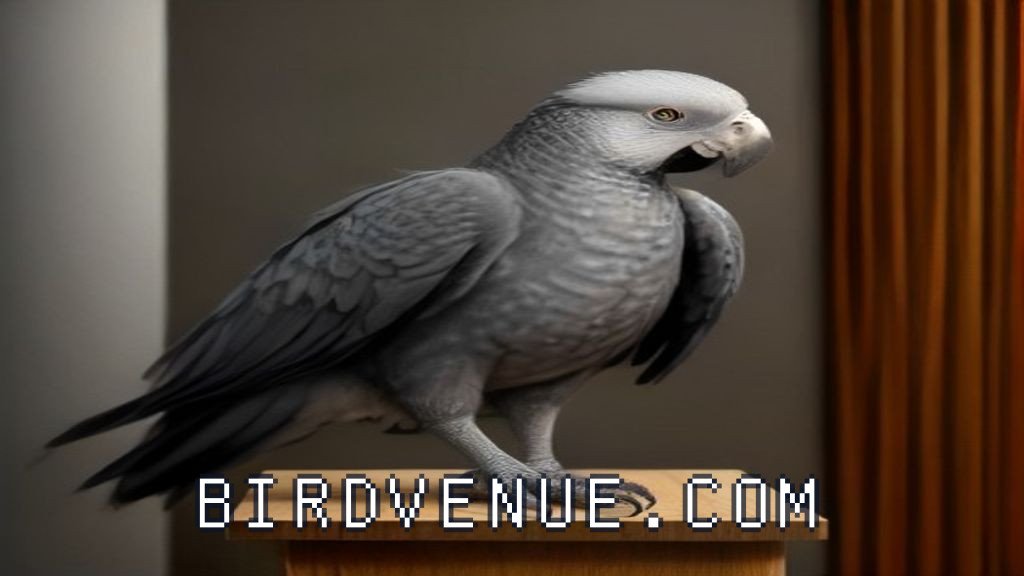
The distinction between mimicry and comprehension is the core of grey parrot intelligence. Most parrots can mimic sounds. A budgie can learn hundreds of phrases. But a budgie saying “hello” is no different from a doorbell ringing — it’s a sound with no meaning attached.
Greys operate differently. The Alex studies demonstrated that greys can use words contextually. Alex didn’t just say “green” when shown a green object. He could identify the color, shape, and material of objects he’d never encountered before. He answered questions correctly about 80% of the time, which is remarkable for any non-human animal.
Contextual Use of Words
Contextual speech means using words in the right situation, not just repeating them. A grey that says “want nut” when it sees a walnut is using context. A grey that says “hello” every time the phone rings is mimicking a sound without understanding its meaning.
In practice, most greys develop a mix of both. They’ll mimic household sounds — microwave beeps, doorbells, other pets — but they’ll also learn to label things that matter to them. Food, favorite people, and toys are the most common targets.
Researchers have found that greys learn words faster when the words have immediate relevance. A bird that gets a treat every time it says “treat” will learn that word quickly. A bird that hears “good morning” every day for years might never say it, because the phrase has no payoff.
The Limits of Avian Intelligence
It’s important to be honest about what greys can’t do. They don’t understand grammar. They don’t string together novel sentences to express new ideas. They can’t discuss the weather or tell you about their day.
What they can do is use learned words to get what they want. That’s a form of intelligence, but it’s not human intelligence. Expecting a grey to converse like a person sets you up for disappointment. Expecting a grey to use words to communicate needs and desires is realistic and rewarding.
Congo vs. Timneh: Which Subspecies is the Better Talker?
There are two subspecies of African Grey: the Congo and the Timneh. They look different — the Congo is larger with a bright red tail, while the Timneh is smaller with a darker, maroon tail. They also differ in talking ability, though not in the way most people assume.
Congos are often described as more articulate. They tend to have clearer voices and larger vocabularies. The record-holding greys, including Alex, have all been Congos. If you want a bird that might learn 200 words, a Congo is the safer bet.
Timnehs, on the other hand, often start talking earlier. They’re also considered more laid-back and less prone to the anxiety that can plague Congos. A Timneh might say its first word at 6 months, while a Congo might wait until 18 months. But the Timneh’s vocabulary usually stays smaller.
| Trait | Congo African Grey | Timneh African Grey |
|---|---|---|
| Size | Larger (12–14 inches) | Smaller (9–11 inches) |
| Talking onset | Often later (12–18 months) | Often earlier (6–12 months) |
| Vocabulary size | Potentially larger (100+ words) | Usually smaller (30–60 words) |
| Clarity | Clearer, more distinct speech | Slightly raspier voice |
| Temperament | More sensitive, prone to stress | More adaptable, less anxious |
Neither subspecies is “better.” The choice comes down to your lifestyle. If you have patience and want a bird that might become a true conversationalist, a Congo fits. If you want a bird that talks sooner and handles change better, a Timneh might be the right pick.
The Month-by-Month Timeline: When to Expect First Words
Every grey develops on its own schedule, but there are general speech milestones you can watch for.
- 3–6 months: The bird starts experimenting with sounds. You’ll hear whistles, clicks, and soft muttering. This is the bird practicing vocalization, often while alone.
- 6–12 months: First words often appear. Timnehs typically start earlier than Congos. The first word is usually something simple — “hi,” “hello,” or the bird’s own name.
- 12–24 months: Vocabulary expands rapidly if training is consistent. The bird begins to associate words with objects and people. This is when phrase repetition starts — the bird will repeat things it hears often, including sounds you wish it hadn’t learned.
- 2–5 years: The bird’s vocabulary stabilizes. Some greys continue learning new words throughout their lives, but the fastest growth happens in the first few years.
One thing to keep in mind: talking onset varies wildly. Some greys say their first word at 4 months. Others wait until age 3. A late talker isn’t necessarily a non-talker. Patience is the single most important trait you can bring to this process.
The Real “Talking” Formula: Environment, Bonding, and Training
Three factors determine whether a grey talks: environment, bonding, and training. You can’t skip any of them.
Environment means the bird feels safe. A grey that’s constantly startled by loud noises, other pets, or sudden movements will shut down. Stress suppresses vocalization. The bird needs a quiet corner where it can observe without feeling threatened.
Bonding means the bird trusts you. Greys are naturally cautious. They form strong attachments to one or two people. A grey that doesn’t trust you won’t talk to you. It might talk when you leave the room, though. That’s a classic sign of a bonded bird that’s still shy about performing.
Training means deliberate, repeated practice. Talking doesn’t happen by accident. It happens because you spend ten minutes a day, every day, working on specific words.
The Model-Rival Technique at Home
The model-rival technique is the method Dr. Pepperberg used with Alex. It works like this: two people interact with the bird, and one of them acts as a “rival” for the bird’s attention.
- Sit with your grey and have a second person (the model) hold up an object, like a cork.
- The model asks, “What’s this?” and you respond enthusiastically, “Cork!”
- You hand the cork to the model, who praises you. The bird watches this exchange and learns that saying “cork” gets a reward.
- After a few repetitions, offer the cork to the bird and ask, “What’s this?”
- If the bird says anything close to “cork,” immediately reward it with the cork and praise.
The key is that the bird sees another human getting rewarded for speaking. That creates motivation. Greys are social creatures — they want what the model has.
Common Owner Mistakes That Silence a Grey
Several well-meaning habits can actually suppress talking.
- Rewarding screaming: If you rush to the cage every time the bird screams, you’re training it to scream. Wait for quiet moments to give attention.
- Inconsistent cues: If you say “hello” with different tones or at different volumes, the bird gets confused. Use the same word, same tone, every time.
- Too much background noise: A TV running all day teaches the bird to mimic TV sounds, not your voice. Keep training sessions in a quiet room.
- Ignoring the bird’s attempts: When the bird mutters or whispers, it’s practicing. If you ignore those moments, the bird may stop trying.
Why Some Greys Never Talk (And Why That’s Okay)
Here’s the hard truth: some African Greys never talk. It’s not a defect. It’s not a failure on your part. It’s just individual differences.
Some birds are naturally quiet. They prefer to communicate through body language and vocalizations that aren’t words. Others are so anxious that they never feel safe enough to practice speech. A grey that was neglected, abused, or moved between homes may take years to trust a new owner, and may never speak.
There’s also the rescue factor. Many greys in shelters are older birds that were rehomed because their previous owners couldn’t handle them. These birds often have deep psychological scars. Expecting them to talk is unfair.
If your grey doesn’t talk, it’s still a wonderful companion. Greys are incredibly expressive without words. They’ll bob their heads, fluff their feathers, and make a range of sounds that communicate plenty. The bond you build matters more than the vocabulary count.
The Ethical Choice: Breeder “Talkers” vs. Rescue Birds
Some breeders advertise “talking greys” or “talking lines.” This is a red flag. Breeder selection for talking ability is based on the parents’ behavior, but there’s no guarantee the offspring will talk. Genetics play a role, but environment and training matter more.
Worse, the demand for “talkers” can lead to unethical breeding practices. Birds are kept in isolation, deprived of social interaction, and trained with food deprivation to force speech. That’s abuse, not training.
Adopting a rescue grey is a different path. You might get a bird that never speaks. You might also get a bird that blossoms after months of patient care. The reward isn’t the words — it’s the trust. A rescue grey that finally says your name after a year of silence is a moment you’ll never forget.
If you’re set on a talking bird, ask the breeder about the parent birds’ behavior, but don’t pay a premium for a “guaranteed talker.” No one can guarantee that.
Factors That Influence Talking Ability: Environment, Bonding, and Training
We touched on this earlier, but let’s go deeper. The environmental influence on speech is profound. A grey raised in a busy household with children, dogs, and constant noise will learn different sounds than one raised in a quiet apartment. The bird mimics what it hears most.
Social interaction is the fuel for speech. Greys learn to talk because they want to communicate with their flock — that’s you. If you treat the bird like a decoration, it won’t talk. If you talk to it throughout the day, narrating your actions, it will learn.
The learning process itself is gradual. The bird first imitates the rhythm and tone of your voice, then the vowels, then the consonants. This is why early attempts often sound like garbled mumbling. Don’t correct the bird — praise the effort. The clarity improves with practice.
How Many Words Can an African Grey Actually Learn?
The average grey learns about 30 to 50 words. That’s a solid, functional vocabulary. Some greys learn 100 or more. The record is held by a grey named Prudle, who had a vocabulary of over 800 words, but that’s an outlier.
Vocabulary size depends on how much time you invest. A bird that gets 15 minutes of focused training daily will learn more than one that gets occasional attention. The quality of training matters too. Repetition with rewards beats random chatter.
Keep in mind that speech clarity isn’t the same as vocabulary size. A bird might know 50 words but only pronounce a few clearly. Others say fewer words with perfect clarity. Both are normal.
Training Techniques to Encourage Talking in African Greys
Here’s a practical toolkit for parrot training that works.
- Start with sounds, not words. Whistles and clicks are easier for the bird to replicate. Once the bird masters a whistle, move to simple words like “hi” or “bye.”
- Use high-value rewards. Find what the bird loves — a sunflower seed, a piece of millet, a scratch behind the head. Use that only for training.
- Train in short bursts. Five minutes, twice a day, beats thirty minutes once a week. Greys lose focus quickly.
- Record yourself. Some owners play back recordings of their voice when they’re away. This helps reinforce words, but it’s not a substitute for live interaction.
- Be patient with mimicry accuracy. Your grey will mangle words at first. “Pretty bird” might come out as “bwitty bub.” That’s normal. The clarity sharpens over months.
One note: never punish a bird for not talking. That creates fear, and fear shuts down vocalization entirely. Praise every attempt, even the ugly ones.
The Role of Diet and Health in Speech Development
A sick bird won’t talk. It’s that simple. Respiratory infections, nutritional deficiencies, and even mild stress can suppress vocalization.
Greys need a diet rich in vitamin A, calcium, and omega-3 fatty acids. A poor diet leads to dull feathers, low energy, and a quiet bird. If your grey suddenly stops talking and you haven’t changed anything else, check its health first. A vet visit is in order.
There’s also the issue of night frights. Greys are prone to waking up in a panic, flapping wildly in the dark. This stress can temporarily halt vocalization. If your grey has night frights, consider a night light and a consistent sleep schedule. A well-rested bird is a talkative bird.
Comparing African Grey Talking Ability to Other Parrots
Greys are the gold standard, but they’re not the only talkers. Here’s how they stack up.
| Species | Vocabulary Size | Clarity | Contextual Use |
|---|---|---|---|
| African Grey | 30–100+ words | Excellent | High |
| Amazon Parrot | 50–100+ words | Very good | Moderate |
| Quaker Parrot | 50–100+ words | Good | Moderate |
| Eclectus | 20–50 words | Good | Low |
| Macaw | 15–30 words | Fair | Low |
Amazons are the closest rivals to greys in clarity and vocabulary. Quakers are surprisingly prolific talkers, though their voices are raspier. Macaws talk, but their voices are loud and harsh. Greys win on the combination of vocabulary, clarity, and comprehension.
Real-Life Stories: African Greys Who Mastered Contextual Speech
Alex is the most famous, but he’s not the only grey with demonstrated comprehension. A grey named N’kisi reportedly used over 950 words, and her owner claims she used them in novel combinations — like “pretty flower” for a bouquet she’d never seen before.
Another grey named Einstein, at the Knoxville Zoo, had a vocabulary of about 200 words and could mimic celebrity voices. Her trainers used the model-rival technique, and she responded with remarkable accuracy.
These stories aren’t meant to set an impossible bar. They illustrate what’s possible when a grey receives hours of daily attention, structured training, and a rich environment. Most owners won’t replicate that. You don’t need to. A grey that says “I love you” in your voice, at the right moment, is already a miracle.
Frequently Asked Questions About African Grey Talking Ability
How well can African Grey parrots talk?
Better than any other parrot species. They have clear voices, large vocabularies, and can use words in context. But individual results vary. Some greys speak in full sentences; others never say a word.
Do African Greys understand what they say?
Sometimes, and that’s the fascinating part. They understand that a word like “apple” refers to the object. They don’t understand grammar or abstract concepts. The Alex studies proved greys can label objects, colors, and shapes with high accuracy.
At what age do African Greys start talking?
Most greys say their first word between 6 and 18 months. Timnehs often start earlier than Congos. Some birds wait until age 3 or 4. Late onset doesn’t mean the bird will never talk.
How many words can an African Grey learn?
The average is 30 to 50 words. Dedicated training can push that to 100 or more. The record is over 800, but that’s an extreme outlier.
Why is my African Grey not talking?
Check for stress, illness, or lack of bonding. The bird might not trust you yet. It might be too distracted by noise. Or it might simply be a quiet individual. Rule out health issues first, then focus on building trust and consistent training.
Which is better for talking: Congo or Timneh African Grey?
Congos tend to have larger vocabularies and clearer voices. Timnehs often start talking earlier and are more adaptable. Neither is guaranteed to talk.
How do I train my African Grey to talk?
Use the model-rival technique, train in short daily sessions, reward every attempt, and keep the environment calm. Consistency beats intensity.
Can African Greys use words in context?
Yes. The Alex studies proved this conclusively. Greys can label objects, colors, and materials they’ve never seen before, which requires understanding, not just mimicry.
What did the Alex studies prove about parrot intelligence?
They proved that a parrot can understand abstract concepts like same/different, bigger/smaller, and even the concept of zero. Alex could count to six and identify 50 objects. This redefined what we thought about avian cognition.
How does an African Grey compare to other talking parrots?
Greys are the best overall. They combine large vocabularies, clear speech, and genuine comprehension. Amazons are close in clarity, and Quakers are prolific, but neither matches the grey’s cognitive ability.
Final Verdict: Setting Realistic Expectations
Here’s what you should take away from all this.
- African Greys have the highest african grey parrot talking ability of any parrot, but it’s not automatic. It requires daily effort.
- Focus on bonding before training. A bird that trusts you will learn to talk; a bird that fears you won’t.
- Use the model-rival technique and high-value rewards. Short, consistent sessions beat long, sporadic ones.
- Don’t compare your bird to Alex. He had a Harvard researcher working with him for hours every day.
- A quiet grey is still a wonderful companion. The relationship matters more than the vocabulary.
- Watch for health issues that can suppress speech. A sudden change in vocalization warrants a vet visit.
- If you’re just starting out, read more about how greys learn and check out enrichment toys to keep your bird stimulated. A happy, busy bird is more likely to chat.
Your grey might never speak. Or it might one day say your name with perfect clarity. Either way, you’ve got a remarkable companion. The talking is a bonus, not the point.