
Stop Wasting Time: Best Luxury Birdhouses That Actually Work
By Erick Updated 13 min read
As an Amazon Associate I earn from qualifying purchases. That costs you nothing and does not decide what gets recommended. We also earn a commission from some links to partner brands (POPOSOAP, Kiwibit Inc.).
On this page (10 sections)
- The short version
- Our picks at a glance
- 1. dobar Luxus-Vogelhaus: best for European species and minimalist design
- 2. Paradise Birdhouses Jasmine: best for multi-cavity installations
- 3. MOCOME Multi-Bird Stake: best for decorative impact
- 4. Edible Birdhouse (Holiday Design): best for seasonal feeding
- Expensive wooden birdhouses: when premium materials pay off
- How to choose a luxury birdhouse
- Getting the most from a high-end birdhouse
- Questions people still ask
In short: The dobar Luxus-Vogelhaus delivers the best combination of premium materials and proven design. Its oiled oak construction and 32mm entrance hole match European great tit requirements. For North American yards needing multiple nesting sites, the Paradise Birdhouses Jasmine model offers two 1.5-inch cavities in a durable PVC frame.
Part of our guide on sparrow nesting house
Most luxury birdhouses look gorgeous on a patio table but fail the one test that matters: whether birds actually nest in them.

Luxus-Vogelhaus 46760e Luxury Birdhouse Nesting Box with
Solid oiled oak and pull-out cleaning access in a contemporary square design
Check it on Amazon
Paradise Birdhouses – Jasmine Bird House (Black)
Two 1.5-inch cavities in weatherproof PVC with 12-pound predator-resistant build
See this alternative
Multi-Bird Houses for Outside with Pole
Three colorful metal cavities on cast iron stake assemble in minutes
See this alternative| Best material | Oiled oak or untreated cedar |
|---|---|
| Hole size range | 1.25–1.5 inches (US species) |
| Minimum wall thickness | 0.75 inches for insulation |
| Cleaning frequency | Once per season after fledging |
| Mounting height | 5–15 feet, species-dependent |
The short version
- Entrance hole size determines which species nest: 32mm for European tits, 1.25 inches for chickadees, 1.5 inches for bluebirds
- Solid wood (oak, cedar, cypress) regulates temperature better than metal or thin pine, critical for hatchling survival
- Pull-out cleaning access matters more than decorative details: parasites build up fast in a sealed box
- Multi-cavity designs attract more nesting pairs only if cavities face different directions and sit 6+ feet apart
- Handmade edible birdhouses work as short-term feeders but require monthly re-seeding to stay attractive
Our picks at a glance
Every luxury birdhouse below was chosen for materials that last outdoors and entrance dimensions birds actually use. The ranking reflects nesting success over ornamental appeal.
| Product | Best for | Why it stands out | Watch out for |
|---|---|---|---|
| dobar Luxus-Vogelhaus | European great tits, nuthatches | Solid oiled oak, pull-out body for cleaning, 32mm hole matches tit species | Hole size too small for most US cavity nesters |
| Paradise Jasmine (Black) | Bluebirds, tree swallows, multi-pair yards | Two 1.5-inch cavities, weatherproof PVC, 12-pound heft resists raccoons | Heavy—needs secure post or reinforced tree mount |
| MOCOME Multi-Bird Stake | Decorative yards, beginner birders | Three colorful cavities on single stake, easy assembly, cast iron durability | Cavities too close together—territorial birds claim all three |
| Edible Birdhouse (Holiday) | Seasonal feeding, kids' projects | Reusable wood frame, seed coating attracts instant traffic, includes moss | Requires monthly re-gluing and seeding to stay functional |
| dobar Luxus-Vogelhaus (EU oak) | Minimalist modern gardens, long-term installations | Contemporary square profile, heat-insulating solid wood, metal closure latch | Premium price reflects European import and craftsmanship |
1. dobar Luxus-Vogelhaus: best for European species and minimalist design
This German-made nesting box uses impregnated EU oak throughout, not veneer over plywood. The wood arrives pre-oiled for weather resistance without toxic sealants. The square profile and pitched roof suit contemporary gardens where a rustic log-cabin style would clash.
The inner cavity slides out completely via a metal closure on the back panel. That access makes fall cleaning fast: scrape out old nesting material, check for mites, slide it back. The 32mm entrance hole matches European great tit, nuthatch, and pied flycatcher dimensions exactly.
Dimensions run compact at 6.3 x 6.3 x 11 inches. The small footprint works on balconies or tight courtyard walls. Weight hits 4.6 pounds, heavy enough that wind won't swing it. A pre-drilled hole on the back panel takes a single screw for tree or wall mounting. If that sounds like your situation, read up on cardinal birdhouse next.
- Solid oiled oak regulates temperature and resists rot for years
- Pull-out body simplifies annual cleaning
- 32mm hole excludes starlings and sparrows in Europe
- Contemporary square design suits modern architecture
- Hole too small for most North American cavity nesters (need 1.25–1.5 inches)
- Premium price reflects European import costs
Luxus-Vogelhaus 46760e Luxury Birdhouse Nesting Box with Pitched Roof and
Solid oiled oak and pull-out cleaning access in a contemporary square design
- Weight 4.63 lb
- Height 6.29 inches
- Width 6.29 inches
2. Paradise Birdhouses Jasmine: best for multi-cavity installations
The Jasmine model houses two nesting cavities in a four-sided PVC structure with metal roof accents. Each cavity gets its own 1.5-inch entrance hole, sized for bluebirds, tree swallows, and violet-green swallows. The dual-cavity design lets you attract two nesting pairs in a single installation.
PVC construction here means zero rot, no seasonal sealing, and no insect damage. The material also stays cooler in direct sun than bare metal. At 12 pounds, this birdhouse resists raccoon tipping and stays put during storms when mounted on a pole or post.
Dimensions measure 12 x 12 x 18 inches. That bulk works on a dedicated post in open yard space but overwhelms a small tree. The black finish keeps a low profile against dark siding or fence backgrounds. Metal accents add visual weight without the maintenance real metal roofs demand. We cover matching bedding to bird species in its own article.
- Two 1.5-inch cavities increase nesting opportunities per install
- PVC never rots, splits, or needs refinishing
- 12-pound weight deters raccoons and resists wind
- Metal accents add upscale look without rust risk
- Heavy—requires sturdy post or reinforced tree branch
- Large footprint overwhelms small yards or balconies
Paradise Birdhouses – Jasmine Bird House (Black)
Two 1.5-inch cavities in weatherproof PVC with 12-pound predator-resistant build
- Height 18.0 inches
- Length 12.0 inches
- Weight 12.0 pounds
3. MOCOME Multi-Bird Stake: best for decorative impact
This three-cavity design stacks colorful metal houses on a single 50-inch cast iron stake. Each cavity features a different decorative opening (pentagram, heart, and flower) with 1.5-inch functional entrance holes behind the ornamental cutouts. The stake's three-prong base pushes into soil without digging or concrete.
Hand-crafted metal and cast iron construction holds up to rain and UV without fading or cracking. The bright painted finish and 3D flower-and-leaf details turn the piece into garden sculpture that also functions. Assembly takes under ten minutes with a screwdriver: just thread the three houses and pole sections together.
At 19.25 inches wide and nearly five feet tall, this birdhouse commands attention in a flowerbed or along a walkway. Weight totals five pounds, enough to stay upright in soft soil but light enough to relocate seasonally. The colorful exterior appeals to birders who want backyard décor that doubles as habitat. For the detail, see our notes on birdhouse camera options.
- Three cavities on one stake maximize space efficiency
- Durable metal resists rot, insects, and UV fading
- Decorative 3D flowers and bold colors enhance garden aesthetics
- Easy assembly—no tools beyond a screwdriver
- Cavities stacked too close—territorial birds often monopolize all three
- Bright colors may deter shy species like wrens
Multi-Bird Houses for Outside with Pole
Three colorful metal cavities on cast iron stake assemble in minutes
- Weight 5.0 pounds
- Width 5.5 inches
- Height 58.25 inches
4. Edible Birdhouse (Holiday Design): best for seasonal feeding
This handmade design covers an unfinished wood birdhouse frame with a layer of birdseed glued to the exterior. Birds land, eat the seed coating, and eventually find the nesting cavity underneath. The concept works as a short-term feeder that transitions into a nesting site once the seed is gone.
The wood frame measures 5.5 x 5.75 x 10.25 inches and ships unfinished, so you can stain or seal it after the seed layer disappears. Natural Spanish moss is included for you to add to the outside: birds will pull it off to line their nests inside. Once the seed is eaten, you can recoat the surface with peanut butter or white glue and fresh seed.
This approach attracts instant bird traffic because the seed is visible and accessible. That visibility helps new birders see which species visit their yard. The five-year guarantee covers the wood frame, not the edible coating. Plan to re-seed monthly during active feeding seasons to keep birds interested. There is more on where to hang bluebird boxes in a separate guide.
- Edible seed coating attracts birds immediately
- Reusable frame—recoat with peanut butter and seed indefinitely
- Includes Spanish moss for nesting material
- Made in USA with untreated wood
- Requires monthly maintenance to stay functional as a feeder
- Seed coating lasts only 2–3 weeks in wet climates
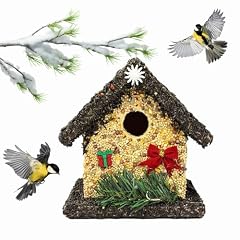
Handmade Edible Birdhouse- Unique Wooden Birdhouse Covered w/Birdseed
Seed-covered reusable frame attracts instant traffic and transitions to nesting site
- Height 5.5 inches
- Width 5.75 inches
- Length 10.25 inches
Expensive wooden birdhouses: when premium materials pay off
Luxury wooden birdhouses use solid hardwoods (oak, cedar, cypress) cut at least 0.75 inches thick. That thickness insulates eggs and hatchlings from temperature swings that kill broods in thin pine boxes. Cedar and cypress contain natural oils that repel insects and resist rot without chemical treatment. Oak lasts longest but weighs more and costs more to ship.
High-end models include pull-out floors or side panels secured with metal latches or screws. That access lets you remove old nests in fall, when parasites and bacteria are dormant. Sealed boxes look cleaner but accumulate mites and blowfly larvae across seasons, and birds avoid them after the first year. A $60 birdhouse with cleanout access gets used for a decade. A $15 sealed box gets used once.
Joinery matters in premium construction. Screws or dowels hold better than nails or staples when wood expands and contracts with humidity. Roofs should overhang the entrance by at least two inches to keep rain out. Drainage holes in the floor (at least four, each 0.25 inches) prevent water from pooling if rain does get in. Ventilation gaps near the roofline keep interior temperatures below lethal levels during summer heat.
Expensive birdhouses also skip exterior paint in favor of natural wood or penetrating oil finishes. Paint flakes into nests and can trap moisture under the film, accelerating rot. Oiled or bare wood breathes, which keeps the interior dry. If you must add color, use exterior stain on the outside only and leave the interior raw.
How to choose a luxury birdhouse
Start with entrance hole diameter matched to your target species. Chickadees and wrens need 1.125 to 1.25 inches. Bluebirds and swallows need 1.5 inches. Larger holes invite starlings and house sparrows, which are aggressive and will evict native birds. Smaller holes exclude the species you want. Measure with calipers: eyeballing it leads to mismatches.
Wall thickness controls insulation. Aim for 0.75 to 1 inch minimum in solid wood. Thinner walls let interior temperatures track outdoor swings, which stresses hatchlings and wastes their energy on thermoregulation instead of growth. Metal and thin plywood birdhouses cook nestlings in direct sun and freeze them on cold nights.
Cleanout access is non-negotiable if you want multi-year use. Look for a hinged side, removable floor, or pull-out body you can open without tools or with just a screwdriver. Old nests harbor mites, lice, and blowfly larvae that parasitize new broods. Clean the box once per season after fledging, scraping out all organic material and checking corners for insect casings.
Mounting hardware should be pre-installed or clearly described. A single screw hole or keyhole slot on the back works for tree or wall mounts. Post-mount models need a base flange or brackets that accept 4×4 posts. Avoid birdhouses that require you to drill your own mounting holes: you risk splitting the wood or placing holes where they compromise the structure.
- Entrance hole: 1.125–1.25 inches for small songbirds, 1.5 inches for bluebirds and swallows, 2.5 inches for woodpeckers
- Wood thickness: 0.75 inches minimum; cedar, cypress, or oak preferred over pine or plywood
- Cleanout access: hinged panel, removable floor, or pull-out cavity for annual maintenance
- Drainage and ventilation: four 0.25-inch floor holes, gaps or holes near the roofline
- Roof overhang: 2+ inches past the entrance to block rain
- Finish: natural wood, oil, or exterior stain on outside only – never paint the interior
Getting the most from a high-end birdhouse
Mount the birdhouse before nesting season starts: late winter for southern states, early March for northern zones. Birds scout territory weeks before they build, and a box that appears mid-season often sits empty until the following year. Position the entrance hole facing away from prevailing wind and rain. East or southeast works in most US climates.
Height depends on species. Chickadees and wrens accept boxes as low as 5 feet in shrubs or on fence posts. Bluebirds prefer 5 to 6 feet in open areas with short grass nearby. Woodpeckers and flickers want 12 to 20 feet on tree trunks. Mounting too high makes cleaning awkward; too low invites predators.
Leave the birdhouse in place year-round. Some species roost in cavities during winter storms. Clean it once in fall after nesting is finished: late September or October in most regions. Remove the old nest, scrape out debris, and check for wasp nests or carpenter ant damage. A quick spray with diluted bleach (1 part bleach to 9 parts water) kills lingering parasites. Let it dry completely before closing it up.
Skip perches below the entrance hole. Perches give predators and nest competitors like house sparrows a foothold to harass occupants. Cavity-nesting birds don't need a perch: they cling to the entrance or fly straight in.

Questions people still ask
Do expensive birdhouses attract more birds than cheap ones?
Price alone doesn't attract birds: dimensions and materials do. An expensive birdhouse with the wrong entrance hole size or poor ventilation will sit empty. But premium models usually get the specs right: thicker walls, proper drainage, and cleanout access. Those features increase occupancy across seasons. A $60 cedar box with a 1.5-inch hole and good insulation will outperform a $15 pine box with a 2-inch hole and no ventilation every time.
What entrance hole size works for most North American birds?
A 1.5-inch hole serves the widest range: bluebirds, tree swallows, violet-green swallows, titmice, and chickadees. It excludes starlings and most woodpeckers. If you want wrens, Carolina chickadees, or downy woodpeckers specifically, go smaller at 1.125 to 1.25 inches. Larger holes (2+ inches) invite starlings, which evict native birds and destroy eggs.
How often should I clean a luxury birdhouse?
Once per season, in fall after fledging is complete. Remove old nests, scrape out debris, and spray with diluted bleach (1:9 bleach to water) to kill mites and blowfly larvae. Let it dry for 24 hours before closing. Birds won't reuse a nest (they build fresh each spring) but parasites from old material will infest the new brood if you skip cleaning.
Can I paint or stain a wooden birdhouse?
Stain or paint the exterior if you want, but leave the interior bare. Interior finishes trap moisture and off-gas fumes into an enclosed space, stressing nestlings. Use exterior-grade stain or latex paint on outside surfaces only. Natural wood or penetrating oil finishes are safer and let the wood breathe, which prevents rot.
Do multi-cavity birdhouses increase nesting success?
Only if cavities are spaced at least six feet apart or face opposite directions. Bluebirds, swallows, and most songbirds are territorial and defend 100+ feet around their nest. A multi-cavity birdhouse with holes close together usually gets claimed entirely by one pair, which chases all others away. You'll get more nesting pairs by mounting single-cavity boxes 25+ yards apart.
Are imported European birdhouses suitable for US birds?
Sometimes. European models often have 28mm to 32mm entrance holes, which work for European tits but are too small for most US species. A 32mm hole equals 1.26 inches: acceptable for chickadees but tight for bluebirds. Check entrance dimensions and drill them out to 1.5 inches if needed. The solid wood construction and cleanout features on imported boxes are usually excellent.