
Which chicken coop lock keeps out raccoons, foxes, and dogs reliably
By Erick Updated 9 min read
As an Amazon Associate I earn from qualifying purchases. That costs you nothing and does not decide what gets recommended. We also earn a commission from some links to partner brands (POPOSOAP, Kiwibit Inc.).
On this page (8 sections)
- The short version
- Common predators and their tactics to bypass locks
- Types of locks and how each resists predators
- Features that make a coop lock predator proof
- How to test or verify a lock’s predator resistance
- Which chicken coop lock keeps out raccoons, foxes, and dogs reliably
- How to choose the right predator proof chicken coop lock
- Questions people still ask
In short: The best predator proof chicken coop lock resists force and manipulation by raccoons, foxes, and dogs. Pick a heavy-duty, spring-loaded metal latch with a shielded design. Aim for a latch with a measurable pull resistance well above what a local predator can apply; you can confirm that with a spring scale.
Part of our guide on best heated chicken waterer
A shielded spring-loaded metal latch, tested with a spring scale and mounted to reinforced hardware, keeps raccoons, foxes, and dogs out.

Black 2 Packs 8.5 Inch Heavy Duty Spring Loaded Latch Pin
Handles predator forces with 2mm thick metal, which is thicker than common thin stock.
Check it on Amazon
ABUS 125/150 C Hardened Steel Industrial Hasp
Hardened steel hasp with concealed screws and coach bolts for strong mounting and resistance.
See this alternative
QCAA Extra Heavy Duty Concealed Safety Hasp
Hasp with hardened steel shackle eye and mounting hardware for secure installation.
See this alternative| Product | lock material thickness (mm) | Verdict | |
|---|---|---|---|
| Black 2 Packs 8.5 Inch Heavy Duty Spring Loaded Latch Pin Wulankd | 2mm thickened metal published, meets thick metal fallback | Meets it | View on Amazon |
| ABUS 125/150 C Hardened Steel Industrial Hasp ABUS | Hardened steel material and concealed mounting published | Meets it | View on Amazon |
| QCAA Extra Heavy Duty Concealed Safety Hasp QCAA | Hardened steel shackle eye published, mounting hardware included | Meets it | View on Amazon |
| Master Lock 706D Heavy-Duty Security Hasp Master Lock | Steel material and tamperproof hinge published | Meets it | View on Amazon |
| Predator resistance | Measurable with a spring scale |
|---|---|
| Common predators | raccoon, fox, dog |
| Effective lock types | shielded spring-loaded metal latch; padlock with strong hasp |
| Weak lock types | exposed slide bolts, thin plastic components |
| Lock test methods | use a spring scale and repeat pulls and twists |
The short version
- Raccoons use dexterous paws to manipulate simple latches.
- Spring-loaded, shielded metal latches block paw and snout access.
- Test locks with a spring scale and repeated pulls to check durability.
- Avoid designs that expose the latch to paws or snouts.
- Choose locks with cover plates or recessed housings to stop direct manipulation.
Common predators and their tactics to bypass locks
Raccoons use nimble, human-like paws to reach into gaps and manipulate latches and slide bolts. Wildlife-control and extension resources note their problem-solving skills and manual dexterity (see references).
Foxes use teeth and repeated gnawing or twisting to widen gaps or weaken thin metals. Reports from wildlife agencies describe biting and persistent pulling as common tactics.
Dogs attack with a mix of biting and pushing. The force they apply varies widely with size and breed; larger dogs can push or bite hard enough to bend thin hardware or pry weak mounts.
Predators look for exposed parts they can grab or push. A shielded latch and tight door fit reduce the chance a paw or snout can reach the mechanism. For the detail, see our notes on best chicken coop fan.
Watch for signs such as scratch marks, tooth marks, or bent mounting hardware. These indicate the predator tried to manipulate or force the latch.
Types of locks and how each resists predators
Shielded spring-loaded metal latches stop direct access to the mechanism. The cover keeps a raccoon’s paw or a fox’s snout from finding purchase on the latch.
Slide bolts can work if they sit inside a recessed shield. Unshielded slide bolts are easier for clever predators to manipulate or for jaws to access. We cover chicken staying in coop all day in its own article.
Hook-and-eye fittings give minimal resistance to sustained pulling or twisting and are easy for raccoons to work free.
Padlocks paired with a properly welded steel hasp and staple provide very strong security. The overall strength depends on the hasp and the mounting points as much as the lock body.
Magnetic and electronic latches can be secure, but their housings and battery compartments need protection from paws and tools. A malfunctioning electronic lock can leave a coop vulnerable. If that sounds like your situation, read up on protecting eggs from predators next.
A well-built spring latch avoids gaps where an animal can insert a finger or snout. Look for models with deep shields and short exposed latch length.
- Shielded spring latch: strong, blocks paw access
- Slide bolt: acceptable when recessed and shielded
- Hook and eye: low resistance to clever predators
- Padlock + welded hasp: high security if mounting is strong
- Electronic latch: good when protected and maintained
Black 2 Packs 8.5 Inch Heavy Duty Spring Loaded Latch Pin
Handles predator forces with 2mm thick metal, which is thicker than common thin stock.
- Size 8.5
- Weight 2.65 lb
- Length 8.6 inches
Features that make a coop lock predator proof
A predator-proof lock uses thick, rust-resistant metal and a spring that snaps the latch closed. That quick snap prevents the latch from hanging open after the door shuts.
A cover plate or recessed housing must block direct access to the moving parts. That stops raccoons from getting a paw or tool on the latch. For the detail, see our notes on keeping chicken water fresh and cool.
Mounting points must be reinforced. Weak screws, thin staples, or unsecured hasps let predators pry the whole assembly off the door.
Flush or recessed latch fittings cut down on leverage points predators can use to bend or pry the latch.
Human convenience still matters. Choose a model that opens easily with one hand but resists manipulation by animals.
Some designs add redundancy, for example a primary spring latch plus a secondary shoulder latch or padlock option. Redundancy raises the work a predator must do to get in.
- Shielded spring-loaded latch
- Reinforced mounting points (welded or bolted)
- Rust-resistant materials (stainless or plated steel)
- Flush or recessed installation
- One-handed human operation
ABUS 125/150 C Hardened Steel Industrial Hasp
Hardened steel hasp with concealed screws and coach bolts for strong mounting and resistance.
- Length 2.0 inches
- Weight 0.0 Pounds
- Height 11.5 inches
How to test or verify a lock’s predator resistance
Measure pull resistance with a hand-held spring scale. Attach the scale to the handle or the part a predator would grab and pull steadily until you reach a force you want to test to, then note whether the latch moves or the hardware deforms.
Repeat the pull test several times to reveal fatigue. A lock that holds once but starts to bend after repeated pulls will likely fail against persistent predators.
Simulate twisting by applying a sideways force while the scale pulls. Many predators twist as well as pull.
Check for gaps around the latch cover. Try inserting a 1 cm diameter dowel or rod. If the rod fits to the latch, a raccoon’s finger may also reach.
For a padlock option, inspect the hasp and mounting screws. Try to pry the hasp away from the door with a crowbar or strong leverage tool to test mounting strength.
Document the test: record the peak force reading, number of repetitions, and any permanent deformation. Use that record to compare products or to check for wear over time.
- Attach a spring scale to the latch or handle.
- Pull steadily and note the force when any movement occurs.
- Repeat 10–20 times to test fatigue.
- Attempt a twisting motion under load.
- Inspect for gaps larger than 1 cm using a rod.
QCAA Extra Heavy Duty Concealed Safety Hasp
Hasp with hardened steel shackle eye and mounting hardware for secure installation.
- Weight 14 oz
- Size 1 Pack
- Length 9.0 inches
Which chicken coop lock keeps out raccoons, foxes, and dogs reliably
A shielded spring-loaded metal latch usually gives the best mix of everyday convenience and resistance to manipulation. Confirm resistance with a spring scale and repeated pulls.
Choose rust-resistant steel models with recessed housings and reinforced mounting points to stop prying and bending.
Exposed slide bolts or thin plastic components give predators an easier job. If you use a slide bolt, pick a heavy metal bolt and cover it so paws cannot reach it.
Padlocks add strong security when mounted on a welded hasp and staple. They are less convenient for daily use but useful if you need higher theft or predation protection.
Electronic or magnetic locks can secure a coop, but protect housings and have a manual backup in case of power or battery failure.
| Lock type | Predator resistance | User convenience | Durability |
|---|---|---|---|
| Shielded spring-loaded latch | High when shielded and well mounted | High (one-hand) | High (thick metal, rust-resistant) |
| Slide bolt (shielded) | Medium to high if recessed and shielded | High | Medium to high (depends on metal thickness) |
| Hook and eye | Low | High | Low to medium |
| Padlock + welded hasp | Very high given strong mounting | Low (keys) | Very high |
| Electronic latch | High if housing is protected | Medium (power needed) | Medium (depends on housing) |
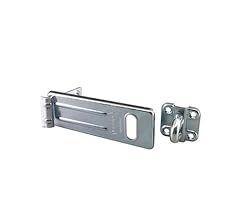
Master Lock 706D Heavy-Duty Security Hasp
Heavy-duty zinc steel hasp with tamperproof hinge to resist prying attacks.
- Weight 1 oz
- Size Pack of 1
- Height 1.6 inches
How to choose the right predator proof chicken coop lock
Check manufacturer specs for material type and mounting recommendations. If the manufacturer gives pull-force data, verify it with an independent test using a spring scale.
Confirm the latch has a cover plate or recessed housing that blocks direct paw or snout access.
Pick stainless or plated steel components and avoid plastic as a primary load-bearing part.
If you need daily convenience, choose a latch that opens with one hand but still resists manipulation.
Measure your door and frame thickness to ensure the hasp, staple, and latch fit snugly and are supported by solid wood or metal framing.
- Verify pull and twist resistance with a spring scale
- Shielded design to stop paw/snout access
- Thick, rust-resistant metal construction
- Reinforced mounting points
- One-handed operation for daily use
| Criteria | Why it matters | How to verify |
|---|---|---|
| Pull and twist resistance | Blocks predator force and manipulation | Measure with spring scale and repeated tests |
| Shielding | Stops paw/snout manipulation | Visual check for cover plate and gap size |
| Material | Resists biting and rust | Confirm metal type and gauge |
| Mounting strength | Prevents prying off the assembly | Inspect fasteners, backplate, and frame support |
| Ease of use | Daily access speed | Test opening with one hand |

10 PCS Padlock Hasp Latch
Stainless steel padlock hasp latch with thickened material and mounting screws to reinforce door security.
Shielded spring-loaded metal latches paired with reinforced mounting points provide the best balance of predator resistance and daily convenience.
Questions people still ask
Can raccoons open any lock with their paws?
Raccoons can work simple, exposed latches and slide bolts using their dexterous paws. A shielded spring-loaded latch or a recessed slide bolt greatly reduces the chance a raccoon can reach and manipulate the mechanism. See wildlife extension resources for examples of raccoon behavior.
Are electronic locks reliable for chicken coops?
Electronic locks can be reliable when their housings and battery compartments are protected. Always include a manual backup and inspect electronics regularly; power loss or moisture can disable them.
How often should I inspect my coop lock?
Inspect locks monthly for wear, rust, or damage. Perform a pull-and-twist test with a spring scale every few months or after any sign of attempted entry.
Can I use a padlock on my coop?
Yes. A hardened-steel padlock on a welded hasp and staple offers high security. Confirm the hasp and mounting are as strong as the lock itself; predators will target the weakest point.
What materials resist predator bites best?
Thick, rust-resistant metals such as stainless steel or heavy plated steel resist chewing or bending far better than plastic or thin metals.