Folded Bird Cages: Space-Saving Homes for Your Feathered Friends
Contents
You love your bird, but your apartment doesn’t love a big, permanent wire tower in the corner. Maybe you travel with your cockatiel on weekends. Or perhaps you need a second cage for vet visits and cleaning days. Whatever your situation, a cage that folds flat when empty solves a real problem. It tucks into a closet, slides under a bed, or rides along in the car without taking over your life.
This guide walks you through what actually matters when picking a folded bird cage. We will look at size limits, material quality, cleaning access, and how folding mechanisms hold up over time. You will leave knowing exactly which questions to ask before you buy, and which cage styles suit which birds.
Misyue
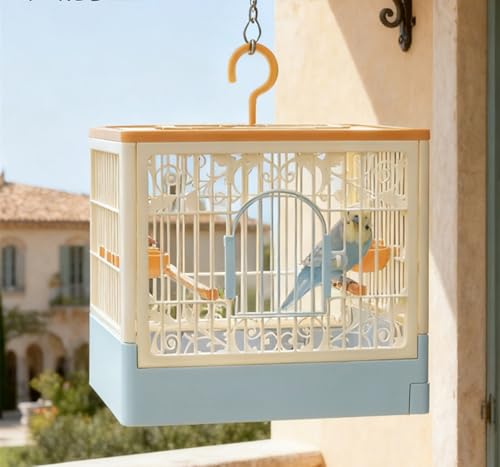
Portable Foldable Bird Cage - 360° Full…
- Please note: The size of this cage is 9.7" x 9.7" x 10.9". Please check the dimensions carefully before purchasing.
- Complete Configuration, Meets All Needs:Includes a dedicated small food bowl for both eating and drinking, along with a comfortabl…
- Easy Cleaning, Ensures Hygiene:Features a slide-out bottom tray for effortless removal of waste and debris, helping to maintain ca…
A good example of a compact option is the Misyue Portable Foldable Bird Cage. It folds down for storage and gives a 360-degree view, which makes it handy for travel or as a temporary holding space.

What Counts as a Folded Bird Cage?
A folded bird cage is any cage designed to collapse into a smaller shape when not in use. The folding mechanism varies. Some cages have hinges on the walls, some have a top that presses down, and others come apart into flat panels that snap together. The common thread is storage convenience.
Before you get excited about the space savings, look at the unfolded dimensions. A cage that folds to the size of a laptop might only offer a 10-inch cube when assembled. That is fine for a finch or a parrotlet for short periods. It is not a home for a conure or a cockatiel. Check the numbers first, not the folding trick.
Think of it like a camping tent. A tent packs small, but you would not live in it. Folded bird cages work the same way. They are excellent for travel, quarantine, or as a spare cage. For a bird’s permanent residence, you need a larger, stationary setup. If you are working with a tight permanent space, look at space-saving bird cages that do not fold but use vertical height instead.
Three Things to Inspect Before Buying
1. Bar Spacing and Material
Bar spacing is the most common mistake new owners make. If the bars are too far apart, a small bird can squeeze through or get its head stuck. If they are too close, a larger bird might break them. For finches and canaries, look for spacing of 1/4 to 1/2 inch. For budgies and parrotlets, 1/2 inch is safe. For cockatiels, you need at least 5/8 inch, but not more than 3/4 inch.
Material matters just as much. Thin, soft wire bends under pressure from a determined parrot. Look for powder-coated steel or stainless steel. Avoid cages made of cheap plastic frames that snap at the joints when you fold and unfold them repeatedly. The folding mechanism itself is a wear point. Test the hinges by folding the cage a few times in the store or immediately upon delivery. If it feels stiff or grinds, it will break in a month.
2. Cleaning Access
Folding cages often sacrifice cleaning convenience for portability. A one-piece welded cage lets you open the door and reach every corner. A folding cage has seams and crevices where droppings and seed husks collect. Look for a slide-out bottom tray. That single feature saves you twenty minutes of scrubbing every week.
Check if the tray is removable while the cage is fully assembled. Some trays only slide out when the cage is partially folded, which is annoying. You want to pull the tray, dump it, wipe it, and slide it back without breaking down the whole structure.
3. Perch and Bowl Placement
Small cages often come with a single perch and one tiny bowl. That is fine for a travel setup, but it limits how long a bird can comfortably stay inside. Look for a cage that lets you attach perches at different heights. A cage with only one perch forces the bird to sit in its food or water.
Also check the bowl attachment. Some bowls clip to the bars, which is secure. Others sit on the bottom tray, which means the bird walks through its own mess. The Misyue foldable travel cage includes a dedicated food bowl and a perch, so it works out of the box for short trips. Just remember the 9.7 x 9.7 x 10.9-inch size is for small birds only.
Comparing Cage Types for Small Spaces
Not all compact cages fold. Here is how the main styles stack up against each other.
| Cage Type | Best For | Storage Shape | Durability | Cleaning Effort |
|---|---|---|---|---|
| Folding (hinged panels) | Travel, temporary housing | Flat, thin | Medium – hinges wear out | Moderate – seams collect debris |
| Collapsible (accordion style) | Very small birds, short trips | Short stack | Low – fabric or thin plastic parts | Low – often disposable |
| Stackable (fixed, vertical) | Multiple birds, permanent homes | Tall, narrow footprint | High – welded or bolted | Easy – slide-out trays |
| Standard (fixed, wide) | Larger birds, permanent homes | Bulky, no storage benefit | High – solid frame | Easy – open access |
Folding cages win on storage. Stackable cages win on permanent living. If you keep multiple birds in one room, a stackable bird cage setup gives you more usable volume without taking up extra floor space.
When a Folded Cage Makes Sense (and When It Does Not)
Use a folded cage for these situations:
- Traveling to the vet or a bird-sitter
- Quarantining a new bird away from your flock
- Moving between rooms during cleaning day
- Outdoor time on a porch, under supervision
- Emergency evacuation kits
Do not use a small folded cage as a permanent home for a bird that needs flight space. A budgie needs a cage at least 18 inches wide to stretch its wings. A cockatiel needs 24 inches or more. The 10-inch cube travel cage is a holding cell, not a habitat.
One honest caveat about folding mechanisms: they get loose. After six months of weekly folding, the hinges on a budget cage will wobble. The cage will still stand, but it might rattle. Check the screws and tighten them with a small screwdriver. If a hinge breaks completely, the cage is usually not worth repairing.
Real Questions People Ask About Folded Bird Cages
Are folded bird cages safe for daily use?
Safe does not mean suitable. A well-built folding cage is structurally safe for a small bird to live in. The risk is boredom and lack of exercise. A bird that cannot fly horizontally for a few feet will develop muscle weakness and behavioral issues. Use a folding cage for daily use only if it is large enough for the bird to spread its wings fully and hop between two or three perches. Otherwise, treat it as a temporary space.
How do I clean a cage that folds?
Start by removing the bird. Take out the tray and wash it with hot soapy water. Wipe down the bars with a bird-safe disinfectant, paying extra attention to the hinge joints where droppings get stuck. Let everything dry completely before folding. Folding a damp cage can cause rust or mildew in the crevices.
Can I put a large parrot in a folding cage?
No. Large parrots like African greys and macaws have strong beaks that can bend thin wire and break plastic hinges. They also need substantial bar spacing and gauge thickness that folding cages rarely provide. Stick to stainless steel fixed cages for large birds. A folding cage is only suitable for birds under 100 grams, like budgies, finches, canaries, or parrotlets.
What is the best way to transport a bird in a folding cage?
Secure the cage so it does not slide around in the car. Put a towel over three sides to reduce visual stress. Never leave the bird in a hot car, even for five minutes. Use the cage’s carrying handle if it has one, or hold the base with both hands. The folding latches should be double-checked before you lift the cage. A loose latch can cause the cage to collapse mid-carry.
How long can a bird stay in a travel folding cage?
For a short trip to the vet, a few hours is fine. For a long car journey, plan a break every two hours to offer water. For overnight stays, the cage is too small. You need a larger temporary setup at your destination. Think of the small folding cage as a car seat, not a hotel room.
Practical Takeaways for Your Next Purchase
- Measure the unfolded cage before you buy. The folded size is marketing; the unfolded size is reality.
- Match bar spacing to your bird species. Too wide is dangerous, too close wastes space.
- Demand a slide-out tray. It is the single most useful cleaning feature on any small cage.
- Test the folding mechanism several times. If it feels flimsy on day one, it will break by day thirty.
- Use a folding cage for travel, quarantine, and temporary housing. Buy a fixed or stackable cage for the permanent home.
- Check the hinges and screws every few months. A loose joint is a safety hazard.
- For very small birds, a 10-inch cube works for short trips. For anything larger, look for a folding cage with at least 18 inches in one dimension.