
When will my chicken eggs hatch if incubation started on a given day?
By Erick Updated 7 min read
As an Amazon Associate I earn from qualifying purchases. That costs you nothing and does not decide what gets recommended. We also earn a commission from some links to partner brands (POPOSOAP, Kiwibit Inc.).
On this page (8 sections)
- The short version
- How many days chicken eggs take to hatch
- How to calculate hatch date from incubation start
- Typical hatch time range for chicken eggs
- Using a hatch date calculator for accuracy
- Common mistakes when calculating chicken egg hatch dates
- How to choose and use a reliable hatch date calculator for chicken eggs
- Questions people still ask
In short: Chicken eggs hatch 19-21 days after incubation starts. Calculate your hatch date by adding 19-21 days to your incubation start day. This range accounts for breed and temperature variations.
Part of our guide on best heated chicken waterer
Calculate your chicken eggs' exact hatch date using your incubation start day with a clear 3-day window method.

16 Duck Eggs Incubator with Phone App
This incubator has app control but does not publish incubation duration or start date for hatch calculation.
Check the specs on Amazon
Cheeglu 48 Incubators for Hatching Eggs
This incubator includes a hatch countdown timer but does not publish incubation duration or start date for
Check the specs on Amazon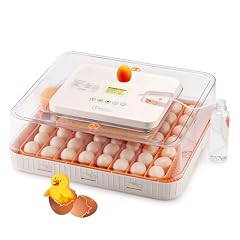
iPettie Nestasy ProHatch56 Egg Incubator with Automatic Egg
This incubator offers temperature and humidity control but does not publish incubation duration or start date
Check the specs on Amazon| Product | incubation duration in days | Verdict | |
|---|---|---|---|
| 16 Duck Eggs Incubator with Phone App Generic | No incubation duration or start date published | Not published | View on Amazon |
| Cheeglu 48 Incubators for Hatching Eggs Cheeglu | No incubation duration or start date published | Not published | View on Amazon |
| iPettie Nestasy ProHatch56 Egg Incubator with Automatic Egg Turning iPettie | No incubation duration or start date published | Not published | View on Amazon |
| Hatching Time Pro24 Automatic Egg Incubator for Hatching Eggs Hatching Time | No incubation duration or start date published | Not published | View on Amazon |
| 12 Egg Incubator for Hatching Eggs with Automatic Turning Xalintz | Custom incubation days setting mentioned but no fixed duration published | Not published | View on Amazon |
| Typical hatch time | 19-21 days |
|---|---|
| Incubation start | Day 0 |
| Hatch window length | 3 days |
| Incubation temp | 99.5°F typical |
| Calculator input | Start date only |
The short version
- Chicken eggs generally hatch 19-21 days after incubation start.
- Adding 19-21 days to your incubation start date gives your hatch window.
- Use a hatch date calculator to improve prediction accuracy.
- Incubation temperature and egg handling affect hatch timing.
- Plan for the full 3-day window to avoid surprise early or late hatches.
How many days chicken eggs take to hatch
Chicken eggs usually hatch between 19 and 21 days after incubation starts. This range depends on the breed and incubation conditions. Temperature is key; maintaining around 99.5°F gives the best results.
Slight temperature changes can speed up or slow down embryo development. Cooler temps push hatch to day 21 or later, while warmer temps may cause earlier hatches but risk weak chicks.
Humidity also affects hatch timing but less than temperature. Aim for 40-50% humidity during incubation, raising it to 65-70% during hatching to ease shell breaking.
How to calculate hatch date from incubation start
To find the hatch date, add 19 days to your incubation start day for the earliest expected hatch. Add 21 days for the latest. This gives you a 3-day window when hatching usually occurs. We cover managing egg counts efficiently in its own article.
Incubation start means the day you set the eggs in the incubator at proper temperature and humidity. Mark this day as Day 0.
For example, if you start incubation on March 1, expect hatching to begin between March 20 and March 22.
- Note the incubation start date (Day 0).
- Add 19 days to that date for the earliest hatch day.
- Add 21 days to that date for the latest hatch day.
- Prepare for chicks to appear anytime during that window.
16 Duck Eggs Incubator with Phone App
This incubator has app control but does not publish incubation duration or start date for hatch calculation.
- Size Small
- Height 7.68 inches
- Weight 2.93 pounds
Typical hatch time range for chicken eggs
The 3-day hatch window from Day 19 to Day 21 covers biological variability. Some eggs develop faster; others slower due to genetics or conditions. For the detail, see our notes on chicken incubation schedule day by day.
Hatching before 19 days is rare and often indicates unhealthy embryos. Hatches after 21 days may mean temperature was too low or eggs were turned improperly.
Expecting hatching over these few days prevents rushing preparations or missing early chicks.
| Incubation Day | Hatch Status | Temperature Condition |
|---|---|---|
| Day 18 or less | Very unlikely to hatch | Too early, embryo immature |
| Day 19-21 | Most hatches occur | Ideal 99.5°F incubation |
| After Day 21 | Late hatch possible | Incubator temperature lower than ideal |
Cheeglu 48 Incubators for Hatching Eggs
This incubator includes a hatch countdown timer but does not publish incubation duration or start date for hatch calculation.
- Size 48 egg
- Length 7.1 inches
- Height 17.5 inches
Using a hatch date calculator for accuracy
A hatch date calculator lets you enter your incubation start date and get an exact hatch window. It removes guesswork and helps schedule care. It helps to understand recording chicken-related expenses before going further.
These calculators rely on the 19-21 day incubation range and can include adjustments for known temperature variations you enter.
Using one avoids missed hatch days and helps prepare for feeding, brooding, and cleaning needs ahead of time.
- Enter the exact incubation start date.
- Receive specific earliest and latest hatch dates.
- Adjust for temperature if your incubator varies.
- Get reminders or alerts for key incubation milestones.
Common mistakes when calculating chicken egg hatch dates
Mistaking candle date for incubation start causes errors. Only count days from when eggs reach consistent 99.5°F, not when candled. If that sounds like your situation, read up on chick weak and not moving next.
Ignoring the full 3-day hatch window leads to impatience or missed chicks. Eggs rarely hatch exactly on Day 20 every time.
Assuming all breeds hatch exactly in 21 days is wrong. Some breeds may hatch closer to 19 days, some near 21.
- Error: Counting incubation from egg laying date instead of start day.
- Error: Expecting all eggs to hatch on the same day.
- Error: Not allowing for temperature fluctuations affecting hatch timing.
How to choose and use a reliable hatch date calculator for chicken eggs
Pick calculators that only require the incubation start date and factor in your regional temperature if possible. They give cleaner results than those needing guesswork about egg age.
Mobile apps designed for backyard chicken keepers often combine hatch date calculation with flock management, health logging, and reminders.
Check if the calculator provides a clear 3-day window and lets you customize incubation length based on your breed or incubator specs.
- Choose calculators designed for chicken eggs, not generic bird eggs.
- Use apps that store data locally for privacy and offline use.
- Select those allowing manual adjustment for incubation time variation.
- Precise hatch window
- Customizable settings
- Integrated flock management
- May require manual input
- Some apps need smartphone
- Limited breed-specific options
Use a simple hatch date calculator based on incubation start and 19-21 day range for best hatch timing predictions.
Questions people still ask
How do I know exactly when my eggs will hatch?
You can't know exactly, but hatch usually happens within a 3-day window after 19 days of incubation. Use a hatch date calculator starting from incubation day 0 for better accuracy.
Can I speed up incubation to hatch eggs earlier?
Raising temperature above 99.5°F may speed development but risks weak or deformed chicks. Maintain stable temperature and wait for natural hatch timing.
Does hatch timing differ by chicken breed?
Yes, some breeds hatch closer to 19 days while others near 21. Always count incubation from start day, and consider breed when planning.
What if my eggs don't hatch by day 21?
Late hatching can result from lower temperature or turning errors. Keep incubator conditions steady and be patient up to day 22 or 23 before concluding.
Do I need to candle eggs to use a hatch date calculator?
No. Candling helps check embryo development but the hatch date calculator only needs your incubation start date to predict hatch timing.
Is humidity important for calculating hatch date?
Humidity influences hatching success but not the days count. Maintain recommended levels for best hatch results, but rely on temperature and start date for hatch day prediction.