
How Many Eggs Do Chickens Lay? The Complete Guide
Chickens typically lay about 5 to 7 eggs per week, depending on the breed, age, and health of the hen.
Chickens typically lay 250-300 eggs per year during peak production. However, egg output varies by breed, age, diet, and environmental factors. This guide explores everything that affects a hen’s laying capacity.
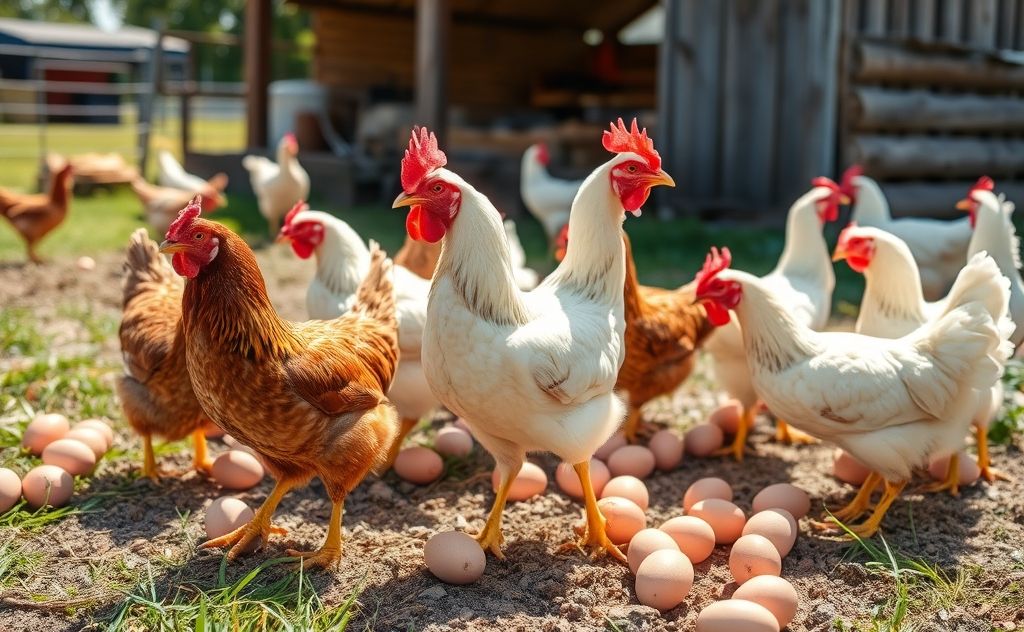
Average Egg Production by Chicken Breed
Not all chickens lay the same number of eggs. Some breeds are prolific layers while others focus on meat production.
Top Egg-Laying Breeds
| Breed | Eggs/Year | Egg Color |
|---|---|---|
| White Leghorn | 280-320 | White |
| Rhode Island Red | 250-300 | Brown |
| Plymouth Rock | 200-280 | Brown |
| Easter Egger | 200-280 | Blue/Green |
For more on colored eggs, see our guide on blue egg-laying breeds.

Egg Production Over a Chicken’s Lifetime
A hen’s laying capacity changes significantly as she ages:
First Year
Peak production occurs around 30 weeks old. Healthy hens lay nearly daily (5-6 eggs/week).
Second Year
Production drops to about 80% of first-year output.
Third Year
Egg counts fall to 70% of peak production.
Retirement
Most hens stop laying around 6-7 years old but can live several more years. The oldest recorded chicken lived to 16 years.
Factors Affecting Egg Production
1. Daylight Hours
Chickens need 14-16 hours of light daily for optimal laying. Production often drops in winter without supplemental lighting.
2. Nutrition
A balanced layer feed with 16-18% protein is essential. According to Purina Mills, hens eat about 1/4 pound of feed daily.
3. Stress Factors
- Predator threats
- Extreme temperatures
- Overcrowding
- Parasites
Learn how to reduce pecking stress in your flock.
Seasonal Laying Patterns
Most hens naturally reduce laying during:
- Winter (shorter days)
- Molting season
- Extreme heat waves
Egg Size and Quality Changes
Young hens lay smaller eggs that increase in size over time. Egg quality can decline in older hens, sometimes resulting in watery eggs.
Maximizing Your Flock’s Egg Production
- Choose high-production breeds
- Provide quality layer feed (90% of diet)
- Ensure 16 hours of daily light
- Maintain clean nesting boxes
- Keep fresh water available
- Manage stress factors
When to Expect First Eggs
Most hens begin laying at 18-22 weeks old. Some larger breeds may start later. Our guide on Rhode Island Red laying age has breed-specific details.
Signs Your Hen is Ready to Lay
- Reddening of comb and wattles
- Increased vocalization
- Squatting behavior
- Exploring nesting areas
Unusual Egg Laying Behaviors
Some hens develop odd habits like digging holes to lay eggs or hiding their eggs. These behaviors often indicate stress or inadequate nesting boxes.
Record-Breaking Layers
The most productive chicken on record laid 371 eggs in 364 days. However, such extreme production isn’t sustainable long-term and can shorten a hen’s lifespan.