
Parrots are more than just colorful mimics. Their vibrant feathers and chatty personalities are just the surface. The real story lies in their incredible evolutionary toolkit. These birds have developed a suite of specialized characteristics for survival across diverse ecosystems. From dense rainforests to arid savannas, their adaptations are a masterclass in avian engineering.
Think about it. A parrot’s ability to crack a Brazil nut or navigate a dense forest canopy isn’t accidental. It’s the result of millions of years of fine-tuning. These parrot survival features are what make them such resilient and fascinating creatures. For parrot enthusiasts looking to support their pet’s natural behaviors, providing appropriate enrichment is key. Many owners find that sturdy, well-designed cages from brands like Prevue Pet Products offer a safe space for these adaptations to be expressed, even in a home environment.
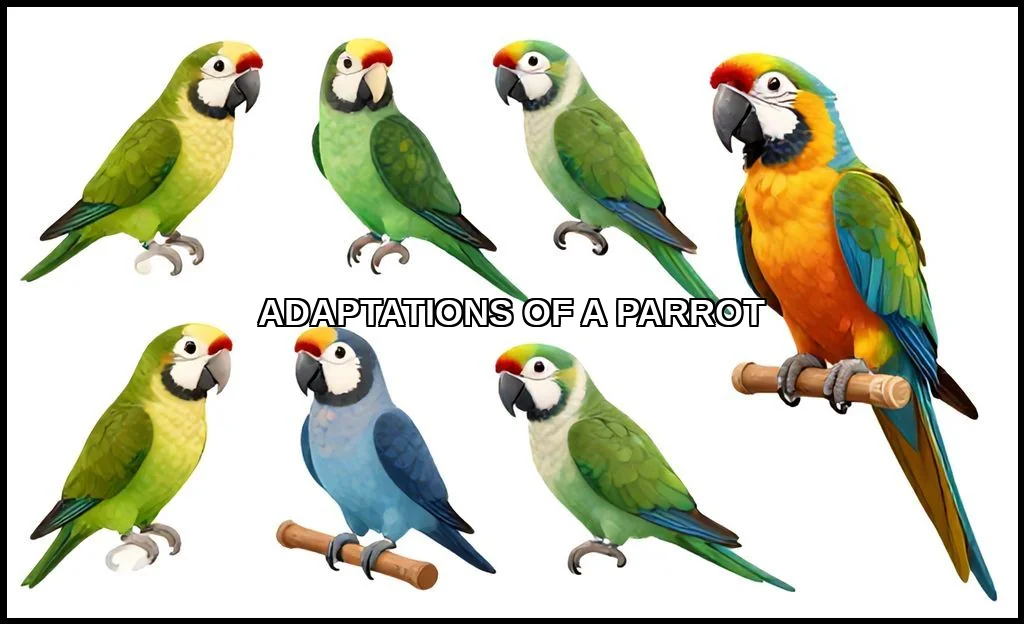
Physical and Anatomical Adaptations: Built for the Job
Every part of a parrot’s body tells a story of adaptation. Their form is perfectly matched to their function, a direct result of evolutionary pressures. These physical traits are the foundation for everything they do.
The Power of the Beak and Feet
Let’s start with the most obvious tools. A parrot’s strong curved beak is a multi-purpose marvel. It’s not just for cracking seeds. This structure is used for climbing, preening, manipulating objects, and even as a “third foot” for stability. The specific curvature and strength vary by species, directly linked to their primary food source. Why do parrots have curved beaks? For leverage. That hook allows them to apply immense force, whether prying bark for insects or opening the toughest nuts.
Equally important are their zygodactyl feet. This means two toes point forward and two point backward. It’s a design for superior grip and dexterity. Parrots use their feet like hands to hold food, climb branches, and explore their world. This foot structure is a core part of their parrot adaptations for flight and arboreal life, allowing for stable landings and agile movement through trees.
Feathers and Flight: More Than Color
Parrot feather adaptations serve multiple critical roles. Their bright colors aren’t just for show; they play a part in mating and camouflage within colorful rainforest flora. The structure of their flight feathers provides the lift and maneuverability needed for agile flight through cluttered environments. Their downy under-feathers provide essential insulation, a key trait for species living in variable climates.
| Adaptation | Primary Function | Example in Action |
|---|---|---|
| Strong Curved Beak | Foraging, climbing, manipulation | Cracking hard-shelled nuts like macadamias |
| Zygodactyl Feet | Gripping, climbing, handling food | Holding a piece of fruit while eating |
| Contour & Flight Feathers | Flight, display, waterproofing | Precise aerial navigation in a rainforest canopy |
Behavioral and Social Adaptations: The Smart Survivalists
Beyond physical traits, parrots exhibit complex behaviors that are just as vital for survival. Their intelligence and social nature are evolutionary assets, not just charming quirks.
Flocking and Communication
Flocking behavior is a cornerstone of parrot life. There’s safety in numbers. A flock has more eyes to spot predators, can defend resources collectively, and provides social learning opportunities. This behavior is deeply ingrained and explains why solitary confinement is so stressful for these highly social birds. Within the flock, communication is paramount. This is where their famous vocal parrot mimicry adaptation finds its roots. In the wild, mimicry helps in social bonding and learning local flock “dialects.” The capacity to mimic human speech, as explored by this authority guide, is an extension of this innate skill for vocal learning.
So, what are the behavioral adaptations of a parrot? They include complex problem-solving, tool use in some species, and elaborate social rituals. Play is a serious business for cognitive development. Their curiosity and ability to learn are behavioral traits that help them adapt to new food sources and environments.
Cognitive Flexibility
Parrots don’t just rely on instinct. They observe, learn, and remember. A young parrot learns what’s edible by watching the flock. They remember locations of reliable food and water sources. This cognitive flexibility is a powerful survival tool in changing environments. It’s also what makes them such engaging companions, as owners exploring which parrots talk can attesttheir vocal talent is linked to this advanced social learning.
Dietary and Foraging Adaptations: Specialized Eaters
Parrots are primarily granivores and frugivores, but their diets can be surprisingly diverse. Their bodies are fine-tuned to extract maximum nutrition from often tough, seasonal food sources.
Parrot diet adaptations begin with that powerful beak. But it continues with a specialized digestive system. Many parrot species have a muscular crop for storing food and a gizzard that helps grind down hard materials. Some species even consume clay from riverbanks (a behavior called geophagy) to neutralize toxins found in certain unripe seeds and fruits.
- Nut-Cracking Specialists: Large macaws have beaks capable of generating enough pressure to crack a coconut. How are parrots adapted to eat nuts? With a combination of beak strength, tongue dexterity to position the nut, and a digestive tract that can process high-fat content.
- Nectar Feeders: Lorikeets have brush-tipped tongues to sip nectar and pollen from flowers.
- Seed Specialists: Many smaller parrots, like budgies, efficiently de-husk tiny seeds with precision.
This dietary specialization is why nutrition is so critical for pet parrots. Mimicking the variety and challenge of wild foraging is essential for their physical and mental health. Providing a secure travel space, like the best travel carrier for vet visits, is part of supporting their overall well-being, which starts with proper diet.
Habitat-Specific Adaptations and Conservation
Parrots aren’t a one-size-fits-all group. Different species have honed their traits for specific environments. These parrot species adaptations showcase the versatility of the parrot blueprint.
Rainforest Dwellers
How have parrots adapted to the rainforest? In numerous, brilliant ways. Their bright green plumage offers camouflage in the sun-dappled canopy. Strong, agile flight allows them to navigate through dense foliage. Their loud, raucous calls carry over long distances through thick vegetation. Dietary flexibility lets them capitalize on various fruits, nuts, and flowers that ripen at different times.
Adapting to Arid and Other Environments
Not all parrots live in jungles. Species like the Australian Budgerigar thrive in arid grasslands. Their adaptations include:
- Nomadic behavior to follow sporadic rainfall and seeding grasses.
- The ability to survive on minimal free water, extracting moisture from food.
- Faster breeding cycles to capitalize on brief periods of abundance.
The Conservation Imperative
Understanding these evolutionary traits of parrots makes their conservation urgent. Habitat loss directly threatens the specialized niches they fill. The pet trade often targets the most colorful and unique species, disrupting complex social flocks. Protecting parrots means protecting the intricate ecosystems their adaptations are built for. It’s about preserving a lineage of incredible avian adaptations.
From their zygodactyl feet gripping a branch to their complex social calls echoing through a forest, every parrot characteristic is a solved problem. Their strong curved beak is a tool, their flocking behavior a strategy, and their intelligence a buffer against change. When you look at a parrot, you’re seeing millions of years of evolutionary refinement. Whether in the wild or in a caring home supported by thoughtful products, these adaptations continue to define their remarkable existence. Their survival now depends on our understanding and respect for these very specializations.
