
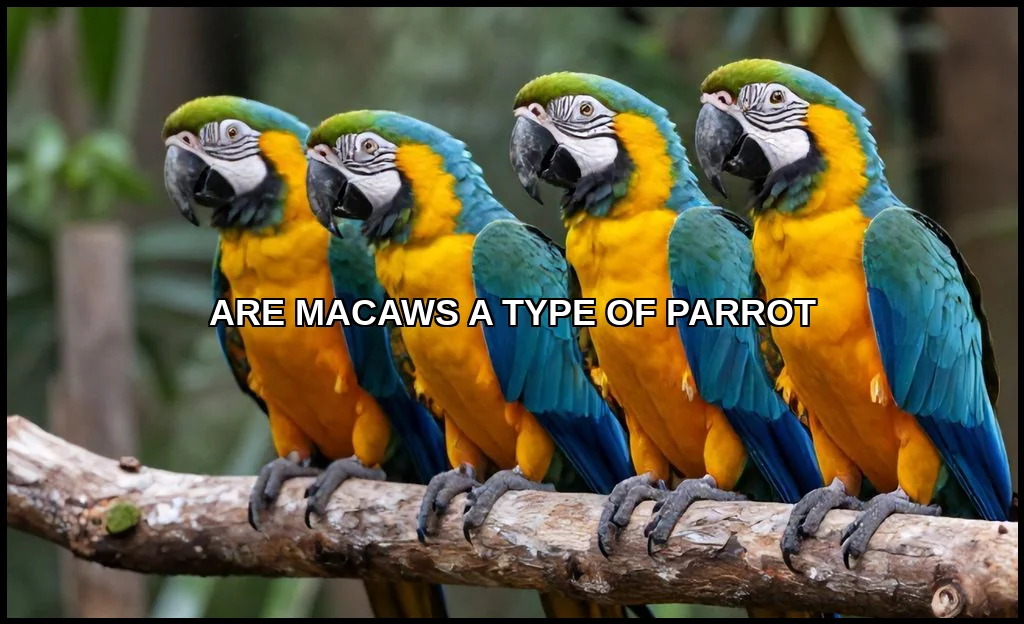
You’re looking at a stunning blue-and-gold macaw and a question pops into your head: are macaws a type of parrot? It’s a common point of confusion. The short answer is a definitive yes, but the full story is a fascinating dive into avian taxonomy and biology.
Think of it like asking if a German Shepherd is a type of dog. Macaws are a spectacular subgroup within the much larger, incredibly diverse parrot family. Their vibrant feathers and impressive size make them iconic, but they share core anatomical and behavioral traits with every other parrot, from a tiny budgie to a majestic cockatoo. For owners of these large parrots, providing adequate space is non-negotiable. That’s why many aviculturists recommend an Extra Large Elegant cage to ensure their intelligent, active companions have room to thrive.
The Parrot Family Tree: Where Everyone Fits
All parrots belong to the scientific order Psittaciformes. This is the big umbrella. Under this order, you find the family Psittacidae, often called the “true parrots.” This is the core group most people imagine. It’s a massive family with over 350 species, including macaws, Amazon parrots, African greys, and conures.
There’s another major branch: the cockatoo family (Cacatuidae). They split off from the true parrots millions of years ago. So, while all cockatoos are parrots (order Psittaciformes), they are not part of the Psittacidae family. Macaws, however, are firmly nestled within Psittacidae. They are specifically classified as New World parrots, meaning their natural habitat is the Americas.
Scientific Classification: The Macaw’s Official Place
Let’s get technical for a moment. This is where the question “are macaws considered true parrots” gets its clear answer. Heres the hierarchical breakdown:
- Order: Psittaciformes (All parrots)
- Family: Psittacidae (True parrots)
- Subfamily: Arinae (Neotropical parrots)
- Tribe: Arini (Macaws and conures)
- Genus: Ara, Anodorhynchus, Cyanopsitta, etc. (Different macaw genera)
This taxonomy confirms macaws are not just casually related to parrots; they are a defined subgroup within the primary parrot family. Every macaw species, from the massive Hyacinth to the smaller Hahn’s, shares this lineage.
Defining Characteristics of Macaws
So, what makes a macaw a macaw within the parrot family? They possess all the standard parrot featuresa strong, curved beak, zygodactyl feet (two toes forward, two back), and high intelligencebut with some dramatic flair.
Physical and Behavioral Traits
Their most obvious trait is size. Macaws are the giants of the Psittacidae family. The Hyacinth macaw is the longest parrot in the world. They also sport that iconic long, tapered tail and bare facial patches of skin, which can blush when they’re excited.
Their social structure is complex. They form strong, often lifelong pair bonds and are incredibly vocal, using loud calls to communicate across vast forest canopies. This intelligence means they require immense mental stimulation, a trait they share with other clever parrots like African Greys, which are famous for their talking ability. If you’re curious about which parrots talk best, macaws are capable, but other species often excel.
Macaw Habitat, Diet, and Lifespan
Understanding a macaw’s natural history cements their identity as parrots adapted to a specific niche.
- Macaw Habitat: Primarily the rainforests of Central and South America. They are canopy dwellers, reliant on large, old-growth trees for nesting and food.
- Macaw Diet: They are primarily granivores and frugivores. Their incredibly powerful beaks are perfectly evolved to crack open hard nuts and seeds that other animals can’t access.
- Macaw Lifespan: This is a key point. Their longevity is legendary, often reaching 50 to 60 years in captivity, with some individuals living beyond 80. This lifelong commitment is a major consideration for any potential owner.
How Macaws Compare to Other Parrots
This is the heart of the query “difference between macaw and parrot.” You’re really asking how macaws differ from other parrots. Let’s break it down.
Macaw vs. African Grey: The Thinkers
Both are true parrots within Psittacidae. The African Grey is often considered the intellectual champion, with an unparalleled knack for mimicry and cognitive tasks. Macaws are brilliant too, but their intelligence often manifests more in problem-solving for food and complex social interaction. The Grey is a subtle, feathered professor; the macaw is a boisterous, charismatic performer.
Macaw vs. Cockatoo: The Emotional Giants
Here’s where family lines matter. Cockatoos are parrots (order Psittaciformes) but from a different family. They lack the vibrant blue and green pigments of many Psittacidae members. Behaviorally, cockatoos are often described as more emotionally needy and prone to dust from their powder down. Macaws, while equally demanding, tend to be slightly more independent and are famously messy in a different waythink large seed hulls and destroyed toys.
Macaw vs. Amazon Parrot: The New World Cousins
These two share the closest direct comparison as New World parrots in the same family. Amazons are generally stockier with shorter, square tails. They are phenomenal talkers and singers. Macaws are larger, longer, and often louder with their contact calls. Choosing between them? It often comes down to space and noise tolerance. For a smaller New World species like a Meyers parrot, finding the best travel carrier is a key part of responsible ownership.
| Trait | Macaw (within Psittacidae) | Typical “Parrot” (e.g., Conure, Amazon) |
|---|---|---|
| Size | Very Large to Giant | Small to Medium-Large |
| Tail Shape | Long, Tapered | Short/Square to Medium |
| Facial Features | Prominent Bare Cheek Patches | Fully Feathered Face |
| Beak Strength | Extremely Powerful | Strong, but Proportionally Smaller |
| Vocal Volume | Extremely Loud, Far-Carrying | Moderate to Very Loud |
Macaws: A Parrot Subgroup, Not a Separate Bird
So, is a macaw a parrot or a separate bird? The science leaves no room for doubt. Macaws are a specialized, awe-inspiring branch on the parrot family tree. They exemplify parrot traits turned up to eleven: bigger beaks, longer tails, louder voices, and often, more vivid colors.
Their conservation status also tells a poignant story. Many macaw species are endangered, victims of habitat loss and the pet trade. Protecting them means protecting the complex rainforest ecosystems they call home. For the most accurate data on wild populations and sightings, conservationists rely on resources like the Cornell Lab of Ornithology’s authority guide on eBird.
If you’re considering a macaw, you’re committing to a decades-long relationship with a creature of profound intelligence and specific needs. They are not “just” parrots; they are parrots in their most magnificent, demanding, and rewarding form. Understanding their place in the Psittacidae family is the first step in truly appreciating them.
