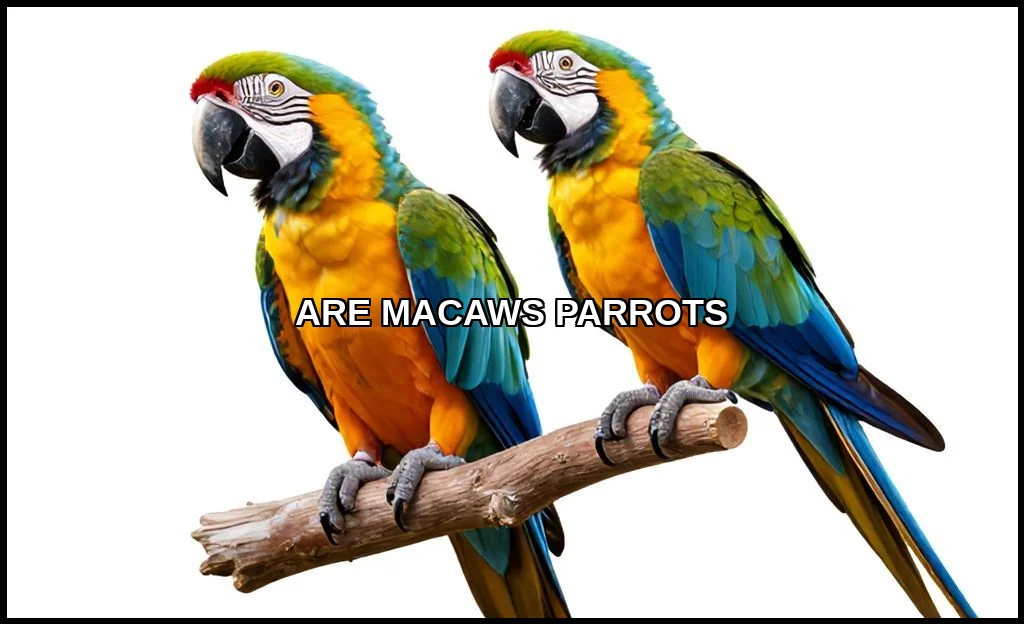
You’re admiring a stunning blue and gold macaw at an aviary. Its vibrant colors and impressive size are captivating. A question pops into your head: “Are macaws parrots?” It seems like a simple yes or no, but the answer reveals the fascinating hierarchy of the avian world.
Yes, absolutely. Every single macaw is a parrot. Think of it like squares and rectangles. All squares are rectangles, but not all rectangles are squares. In the same way, all macaws are parrots, but not all parrots are macaws. They are a spectacular subgroup within the much larger parrot family, bringing their own unique flair to the party.
For those caring for these magnificent birds, maintaining their vibrant plumage is part of the joy. A quality supplement like the 2 Color Extra can support feather health, helping your bird look as brilliant as its wild cousins. It’s a small step in responsible macaw care.
Defining the Parrot Family: Welcome to Psittacidae
To understand macaws, you need to know their family. All parrots belong to the order Psittaciformes. Within that, the vast majority, including macaws, cockatoos, and budgies, are classified in the family Psittacidae. These are often called the true parrots.
What traits define this family? It’s a specific set of biological hardware:
- A strong, curved beak perfect for cracking nuts and climbing.
- Zygodactyl feet: two toes forward, two toes back. This gives them incredible dexterity for handling food and climbing.
- High intelligence and complex social behaviors.
- The renowned ability to mimic sounds, though the talent varies widely by species (some are incredible, others less so).
Macaws check every single one of these boxes. Their powerful beaks can crack a Brazil nut with ease. Their feet are masterful tools. Their intelligence is well-documented. So, when we ask “are all macaws considered parrots?”, the biological answer is a definitive yes.
Where Macaws Fit: New World Parrots
Within Psittacidae, macaws are further categorized as New World parrots. This means their natural habitat is the Americas, from Mexico through Central and South America. This distinguishes them from Old World parrots like African Greys and Asian parakeets.
The genus for most macaws is Ara (hence the term Ara macaw), though a few species fall into other genera like Anodorhynchus (the Hyacinth macaw) and Primolius (the smaller mini-macaws). There are about 19 living species of these large parrots, answering the query “how many species of macaw parrots are there?” with a number that, sadly, conservationists are fighting to keep stable.
Macaw Characteristics: The Parrot Blueprint, Amplified
Macaws embody classic parrot traits, but they often take them to the extreme. This is where the “wow” factor comes in.
Size and Presence
When people think of large parrots, macaws are the first image. The Hyacinth macaw is the longest parrot in the world, reaching up to 40 inches from head to tail. Their wingspan is equally impressive. Even the smallest “mini-macaws” are substantial birds compared to a budgie or lovebird.
Lifespan: A Long-Term Commitment
Macaw lifespan is a critical consideration. These are not short-term pets. With proper care, many macaw species live 50 to 60 years, and some can reach 80 or more. They are a lifelong companion, often outliving their original owners.
Vocal Abilities: More Than Just Talk
Macaw talking ability is notable, but it’s not their only sound. They are excellent mimickers and can learn many words and phrases clearly. However, their natural vocalizationsloud squawks, screeches, and contact callsare a fundamental part of their behavior. They are powerful, which is something every potential owner must realistically prepare for. If you’re curious about which parrots top the charts for clarity and vocabulary, macaws are strong contenders, though other species might have an edge in sheer mimicry skill.
Dietary Needs
A proper macaw diet in captivity goes beyond seeds. It should be rich in fresh vegetables, fruits, high-quality pellets, and nuts, which provide essential fats and satisfy their natural foraging behavior. Their nutritional needs are complex and vital for preventing disease.
How Macaws Differ from Other Parrot Types
This gets to the heart of “what is the difference between a macaw and a parrot?” All macaws are parrots, but they have distinct features that set them apart from other popular parrot species.
Macaw vs. Cockatoo: A Classic Comparison
The macaw vs cockatoo debate is common among bird enthusiasts. Both are large, intelligent, and demanding. Key differences?
- Origin: Macaws are New World; most cockatoos are from Australia and Indonesia.
- Appearance: Macaws are famous for vibrant, solid blocks of color (blue, gold, green, red). Cockatoos are often white, grey, or pink with dramatic crests.
- Personality: Cockatoos are often described as more emotionally needy and “cuddly,” while macaws are playful and can be more independent (though still very social).
- Dust: Cockatoos produce a powdery down; macaws do not.
Macaws vs. African Greys & Amazons
African Greys are famed for cognitive intelligence and talking precision. Amazons are known for their outgoing, sometimes boisterous personalities. Macaws distinguish themselves with their physical grandeur, striking colors, and powerful beaks designed for larger nuts. They are the athletes of the parrot world.
So, are Hyacinth macaws the same as parrots? Yes, the majestic Hyacinth is simply the largest of all parrot species. It’s a macaw, and therefore a parrot.
The Realities of Macaw Ownership
Understanding their classification is academic. Living with one is practical. Their needs are immense.
Space, Enrichment, and Socialization
A macaw needs a huge, sturdy cage and, more importantly, hours of supervised time outside it. They are destructive chewersthis is natural behavior. Providing a constant rotation of wooden toys is non-negotiable. They are flock animals and require daily social interaction to prevent severe behavioral issues like screaming and feather-plucking.
Acquisition and Ethics
The macaw price can range from $1,000 to over $15,000 for rarer species like the Hyacinth. The purchase price is just the beginning. Vet care (requiring an avian specialist), high-quality food, and large-scale equipment represent a significant ongoing financial commitment.
More critical than price is source. Always seek reputable, ethical breeders who hand-raise and socialize chicks. Better yet, consider adoption from a bird rescue. Many macaws are rehomed because owners underestimated their needs.
Speaking of needs, ensuring safe travel for vet visits or moves is part of responsible ownership. Finding the best carrier for any large parrot involves looking for secure, spacious, and well-ventilated optionsprinciples that apply directly to macaws as well.
Conservation: The Stark Reality
Their status in the wild is precarious. Habitat destruction and the illegal pet trade have devastated populations. Several species, like the iconic Spix’s macaw, are extinct in the wild. Others, like the Glaucous and Lear’s macaws, are critically endangered.
This makes the question “are macaws parrots?” more than taxonomic. It’s a conservation imperative. Supporting habitat protection and ethical captive breeding programs is crucial. For the most current data on population trends, conservationists rely on resources like the Cornell Lab of Ornithology’s official source for tracking species.
Macaws: A Brilliant Branch on the Parrot Tree
Macaws are not just parrots; they are one of the most recognizable and awe-inspiring expressions of what it means to be a parrot. They share the core Psittacidae blueprintthe beak, the feet, the brainwhile turning the volume up on size, color, and presence.
Owning one is a monumental responsibility that spans decades. It requires deep research, ample resources, and a lifestyle that can accommodate a loud, messy, intelligent, and emotionally complex feathered family member. They are a lifetime commitment.
Whether you’re watching them soar in a documentary, caring for one at home, or supporting efforts to preserve them in the rainforest, appreciating macaws starts with recognizing their place in nature. They are a vibrant, vital subgroup of parrots, reminding us of the incredible diversity within a single, remarkable family of birds.
