
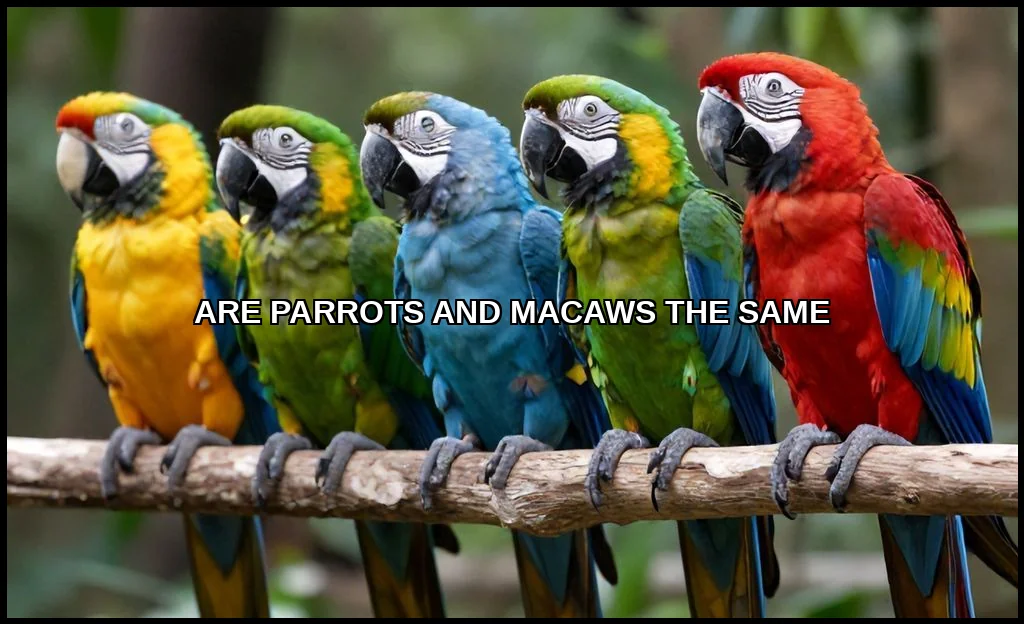
You’re at a pet store, and you see a brilliant blue and gold bird labeled “Macaw.” Next to it, a smaller green bird is called a “Parrot.” It’s a common question: are parrots and macaws the same thing? The short answer is no, but they are deeply connected. Think of it like squares and rectangles. All macaws are parrots, but not all parrots are macaws.
Macaws are a specific subset within the vast and colorful Psittaciformes order, which is the scientific name for all parrots. This distinction matters for potential owners. Their needs, from space to social interaction, differ dramatically. For instance, a spacious cage is non-negotiable for a large macaw. A product like the Yaheetech 69-inch Wrought iron cage is often recommended for such big birds, providing the necessary room for movement and play.
The Parrot Family Tree: Understanding Taxonomy
To clear the confusion, we need to look at taxonomy, the science of classification. All parrots belong to the order Psittaciformes. This huge group includes over 350 species, from tiny budgies to massive hyacinth macaws. Within this order, parrots are further divided into families.
Most parrots, including macaws, cockatoos, and Amazon parrots, fall into the family Psittacidae. Macaws are specifically classified as New World parrots, meaning their natural habitat is the Americas. So, when you ask “are all macaws parrots?” the answer is a definitive yes. They are a specialized branch on the much larger parrot family tree.
Parrot Family Classification: A Quick Guide
Heres a simplified look at where macaws fit in the avian hierarchy:
- Order: Psittaciformes (All parrots)
- Family: Psittacidae (True parrots, including macaws, Amazons, African Greys)
- Subfamily: Arinae (Neotropical parrots)
- Tribe: Arini (Includes macaws and conures)
- Genus: Ara, Anodorhynchus, etc. (Different macaw groups)
This structure highlights the parrot vs macaw relationship perfectly. Macaws are a distinct group within the broader parrot category, sharing core traits but evolving unique features.
Key Physical Differences: Size, Color, and Beak
This is where the difference between parrot and macaw becomes visually obvious. While all parrots share a curved beak and zygodactyl feet (two toes forward, two back), macaws take these traits to the extreme.
Macaw Size and Structure
Macaw size is their most striking feature. The hyacinth macaw is the world’s largest flying parrot, reaching nearly 40 inches from head to tail. Even smaller macaw species dwarf most common pet parrots like cockatiels or lovebirds. Their long, graceful tail feathers contribute significantly to their length and majestic appearance.
Their beaks are incredibly powerful, designed to crack open hard nuts and seeds in the wild. This requires specialized toys and perches in captivity to manage beak health. Compare this to an African Grey’s beak, which is strong but more adapted for precision.
A Spectrum of Color
While many parrots are colorful, macaws are often the poster birds for tropical brilliance. They frequently exhibit large, solid blocks of vibrant colorscarlet, cobalt blue, emerald green. Many species also have distinctive facial patches of bare skin, which can blush when they are excited. Other types of parrots, like Amazons, may have more patchwork or scalloped color patterns.
| Trait | Typical Macaw | Typical Parrot (e.g., Amazon, African Grey) |
|---|---|---|
| Size | Large to very large (20-40 inches) | Small to medium (10-15 inches) |
| Tail | Long, tapered, and pointed | Shorter, often square or rounded |
| Facial Features | Often has large bare facial patches | Usually fully feathered face |
| Beak Proportion | Extremely large, powerful relative to head | Large, but more proportional to head size |
Behavior and Temperament Comparison
Beyond looks, their personalities diverge. Both groups exhibit remarkable avian intelligence, but how that intelligence manifests can differ.
Macaws are often described as “clowns.” They are physically playful, love to hang upside down, and enjoy dramatic displays. They can be very loud, with calls that carry for miles in the wild. This leads to a common long-tail question: which is louder a macaw or an african grey? While both can be very vocal, a macaw’s call is typically louder in volume and more piercing, though an African Grey might vocalize more frequently with whistles and speech.
Other parrots, like the African Grey, are often considered the intellectualsmore focused on problem-solving and mimicry. Of course, individual personality varies wildly. For a deeper dive into vocal abilities, our guide on which parrots talk explores this fascinating trait.
Social Dynamics and Noise
All parrots are social, but macaws often form incredibly strong, almost symbiotic bonds with a chosen person. This intensity requires dedicated time and understanding. Their noise level is a serious consideration for apartment dwellers. A macaw’s contact call is not something you can ignore.
This also raises the question: can macaws and smaller parrots live together? Generally, it’s not advised to house them in the same cage. The size and power difference poses a significant risk to the smaller bird. Supervised, out-of-cage interaction might be possible with extremely careful management, but separate living spaces are safest.
Care and Commitment: What Each Bird Requires
This is where the theoretical difference hits practical reality. Your lifestyle and resources will determine what is the main difference between a parrot and a macaw for you as an owner.
Space, Diet, and Enrichment
A macaw needs a palace, not a cage. The bar spacing, strength, and dimensions must be macaw-proof. They destroy flimsy toys in minutes and need a constant supply of durable wood and foraging items. Their diet is rich in fats and nuts, reflecting their wild consumption.
Smaller parrots still need large cages and enrichment, but the scale is different. An appropriate travel carrier is part of essential care for vet visits or trips. Finding the best travel carrier for a Meyer’s parrot, for example, involves different specs than for a macaw.
Lifespan and Financial Investment
Parrot lifespan is a major commitment across the board. Large macaws can live 60+ years with excellent care, essentially a lifetime companion. Even smaller parrots like conures often live 20-30 years.
This leads to another practical question: are macaws more expensive than other parrots? Almost always, yes. The initial purchase price for a hand-fed baby macaw is higher. But the ongoing costs are the real differentiator: massive cages, huge volumes of fresh food and premium nuts, more expensive vet bills (avian vets often charge by size), and a constant stream of heavy-duty toys. The financial outlay is substantial.
Time and Emotional Labor
Both require daily, dedicated out-of-cage time and social interaction. A bored parrot is a destructive, neurotic parrot. However, a macaw’s emotional needs and powerful beak mean their care requires a confident, experienced handler. They are not typically recommended for first-time bird owners. For a definitive, science-backed look at these distinctions, the Audubon Society provides an excellent authority guide.
Choosing the Right Bird for You
So, which feathered friend aligns with your life? Don’t choose based on color alone. It’s about matching energy, noise tolerance, and capacity for care.
Consider a macaw if you have extensive space, a robust budget, and can handle a loud, physically demanding, deeply affectionate companion for decades. You’re ready for a life-altering bond.
Consider other macaw species or parrot types if you have less space, are newer to bird ownership, or need a slightly quieter household. A severe macaw (a mini-macaw) or a well-socialized Amazon parrot might offer a compelling middle ground.
Visit rescues. Talk to breeders and owners. Spend time with the birds. Listen to their calls at full volume. Understand that “parrot” is a category, and within it exists a world of difference. Your perfect match is waiting, but it requires honest reflection on what you can truly provide for the next 30, 40, or 60 years.
