
Choosing the right binoculars feels like finding the perfect pair of hiking boots. They need to fit, perform, and last. For bird watching, the 10×42 configuration has become a gold standard. It offers a powerful 10x magnification to bring distant warblers into sharp view, paired with a 42mm objective lens that gathers ample light for dawn choruses and shaded forests. This balance of power and practicality makes it a top recommendation from groups like the official source at the Audubon Society.
But not all 10×42 binoculars are created equal. The market is flooded with options, from budget-friendly models to premium birding gear that costs as much as a lens. Your choice hinges on optical specifications, durability, and how they feel in your hands after three hours on the trail. For those seeking a more compact, higher-magnification option for general wildlife, the Occer 12×25 Compact is a notable alternative, especially for its portability.
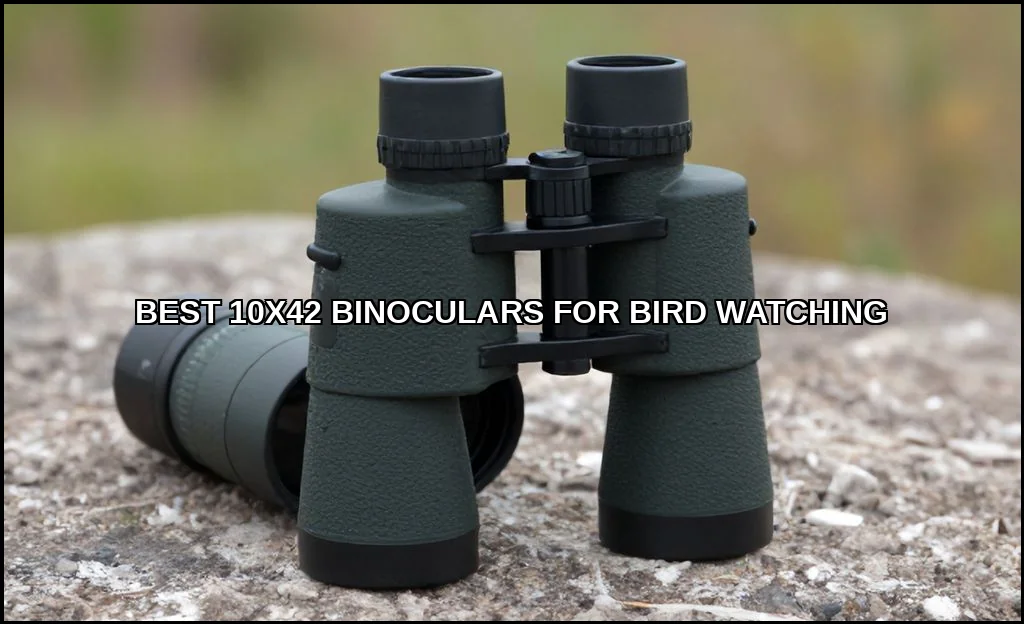
Why 10×42 Binoculars Dominate Birding
Why this specific combo? The 10x magnification gives you the detail needed for identifying subtle field marksthink wing bars on a sparrow or the eye-ring on a vireo. The 42mm lens is the sweet spot for light-gathering without becoming overly bulky. Its the workhorse of the birding world, suitable for everything from backyard observation to serious field trips. Compared to 8×42 models, you gain detail at distance, though with a slightly narrower field of view and more noticeable hand shake. Its a trade-off many experienced birders gladly make.
Key Features to Compare in Birding Binoculars
Look beyond the basic numbers. The real performance lies in the engineering and coatings.
Optical Performance: The Heart of the View
This is where you separate the good from the great. Fully multi-coated lenses are non-negotiable; they maximize light transmission and reduce glare. Most quality birding binoculars use roof prism binoculars for a streamlined design. Pay close attention to three specs:
- Close Focus Distance: The minimum distance at which you can focus. Crucial for observing butterflies, dragonflies, or that confiding warbler just meters away. Some models focus down to an impressive 5 feet.
- Field of View: The width of the area you see at 1000 yards. A wider field makes it easier to locate and track fast-moving birds in dense foliage.
- Eye Relief: The distance from the eyepiece lens to your eye where you still see the full field. If you wear glasses, youll need at least 15mm of eye relief, and twist-up eyecups are essential for a comfortable view.
Dont forget diopter adjustment. This feature, usually on the right eyepiece, lets you compensate for differences in vision between your eyes. Set it once and forget it for perfect focus.
Durability & Build for the Field
Birding happens in rain, dust, and humidity. Your optics must keep up. Look for waterproof and nitrogen purged construction to prevent internal fogging. An armored housing of rubber provides a secure grip and protects against the inevitable bumps and drops. Brands like Vortex have built stellar reputations on their unconditional VIP warranty, which is a huge consideration for a tool that travels.
Ergonomics & Comfort
A binocular that causes neck strain or hand fatigue will stay in your backpack. Weight distribution is key. A well-balanced 10×42 can feel lighter than a poorly balanced, smaller model. Consider the grip texture, the smoothness of the focus wheel, and how the binoculars feel when you bring them up to your eyes repeatedly. For long hikes, the quest for lightweight 10×42 binoculars is a real one.
Top 5 10×42 Binoculars for Bird Watching
Based on optical performance, build quality, and overall value, here are five standout models across different price points.
1. The All-Around Champion: Vortex Diamondback HD 10×42
A perennial favorite for good reason. It offers exceptional clarity for its mid-priced optics category, a rock-solid warranty, and ergonomics that work for most hands. The field of view is generous, and its fully waterproof. Its the benchmark against which many others are measured.
2. The Optical Benchmark: Nikon Monarch M7 10×42
Nikons optics heritage shines here. The color fidelity and edge-to-edge sharpness are superb. Its close focus distance is excellent for insect observation, making it a versatile tool. The build feels premium, justifying its position in the higher tier of mid-priced optics.
3. The Budget Powerhouse: Celestron Nature DX ED 10×42
This model punches far above its weight. The inclusion of Extra-low Dispersion (ED) glass at this price point minimizes chromatic aberration (color fringing). Its a top contender for the best 10×42 binoculars for birding under $300. A fantastic entry point for new birders.
4. The Lightweight Specialist: Maven C.3 10×42
For those prioritizing weight, Maven delivers a remarkably light yet robust instrument. The optical quality rivals models costing hundreds more. Its a direct-to-consumer brand, so you get premium features without the retail markup. Ideal for long days in the field.
5. The Premium Choice: Zeiss Victory SF 10×42
The pinnacle of premium birding gear. The view is breathtakingly bright and wide, with an almost effortless focus mechanism. The balance is engineered to perfection, reducing fatigue. Its a significant investment, but for the serious birder, it represents optical nirvana.
| Model | Key Strength | Best For |
|---|---|---|
| Vortex Diamondback HD | Value & Warranty | All-around, reliable birding |
| Nikon Monarch M7 | Optical Clarity | Critical identification & color |
| Celestron Nature DX ED | Budget with ED Glass | New birders & students |
| Maven C.3 | Lightweight Design | Long hikes & travel |
| Zeiss Victory SF | Premium Performance | Serious enthusiasts & pros |
Buyer’s Guide: How to Choose Your 10×42
Lets translate features into a decision. Start with your budget, but think long-term. A $250 binocular with a great warranty can be smarter than a $150 one without.
Price vs. Value: Where to Invest
Under $300, you get capable, fully multi-coated optics that are waterproof. The $300-$600 range introduces better glass (like ED elements), superior coatings, and refined mechanics. Above $600, you pay for marginal gains in light transmission, field of view, and exquisite build. The debate of 10×42 vs 8×42 for bird watching often centers on budget, as higher-quality 10x models can mitigate their inherent handling challenges.
Hands-On Tests You Should Do
- Check the Focus Wheel: Is it smooth, with just the right resistance? A stiff or jerky wheel will frustrate you.
- Test the Eye Relief: With glasses on, twist down the eyecups. Do you see the full circular field without vignetting?
- Assess the Weight: Hold them up to your eyes for a full minute. Do your arms protest?
- Look for “Chicken Wire”: Point at a bare, bright sky. Move the binoculars slightly. If you see a hexagonal pattern (a roof prism artifact), it indicates lower-quality phase correction coatings.
Consider tripod adaptability if you do stationary observation or digiscoping. A built-in tripod adapter socket is a valuable feature. Also, look up a models twilight factora calculated metric for low-light performance. A higher number is better for dawn and dusk.
FAQ: Your Birding Binocular Questions Answered
Are 10×42 binoculars too shaky for bird watching?
They can be, initially. The 10x magnification amplifies hand movement more than 8x. With practice, steadying techniques (leaning against a tree, tucking elbows in) become second nature. Image-stabilized models exist but add cost and complexity.
What’s more important: magnification or lens size?
For birding, its a system. The 42mm lens supports the 10x magnification with enough light. A 10×50 gives a brighter image but is heavier. A 10×32 is lighter but struggles in low light. The 10×42 is the compromise most experts, including the Cornell Lab of Ornithology, recommend.
Can I use these for other hobbies?
Absolutely. A good 10×42 is incredibly versatile. Theyre excellent for hiking, astronomy (for wide-field views), sports events, and even marine use. Their best close focus for butterflies makes them a great all-purpose nature optic.
How do I maintain my binoculars?
Use a lens brush or air blower first, then a microfiber cloth for smudges. Never use household cleaners. Store them in a dry place, and if they get wet, dry the exterior before casing them. For supporting your backyard birds in other ways, check out our guides on the best birdhouse cameras and best heated bird baths.
The best 10×42 binoculars for you are the ones that feel like a natural extension of your vision. They disappear in your hands, leaving only the vivid detail of a scarlet tanager or the intricate pattern on a hawks wing. Prioritize optical clarity and a comfortable, durable build. Test them if you can. Whether you choose the value of a Vortex, the clarity of a Nikon, or the lightweight design of a Maven, youre investing in countless hours of connection with the natural world. Now get outside and see what youve been missing.
