
You’re looking at a distant bird, maybe a hawk circling high above. You twist the center dial on your binoculars. The image snaps into a tighter view, revealing feather details you couldn’t see before. That’s the immediate appeal of adjustable zoom binoculars. They promise versatility in a single device, letting you switch from a wide landscape view to a magnified close-up with a simple adjustment. But this flexibility comes with trade-offs that every buyer should understand.
For many enthusiasts seeking a powerful, all-in-one optical tool, a model like the 15-35×70 Binoculars ults represents a compelling option. Its expansive 15-35x zoom range and large 70mm objective lenses are designed for those who need serious reach, whether for terrestrial observation or casual stargazing. It’s a prime example of what modern variable magnification binoculars aim to deliver.
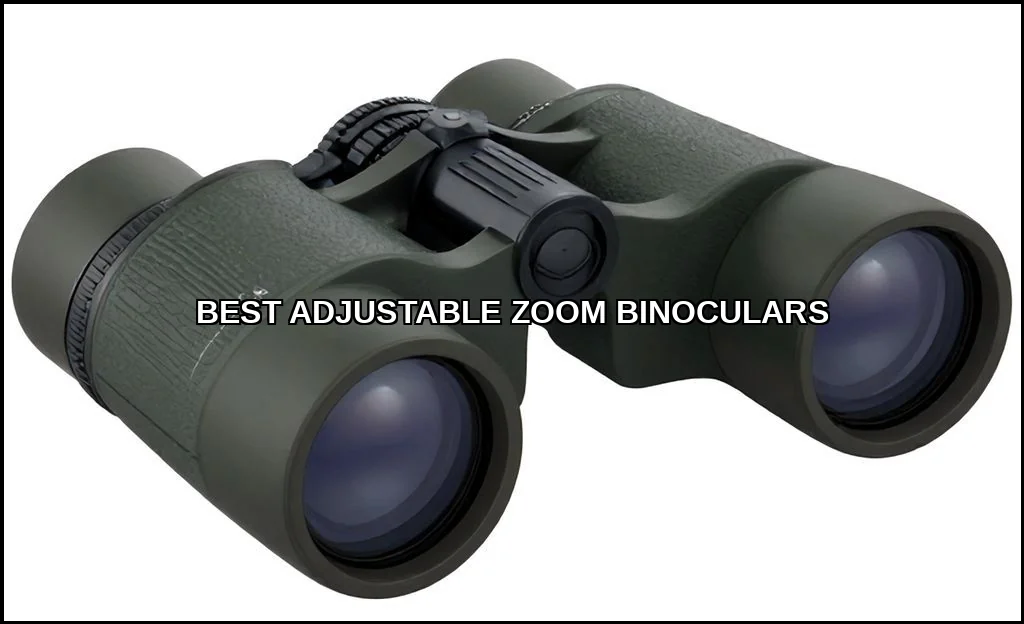
What Are Adjustable Zoom Binoculars?
Unlike fixed-power binoculars (like standard 8x42s), adjustable magnification binoculars let you change the magnification level. You might start at 10x for a stable, bright image and then zoom to 20x or 30x to see finer details. The mechanism is usually a lever or dial near the hinge. This zoom power optics system uses additional moving lens elements inside the barrels to achieve the change in magnification.
The core idea is one device for multiple scenarios. Think of it as an optical Swiss Army knife. However, the added complexity of the zoom mechanism durability and optical design introduces challenges that aren’t present in fixed models. Image brightness, field of view, and edge sharpness often change as you zoom.
Key Features to Compare
Choosing the right pair means looking beyond the advertised zoom range. You need to dissect the specs that impact real-world performance.
Optical Quality vs. Zoom
This is the central tension. As magnification increases, several things typically degrade. The field of view narrows dramatically. Image brightness drops because the exit pupil shrinks. Optical flaws like chromatic aberration (color fringing) and soft edges become more pronounced. High-quality zoom optics clarity relies on premium glass and advanced coatings. Look for terms like fully multi-coated and ED (Extra-low Dispersion) glass to combat these issues. A common question in zoom binocular reviews is how well the image holds up at maximum power.
Core Specifications
- Zoom Range: Expressed as “low-high x objective lens size” (e.g., 10-30×50). A wider range offers more versatility but often greater optical compromise.
- Field of View: Measured in feet at 1000 yards. It will always be wider at the lowest magnification. Critical for tracking moving subjects like birds or athletes.
- Close Focus Distance: The minimum distance at which you can focus. Important for butterfly watching or detailed inspection.
- Eye Relief: The distance your eye can be from the eyepiece while still seeing the full image. Vital for eyeglass wearers.
- Prism Type: Most modern zooms use roof prisms for a slimmer design, while some budget models may use porro prisms.
Durability and Usability
Competitors often miss discussing build quality standards. For any outdoor use, ensure the binoculars are waterproof and fogproof (often nitrogen or argon purged). The zoom lever should feel smooth, not gritty. Given the shake inherent at high magnifications, tripod adaptability is a non-negotiable feature for any model over 12x zoom; a built-in tripod adapter thread is essential. For the steadiest view, some premium models integrate image stabilization technology, though this significantly increases cost.
Top Adjustable Zoom Binocular Considerations
Instead of a simple list, let’s break down what to look for in different performance tiers. Brands like Celestron often dominate the astronomy-conversant market, while Nikon and Bushnell offer strong options for general outdoors use.
| Use Case | Recommended Zoom Range | Critical Feature Focus |
|---|---|---|
| Birding & Wildlife | 10-22x or 12-25x | Fast focus, color fidelity, wide field of view at low power. Check out this authoritative guide on bird behavior to understand what you might be observing. |
| Stargazing & Astronomy | 15-45x or 20-60x with 70mm+ lenses | Large objective lenses for light gathering, must have a solid tripod mount. |
| Marine & Hunting | 10-30x with 50mm lenses | Rugged, waterproof construction, and good low-light performance. |
| Sports & Events | 8-20x or 10-25x | Wide field of view, fast zoom action, and good close focus distance for program reading. |
Use Case Recommendations
Your primary activity should dictate your choice. A jack-of-all-trades is often a master of none, especially in optics.
For Birding and General Wildlife
Best zoom binoculars for birding prioritize a balance. You need a wide view to locate a flitting warbler (low zoom) and enough power to see plumage details (high zoom). Optical quality is paramount. Many seasoned birders still prefer fixed power for its reliability and brighter image, leading to the great zoom vs. fixed power debate. For a stationary setup, like monitoring a premium birdhouse, a zoom can be excellent.
For Astronomy and Stargazing
Here, high magnification binoculars shineliterally. They gather more light than a standard pair. The best adjustable binoculars for stargazing have large objective lenses (70mm or more) and a stable tripod. The moon, star clusters, and bright planets are fantastic targets. The zoom lets you frame objects perfectly. Remember, your maximum usable magnification is often limited by atmospheric conditions, not the binoculars themselves.
For Hunting and Marine Use
Are zoom binoculars good for hunting? They can be, for glassing a hillside from a fixed position. The zoom allows you to scan broadly and then inspect potential game closely. However, in low-light dawn/dusk conditions, the reduced brightness at high zoom can be a drawback. For marine use, a waterproof build and a compass reticle are valuable additions. The versatility is key when you need to identify a buoy, then a bird, then a boat on the horizon.
For Sports and Dynamic Events
At a stadium or racetrack, adjustable binoculars for sports events are fantastic. You can watch the full-field play at low power, then zoom in on the quarterback’s release or a pit crew’s action. The fast-paced nature benefits from the on-the-fly adjustment. Just be prepared for a narrower view when zoomed in.
Common Zoom Binocular Drawbacks
To make an informed decision, you must acknowledge the compromises.
- Image Instability: Hand shake is magnified. At higher powers, a tripod or image stabilization becomes nearly mandatory for a clear view.
- Optical Compromises: Sharpness and brightness often decrease at maximum zoom. Cheaper models show significant blurring and dimming.
- Narrower Field of View: Following moving subjects is harder when zoomed in. You can “lose” a bird in the sky easily.
- Complexity & Cost: More moving parts can mean less durability and a higher price for equivalent optical quality versus a fixed pair.
- Size & Weight: They are often heavier and bulkier than their fixed-power counterparts, especially models with large lenses.
The comparison of zoom binoculars vs spotting scope is relevant here. For dedicated, tripod-mounted long-range viewing, a good spotting scope often provides better optical performance than a high-magnification binocular. The binocular’s advantage is two-eyed viewing comfort and portability.
Making Your Final Choice
So, are variable power binoculars right for you? If your priority is ultimate optical performance and simplicity for a single primary use, a high-quality fixed-power binocular is likely the better path. But if you value adaptability above all and are willing to manage the trade-offsusing a tripod, accepting some optical fall-offthen a zoom is a powerful tool.
Set a budget. For under $200, you’ll face significant optical compromises at high zoom. The mid-range ($300-$600) from reputable brands offers much better control. Remember, the sweet spot of a zoom binocular is often in the middle of its range, not at the extremes. Test them if you can, or read detailed zoom binocular reviews from trusted sources like this authority guide on birding optics.
Your use case dictates your needs. A birder might choose a 10-22×50. An astronomy beginner might lean toward a 15-35×70 model. Know the trade-offs, manage your expectations, and that versatile pair of adjustable zoom binoculars will open up a world of detail, near and far.
