
Spotting a red-tailed hawk circling overhead or locking eyes with a perched bald eagle is a thrill. But without the right gear, you might just see a blurry silhouette against the sky. Specialized optics make the difference between a guess and a positive identification, turning a distant shape into a detailed study of plumage, behavior, and sheer power.
Raptor watching demands more than just any pair of binoculars. You need optics that handle long distance viewing in bright, high-contrast skies, track fast-moving birds in flight, and still offer enough detail for a close-up look at a stationary bird. It’s a unique challenge that separates casual birding from serious bird of prey viewing.
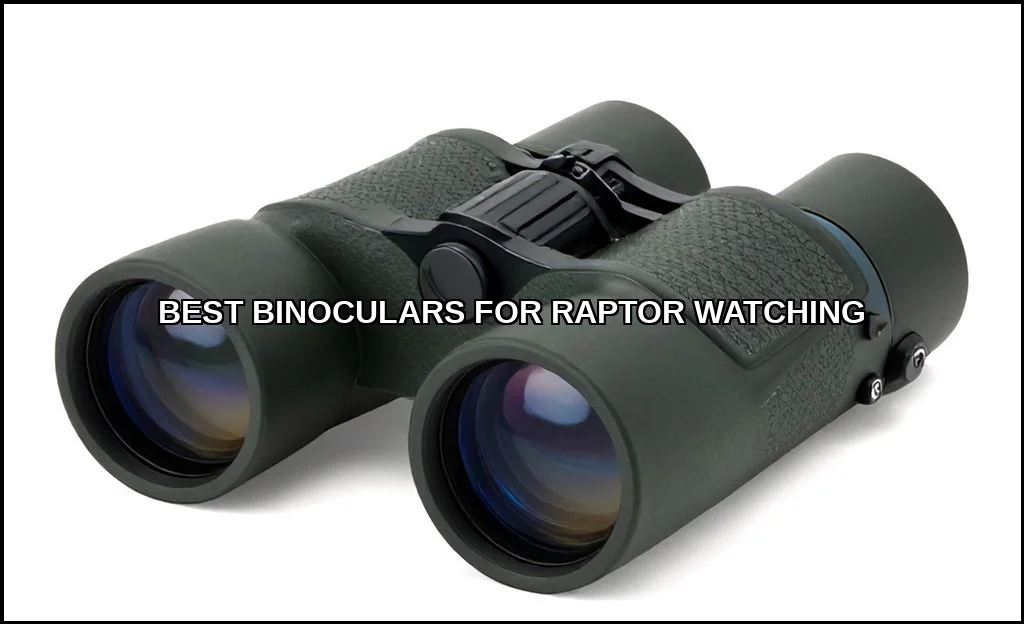
Why Your Current Binoculars Might Be Letting You Down
Using general-purpose binoculars for raptor identification is like using a butter knife to carve a turkey. It sort of works, but it’s frustrating and inefficient. The most common issues? Poor light gathering in forest shadows, shaky images at high power, and color fringing (chromatic aberration) that ruins the crisp outline of a bird against a bright sky. This is where dedicated birding binoculars, designed with specific optical principles, become non-negotiable.
For instance, if your primary need is a supremely portable option for quick hikes to vantage points, a compact model like the Occer 12×25 Compact can be a solid choice. Its high 12x magnification brings distant raptors closer, and its small size means you’ll actually have it with you when that rare sighting occurs. Just remember, higher magnification in a compact body requires a steadier hand.
Decoding the Specs: Key Features for Raptor Watching
Navigating binocular specifications is key. Let’s break down what truly matters for spotting hawks, eagles, and falcons.
The Magnification & Objective Lens Balance
Magnification (like 8x or 10x) determines how much closer the subject appears. Objective lens size (like 42mm) dictates how much light enters the binoculars. For raptors, the classic debate is 8×42 vs. 10×42.
- 10×42: Excellent for long distance viewing across open fields, canyons, or large bodies of water. Ideal for identifying distant perched eagles or vultures. The extra detail is invaluable, but the image is shakier and the field of view is narrower.
- 8×42: The sweet spot for most birders. Wider field of view makes it easier to locate and track fast-moving birds like falcons in flight. Brighter image in low light (dawn/dusk) and less hand shake. Often the best all-around answer to “what magnification is best for identifying raptors in flight?”
Optical Clarity & Specialized Glass
This is where premium models earn their keep. Look for terms like ED (Extra-low Dispersion) or HD (High-Density) glass. This specialized glass significantly reduces chromatic aberrationthose annoying purple or green fringes around high-contrast edges, like a raptor’s wing against a white sky. For serious hawk watching optics, it’s a game-changer for clarity and color fidelity.
The Supporting Cast: Field of View, Close Focus, and Eye Relief
These three specs are critical for comfort and versatility.
- Field of View: Measured in feet at 1000 yards. A wider field lets you scan large swaths of sky or landscape quickly, crucial for finding birds before they disappear. Essential for best binoculars for hawk watching in forests where sightlines are shorter.
- Close Focus Distance: The minimum distance at which the binoculars can focus. A good close focus (under 10 feet) allows you to admire intricate details on a nearby perched bird of prey, or even switch to observing butterflies and flora.
- Eye Relief: The distance your eye can be from the eyepiece while still seeing the full image. If you wear glasses, you need long eye relief (15mm+). This ensures you don’t miss any of that glorious field of view.
Build Quality for the Wild
You’ll be hiking ridges, facing sea spray, or dealing with sudden rain showers. Your binoculars must be waterproof/fogproof. This means O-ring seals and nitrogen or argon purging to prevent internal fogging. Rubber armoring provides a secure grip and protects against bumps. Durability isn’t a luxury; it’s a requirement for reliable wildlife observation equipment.
Top Binocular Picks for Different Raptor Scenarios
Heres a breakdown of excellent choices across budgets and specific use cases, from ospreys at the coast to vultures in the desert.
| Best For | Recommended Type | Key Reason |
|---|---|---|
| All-Around Excellence | 8×42 Roof Prism | Perfect balance of light, stability, and field of view for most raptor situations. |
| Long-Distance & Open Country | 10×42 Roof Prism | Extra detail for identifying distant eagles or hawks on cliff faces. |
| Lightweight Hiking | 8×32 or 10×32 Compact | Ideal for lightweight binoculars for hiking to raptor nests. Less weight, slightly less bright at dawn/dusk. |
| Budget-Conscious Starters | Porro Prism (8×40) | Often offers brighter, more 3D images per dollar. Bulkier but great value. |
| Digiscoping Enthusiasts | Models with phone adapter compatibility | Allows you to attach your smartphone to capture photos/video through the eyepiece. Brands like Vortex, Nikon, and Celestron often have compatible adapters. |
Brands like Vortex (known for their unlimited warranty), Nikon (optical legends), and Celestron (great value in astronomy and nature optics) consistently top lists for birding binoculars. Your choice depends on which of the scenarios above fits your primary style of bird of prey viewing.
Sharpening Your Skills: How to Use Binoculars Effectively
Great gear is only half the battle. Proper technique turns good optics into great experiences.
- Set the Diopter First: Adjust the diopter ring (usually on the right eyepiece) to match the difference between your eyes. Focus on a distant, static object with your right eye closed using the center focus wheel. Then, close your right eye and open your left, using only the diopter adjustment to sharpen the image. Lock it. You shouldn’t need to adjust it again.
- Find the Bird with Your Eyes First: Don’t raise your binoculars and then scan. Spot the moving raptor with your naked eyes, keep your gaze locked on it, and then smoothly bring the binoculars up to your eyes. You’ll find it instantly.
- Use a Support: Lean against a tree, brace your elbows on your knees or a railing. Any support dramatically stabilizes the image, especially at 10x magnification.
- Practice Panning: Follow a moving birda car, a cyclistwith your binoculars. Learn to move smoothly from your core to keep the subject centered. This skill is vital for tracking a diving peregrine falcon.
Consider connecting with local birding groups or raptor rehabilitation centers. They are fantastic resources for learning identification tips and prime local spots, turning your gear into a true tool for discovery. For broader bird behavior insights, an authority guide like the Cornell Lab of Ornithology is an invaluable official source.
Protecting Your Investment: Maintenance & Essential Accessories
Treat your binoculars like the precision instruments they are. A little care goes a long way.
Cleaning & Storage
Never use household glass cleaner or wipe a dry lens. Use a soft lens brush or air blower first to remove grit. Then, apply lens fluid specifically for coated optics to a microfiber cloth and wipe gently in a circular motion. Store them in their case in a dry place. Extreme heat (like a car dashboard) can damage seals and optics.
Must-Have Add-Ons
- A Quality Strap: Replace the often-thin factory strap with a wide, padded neoprene strap. It distributes weight and makes all-day carrying comfortable.
- Lens Covers: Always use the tethered objective lens covers. Keeping dust and moisture off the front lenses is the simplest way to maintain image quality.
- Harness System: For serious hiking, a chest harness is superior to a neck strap. It stabilizes the binoculars, prevents bouncing, and takes weight off your neck.
Your birding journey might expand beyond raptors. Perhaps you’ll develop an interest in vocal species, like learning about which parrots are the most articulate. Or maybe you’ll want to monitor a nest box closely from the comfort of your home. The right tools always deepen the connection.
The Final Perch
Choosing the best binoculars for raptor watching is a personal equation of optics, ergonomics, and environment. Prioritize a bright, clear image with a comfortable field of view. Remember, the best binoculars are the ones you have with you and know how to use proficiently. Start with the fundamentalsa reliable 8×42 from a reputable brand is rarely a wrong choice. Then, get outside. Train your eyes and your optics on the horizon. There’s an eagle out there waiting to teach you what true clarity looks like.
