
You’re looking through binoculars at a distant bird. Your hands tremble slightly. The image jumps and blurs. That critical detailthe wing bar, the eye ringis lost. This is the universal frustration that Canon’s image stabilized binoculars were engineered to solve. They transform shaky, unusable views into rock-steady windows on the world, making them a game-changer for anyone from birders to boaters.
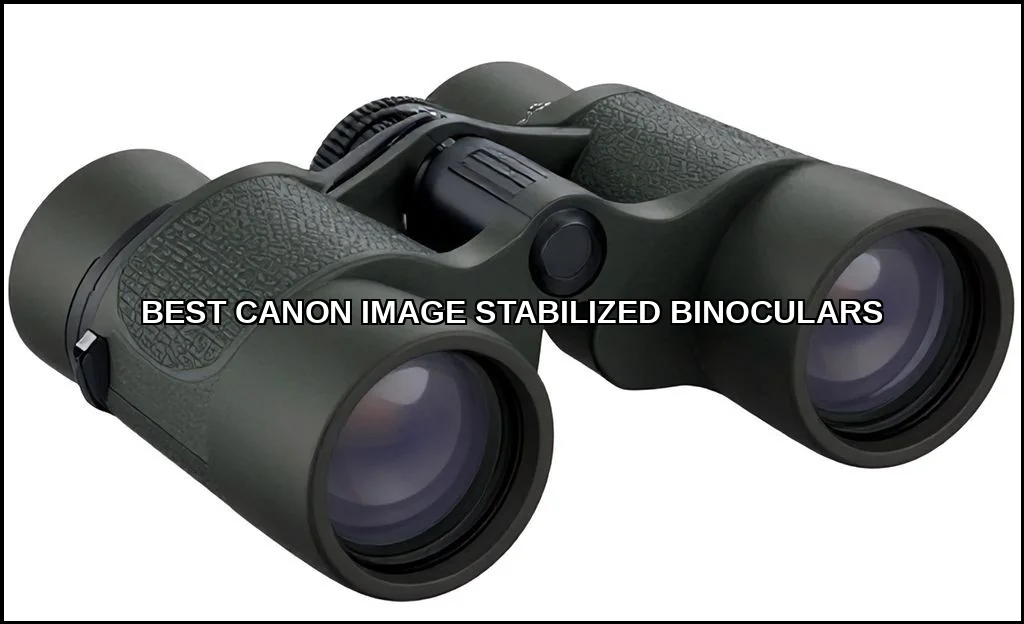
But with several models on the market, how do you choose the right pair? The decision hinges on understanding the technology, your primary use case, and the nuanced differences between models. For many enthusiasts seeking a superb balance of magnification, size, and performance, the Canon 12×36 Image Stabilized Binoculars are a top-tier recommendation. They offer significant stabilization in a relatively compact package, perfect for active wildlife observation.
How Canon Image Stabilization Technology Works
At its core, Canon’s system is about counteracting movement. It’s not just a lens trick; it’s a miniaturized marvel of engineering. Inside the binoculars, gyro sensors and accelerometers detect the slightest hand shake or vibration. This data is sent to a microcomputer, which instantly calculates the correction needed.
A variable-angle prism in the optical path then shifts to bend the light, compensating for the movement before it reaches your eyes. The result is what Canon calls its steady view technology. It feels like the world itself has frozen, even from a moving vehicle or a windy cliffside. For a deep technical dive, Canon’s own authority guide is an excellent resource.
Key advancements include the Power IS mode, found in newer models. This mode is specifically tuned to handle the larger, low-frequency vibrations encountered when you’re on a moving boat or vehiclemaking Canon image stabilized binoculars for whale watching a particularly compelling choice.
The Core Components: More Than Just Gyros
The magic isn’t just in the movement. Canon integrates its legendary optical expertise. Lenses feature Super Spectra coating to minimize flare and ghosting, boosting contrast and color fidelity. Many models also use Vapor Barrier Glass to prevent internal fogging, a critical feature for moving between different climates.
Two questions often arise: image stabilized vs regular binoculars, and are Canon stabilized binoculars worth the money? The answer lies in what you lose without stabilization. At higher magnifications, even a heartbeat can blur the view. For detailed observation, stabilization isn’t a luxury; it’s the difference between seeing and identifying.
Top Canon IS Binocular Models Compared
Canon’s lineup caters to different needs, from compact versatility to extreme long-range observation. Heres a breakdown of the key contenders.
| Model | Magnification x Objective | Key Strengths | Ideal For |
|---|---|---|---|
| Canon 10×42 IS | 10×42 | Bright, wide view; excellent all-rounder | General birding, sports, nature |
| Canon 12×36 IS | 12×36 | Great balance of power and portability | Travel, hiking, versatile wildlife |
| Canon 18×50 IS | 18×50 | High power, long-distance detail | Astronomy, coastal observation, fixed-point wildlife |
Digging Into the Specifications
Specs tell part of the story. The Close Focus Distance determines how near a subject can be while still in focuscrucial for butterfly or insect watching. The Field of View is the width of the scene you see, often more important for tracking moving birds than raw magnification.
Battery life is a missing entity in many reviews. Most Canon IS binoculars run on a single AA battery, providing roughly 4 to 6 hours of continuous use. It’s wise to carry a spare. Also, note that all current models include a standard tripod socket for adapter compatibility, allowing for rock-solid, hands-free viewing during extended sessions.
Best Use Cases for Stabilized Binoculars
While helpful for anyone, stabilization provides disproportionate benefits in specific scenarios. It redefines what’s possible.
- Birding: The holy grail. Holding a steady view on a warbler in dense foliage is exponentially easier. These are arguably the best Canon binoculars for birding, especially for aging eyes or less-steady hands.
- Marine & Coastal: From a rocking boat, stabilization is indispensable. It turns a nauseating blur into a clear view of dolphins, whales, or coastal birds. Power IS mode is key here.
- Astronomy: For casual stargazing, high-power models like the 18×50 IS bring the moon’s craters and Jupiter’s moons into stunning, steady detail without a tripod.
- Events & Sports: Whether at a racetrack or a stadium, you can follow the action without the fatigue of fighting shake.
It’s worth considering your specific habitat. For backyard birding where you might also want to attract specific species, knowing which parrots talk is a different kind of research altogether. And for a stationary setup, a best birdhouse camera can complement your long-range optics with intimate close-ups.
Canon vs Other Stabilized Binocular Brands
Canon isn’t alone. Fujinon and Zeiss also produce high-end stabilized optics. The comparison often comes down to philosophy and price.
The Canon 12×36 IS vs Fujinon Techno-Stabi debate is common. Fujinon often uses a more complex, dual-mode system, but this can come with a significant price premium and sometimes more weight. Canon’s approach prioritizes a seamless, single-button user experience and often better value.
Zeiss’s offerings sit at the very top of the market, with exceptional optical quality and stabilization, but at a cost that places them in a different tier entirely. For most enthusiasts looking at the best Canon IS binoculars under $1000, Canon provides the most accessible and reliable entry point into premium stabilized viewing.
A key differentiator is manufacturing. Canon’s IS binoculars are engineered and built in Japan, a point often associated with stringent quality control and durability.
Buying Guide: What to Look For
Cut through the noise. Focus on these factors to match the tool to your task.
- Magnification (First Number): 10x is the sweet spot for most. 12x or 15x offers more reach but a narrower field of view and more noticeable shake without IS. 18x is for specialized, long-distance use.
- Objective Lens Size (Second Number): Larger lenses (42mm, 50mm) gather more light for brighter dawn/dusk viewing but add weight. 30-36mm offers better portability.
- Stabilization Mode: If marine use is a priority, ensure the model has Power IS or an equivalent for low-frequency vibration.
- Ergonomics & Weight: Hold them if possible. The best binoculars are the ones you’ll actually carry and use. Check the grip and balance.
- Optical Quality: Look for terms like dielectric high-reflective prism coating and, of course, Super Spectra coating. This ensures a bright, sharp, color-accurate image.
Remember, the Canon IS system is the core feature. Test it. Press the button. The world should snap into a placid, detailed stillness. That feeling never gets old.
The pursuit of the perfect view drives optics innovation. Canon’s image stabilized binoculars answer that call by removing the weakest link in the chain: human steadiness. Whether you’re trying to identify a rare sparrow, follow a breaching humpback, or simply enjoy the moon’s surface, they deliver a consistently clear, stable, and immersive experience. You’re not just buying binoculars; you’re buying confidence in every glance. Start by defining your primary adventure, then let the technology handle the rest.
