
You’re on the hunt. The trophy bull elk is across the canyon, but the terrain is steep and the wind is shifting. Guessing the distance and holdover is a recipe for a missed shot or, worse, a poor hit. This is where modern technology changes the game. Rangefinder binoculars with ballistic calculator combine critical optics into one rugged unit, delivering a ballistic solution directly in your eyepiece.
These aren’t your grandfather’s binoculars. They integrate a high-powered laser rangefinder with sophisticated onboard ballistics software. You get a precise distance, and the device instantly calculates the exact holdover or dial correction for your specific rifle and cartridge. For hunters and long-range shooters who demand efficiency and precision, this is the ultimate tool. A great entry point into this category is the Halo Optics K2000, which packs impressive ballistic features into a value-conscious package, proving advanced tech is becoming more accessible.
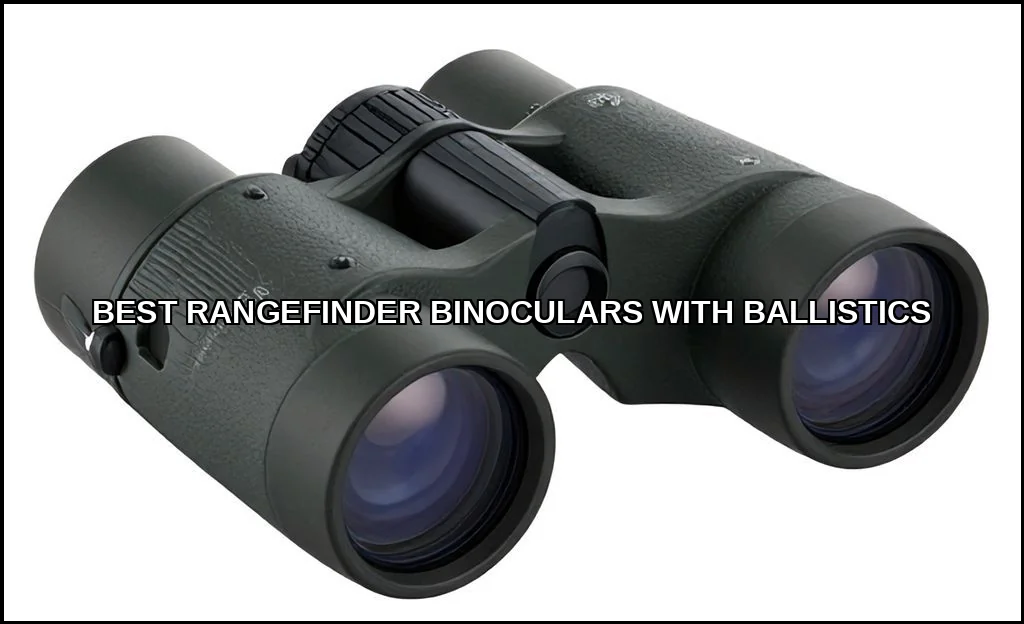
What Are Rangefinder Binoculars with Ballistics?
Think of them as your spotter, rangefinder, and ballistic expert, all in one. At their core, they are high-quality binoculars. Built into that optical path is a Class 1 laser emitter and sensor. When you range a target, the laser provides a precise distance measurement. The magic happens next.
The device’s onboard computer uses that distance, plus other critical data points you’ve input (like your specific caliber, bullet weight, and muzzle velocity), to run a ballistic calculation. It then displays the corrected aiming point right in the field of view. This integrated ballistics solution accounts for bullet drop and, critically, provides angle compensation for uphill or downhill shots to give you the true ballistic range.
How Do Ballistic Rangefinder Binoculars Work?
The process is seamless. You input your rifle’s ballistic profile into the unit, often selecting from a vast library of factory loads or creating a custom curve. When you press the range button, several things happen simultaneously:
- The laser fires and calculates the straight-line distance.
- An internal inclinometer measures the shot angle.
- The ballistic engine (like Applied Ballistics or a brand’s proprietary system) crunches the numbers.
- It compensates for the angle, gravity, and your bullet’s flight characteristics.
- The resultin holdover marks (BDC reticle), MOA, or MILsis displayed.
Advanced models may even connect to environmental sensors via Bluetooth for real-time atmospheric data, taking the guesswork out of wind and pressure. This is the pinnacle of hunting optics with ballistics.
Key Features to Compare
Not all ballistic rangefinder binoculars are created equal. When comparing models, you need to look beyond just magnification and price. The ballistic functionality is where they truly differentiate.
Ballistic Software & Customization
The brain of the unit is its ballistic solver. Top-tier systems like Applied Ballistics Ultralight or Sig Sauer’s BDX are highly respected. Key questions to ask:
- How extensive is the factory ammunition library?
- Can you input custom drag models (CDMs) for handloads?
- Does it offer solutions in both MOA and MILs?
- Is there mobile app integration for data management? This is a huge time-saver for managing multiple gun profiles.
Optical & Ranging Performance
The best ballistic solution is useless if you can’t see or range your target.
- Magnification & Objective Lens: 10×42 is a classic, versatile hunting format. For long-range shooting gear, consider 12x or 15x.
- Ranging Capability: Look for maximum range on reflective and non-reflective targets. 1500+ yards on trees is a good benchmark.
- Reticle Choice: Understand Mil-Dot vs. MOA reticles for ballistics. MOA is common in hunting, while MILs are prevalent in tactical circles. Choose the system you understand.
Durability & Ecosystem
These are field tools. They must be waterproof, fog-proof, and shock-resistant. Also, consider the brand’s ecosystem. Vortex offers an unbeatable VIP warranty. Sig Sauer has its BDX system that can pair with scopes. Leupold brings legendary optical clarity. Your choice in hunting rangefinder optics should be a long-term investment.
Top 5 Rangefinder Binoculars with Ballistics Reviewed
Based on performance, features, and market reputation, here are five standout models that define the category of the best ballistic rangefinder binoculars.
1. Sig Sauer KILO10K ABS
The king of integration. Its First Strike ballistic system is incredibly fast and accurate, offering both incline/decline and windage holds. It features a massive onboard library and Bluetooth for app connectivity. The optical clarity is superb, and its ranging ability is legendary in the industry. It’s a top-shelf choice for serious hunters and shooters who want the most data at their fingertips.
2. Vortex Fury HD 5000 AB
A phenomenal balance of performance and value. It runs the proven Applied Ballistics engine, providing highly accurate solutions. The HD optics are brilliant, and the interface is user-friendly. Vortex’s warranty is the best in the businessno questions asked. It’s a fantastic all-arounder for everything from whitetail to rangefinder binos for long range shooting.
3. Leupold BX-5 Santiam HD
Where Leupold shines is in pure optical quality and ruggedness. The Santiam HD features the TBR (True Ballistic Range) system with DNA (Digitally eNhanced Accuracy) engine. It provides excellent angle-compensated solutions in a package built to withstand brutal conditions. It’s a trusted tool for backcountry hunters who prioritize reliability and glass quality above all.
4. Halo Optics K2000 Ballistics
The value disruptor. As mentioned, the Halo Optics K2000 brings legitimate ballistic calculation to a much lower price point. It offers angle compensation, multiple rifle profiles, and a clear display. While it may not have the extreme ranging distance of the top models, it represents incredible performance-per-dollar and is a perfect entry into ballistic rangefinding.
5. Nikon Laserforce 10×42
A sleeper hit with incredible optics. Nikon’s ID (Incline/Decline) Technology provides simple, effective hold points. The display is one of the cleanest and least intrusive on the market. While Nikon has stepped back from the firearms market, the Laserforce remains a highly capable and optically outstanding piece of tactical equipment and hunting gear.
| Model | Key Ballistic Tech | Max Range (yds) | Best For |
|---|---|---|---|
| Sig Sauer KILO10K | First Strike w/ Wind | 10,000+ | Elite Long-Range |
| Vortex Fury HD 5000 AB | Applied Ballistics | 5,000 | All-Around Value & Warranty |
| Leupold BX-5 Santiam | Leupold TBR/DNA | 2,000 | Optical Quality & Durability |
| Halo Optics K2000 | Basic Ballistic Solver | 2,000 | Budget-Conscious Entry |
| Nikon Laserforce | Nikon ID Technology | 2,000 | Optical Clarity & Simple Use |
How to Choose the Right Model for Your Needs
Your perfect pair depends on your primary use case. Let’s break it down.
For the Western Big Game Hunter
You need reliability, long-range capability, and advanced angle compensation. Look for models with a minimum 1500-yard ranging on game and a robust ballistic solver. The question of the best rangefinder binoculars with ballistics for elk hunting often points to the Sig Sauer KILO10K or Vortex Fury AB for their combination of power and accurate field solutions in complex terrain.
For the Precision Long-Range Shooter
Your demands are extreme. You need the most accurate solver (like Applied Ballistics), support for custom curves, and likely MIL-based outputs. Maximum ranging distance and clarity at high magnification are non-negotiable. This is the core domain of the rangefinder with trajectory compensation done to the nth degree.
For the Value-Focused All-Rounder
You want the technology without the flagship price tag. Your search might be for rangefinder binoculars with ballistics under $1000. Here, the Halo Optics K2000 and the Vortex Fury AB (when on sale) are dominant players. You sacrifice some extreme range but gain 95% of the critical functionality for most hunting scenarios.
Just as you’d research the which parrots talk before buying a pet bird, understanding your specific ballistic needs is essential before this investment.
FAQs About Ballistic Rangefinder Binoculars
Are they worth the cost over a standard rangefinder?
Absolutely, if you regularly take shots beyond 200 yards or in steep terrain. The speed and confidence of an instant, angle-compensated solution are invaluable. It eliminates multiple calculation steps and potential errors.
How accurate are the ballistic calculations?
Extremely accurate, provided you input correct rifle data (velocity is critical). High-end solvers account for drag, not just a simple ballistic curve. For a deep dive, this authority guide explains the science. The limiting factor is usually the shooter’s ability, not the device’s math.
Can I use one caliber profile for similar loads?
It’s not recommended. A 150-grain .308 load and a 180-grain .308 load have different trajectories. For best results, use a specific profile for each load. This highlights the importance of specific caliber/load library compatibility when choosing a unit.
Do I still need a separate spotting scope?
For pure glassing sessions at extreme distance, a high-end spotting scope still has an advantage. But for most hunters, laser rangefinder binoculars with excellent optics eliminate the need to carry both, simplifying your pack. It’s about finding the best tool for your entire process.
The right ballistics calculator binoculars transform you from a guesser into a calculated shooter. They bridge the gap between raw distance and a precise aiming solution. Whether you choose a feature-packed flagship or a capable value model, you’re investing in more than optics. You’re buying confidence, efficiency, and a higher probability of a clean, ethical harvest. Focus on the ballistic features that match your actual shooting, trust the glass, and hit what you aim at.
