Birds That Look Like Bald Eagles: Common Lookalikes
Contents
Spotting a bald eagle soaring overhead is a thrilling moment for any birdwatcher. That iconic white head and tail against a dark brown body is unmistakable. Or is it? From a distance, several other large raptors can easily be mistaken for America’s national bird, leading to common cases of mistaken identity.
Getting your identifications right is part of the fun and challenge of birding. A reliable field guide, like the Smithsonian Handbooks Birds, is an invaluable tool for any enthusiast. It provides clear photos and range maps that are perfect for side-by-side comparisons in the field.
Why So Many Birds Look Like Bald Eagles
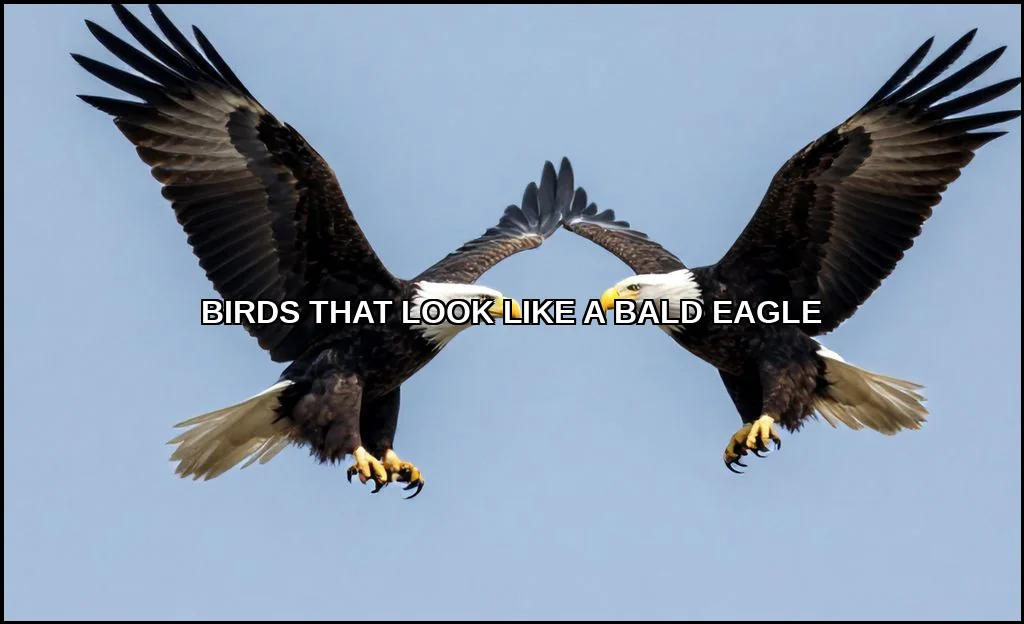
The confusion makes sense. Many birds share key traits with bald eagles: large size, broad wings, and a commanding presence in the sky. Some even sport similar color patterns, especially in their juvenile plumage. The key to accurate identification lies in looking beyond the silhouette to specific markers like head shape, flight profile, and behavior.
Top 5 Birds Commonly Mistaken for Bald Eagles
These are the usual suspects when it comes to bald eagle lookalikes. Knowing them will sharpen your skills instantly.
1. The Golden Eagle
This is the most classic case of bald eagle vs golden eagle confusion. Both are massive, powerful birds. The critical difference? A mature golden eagle has a dark brown body with golden-brown feathers on the back of its head and neckno white at all. Their legs are feathered all the way to the toes, unlike the bald eagle’s bare yellow legs.
2. The Turkey Vulture
Seen soaring in a wobbly “V” shape (called a dihedral), the turkey vulture is often misidentified from below. Its two-toned black and gray wings can mimic a juvenile bald eagle’s mottling. Look for the small, red, unfeathered head and the distinctive wobbly flight. They rarely flap steadily.
3. The Osprey
At a glance, an osprey has a white head and a dark eye stripe that can resemble a bald eagle’s pattern. Their wings, however, are distinctly angled or “crooked” at the wrist. Osprey are also smaller and more slender. You’ll almost always find them near water, as they are spectacular fish-hunters that dive feet-first.
4. The Red-tailed Hawk
While smaller, a high-flying red-tail can trick the eye. Adults have a pale, sometimes streaky breast and that famous rusty-red tail. From below, the patagial bars (dark marks on the leading edge of the wing) are a dead giveaway. They lack the massive, straight-winged profile of an eagle.
5. The Black Vulture
This is a missing entity many guides overlook. Black vultures have short, square tails and show bright white wingtips in flight. Their heads are dark gray and unfeathered. They hold their wings flat while soaring and flap in quick, stiff bursts, unlike an eagle’s powerful, deep wingbeats.
Key Identification Markers and Differences
Forget just size. Focus on these specific features to solve any bald eagle confusion.
Head and Bill Profile
- Bald Eagle: Large, bright white head with a massive, bright yellow beak. The head appears to protrude forward in flight.
- Golden Eagle: Dark head with a slightly smaller, darker beak. The head appears more streamlined with the body.
- Turkey Vulture: Very small, red head that appears to barely extend from the wings.
Flight Silhouette and Wing Shape
How a bird holds its wings is a huge clue. Bald eagles soar with their broad wings held perfectly flat, like a plank. Golden eagles often show a slight dihedral. Vultures are masters of the pronounced “V” shape. For a deeper dive on flight patterns and other behaviors, you can explore how different species are affected by environmental factors, which does influence their visibility and health.
| Bird | Wing Position in Soar | Tail Shape | Key In-Flight Marker |
|---|---|---|---|
| Bald Eagle | Flat as a board | Wedge-shaped | Bright white head & tail (adult) |
| Golden Eagle | Slight “V” (dihedral) | Long, slightly rounded | Feathered legs, all-dark body |
| Turkey Vulture | Pronounced “V” shape | Long, rounded | Wobbly flight, two-toned wings |
| Osprey | Crooked at wrist (M-shaped) | Long, narrow | Dark wrist patches, white underparts |
The Juvenile Plumage Puzzle
Juvenile bald eagle identification is a major point of confusion. For their first four to five years, they are mostly dark brown with varying amounts of white mottling on the wings and body. Their beak is dark, not yellow. This mottled look is why they are so often confused with golden eagles or even large hawks. Look for the large, protruding head and massive beak even on juveniles.
A juvenile bald eagle vs adult golden eagle comparison is tricky. Focus on the beak and legs. The juvenile eagle’s beak is huge and dark-tipped, transitioning to yellow. The golden eagle’s beak is smaller and uniformly dark. The eagle’s legs are bare; the golden’s are feathered.
Habitat and Behavioral Comparisons
Where you see a bird offers massive clues. Bald eagles are almost always tied to significant bodies of waterlakes, rivers, coasts. They are perch-and-swoop hunters. Golden eagles prefer open, rugged terrain like mountains, cliffs, and plains, often hunting mammals from a soar.
Vultures are scavengers, circling over open land or gathered near roadkill. Osprey are the acrobats of the water, hovering before a dramatic plunge. Noting behavior, like the vocalizations a bird makes, can be as distinctive as visual cuesmuch like discerning which parrots are the best talkers requires listening for specific patterns.
Don’t Forget These Lookalikes
Beyond the top five, keep an eye out for two other large birds of prey that can cause a double-take.
- Northern Harrier: Flies low over marshes and fields with a distinct white rump patch. Their owl-like facial disk and buoyant, tilting flight are unique.
- Rough-legged Hawk: A winter visitor that hovers like a kestrel. Look for dark wrist patches and a broad, dark belly band. They often show a dark terminal band on the tail.
Birdwatching Tips for Accurate Identification
Putting it all together requires a system. Follow these steps to confidently identify any birds resembling bald eagles.
Your Raptor ID Toolkit
- Start with Silhouette: Flat wings or a V? Long tail or short? This narrows it down fast.
- Zoom in on the Head: Is it white, dark, or red? Is it large or small? This is often the deciding factor.
- Check the Locale: Are you over water, a field, or a highway? Habitat is a huge hint.
- Observe the Flight: Steady soaring, wobbly glides, or deep wingbeats? Behavior tells a story.
- Use Technology: Apps like Merlin Bird ID from the Cornell Lab of Ornithology are fantastic. Pair them with a good pair of birdwatching binoculars for clarity.
When in doubt, consult an authority guide. The official source from the Cornell Lab is an excellent, detailed reference for bald eagle specifics and comparisons.
Practice Makes Perfect
Join a local Audubon Society walk. Experienced birders love to share tips. Study photos in field guides and online resources from National Geographic to train your eye. Remember, even experts get fooled sometimes, especially with distant, backlit birds. The goal is continuous learning.
Next time you spot a majestic, dark bird with a light head, pause. Consider the wing shape, the flight style, the surroundings. That moment of careful observationchecking if it’s a majestic bald eagle, a regal golden, or a humble vultureis where the real magic of birding happens. It transforms a simple glance into a moment of genuine connection with the wild.