
You’re looking for a book on avian anatomy and physiology. It’s a specific niche, but whether you’re a student, a vet, or a curious bird owner, the right reference is invaluable. The field blends intricate biological systems with the unique adaptations that allow birds to fly, migrate, and thrive.
Finding a comprehensive resource can be tricky. You need something that balances academic rigor with practical clarity. For many professionals and serious students, a foundational text like the Avian Anatomy Textbook serves as a critical starting point. It provides the structural framework upon which all other physiological knowledge is built.
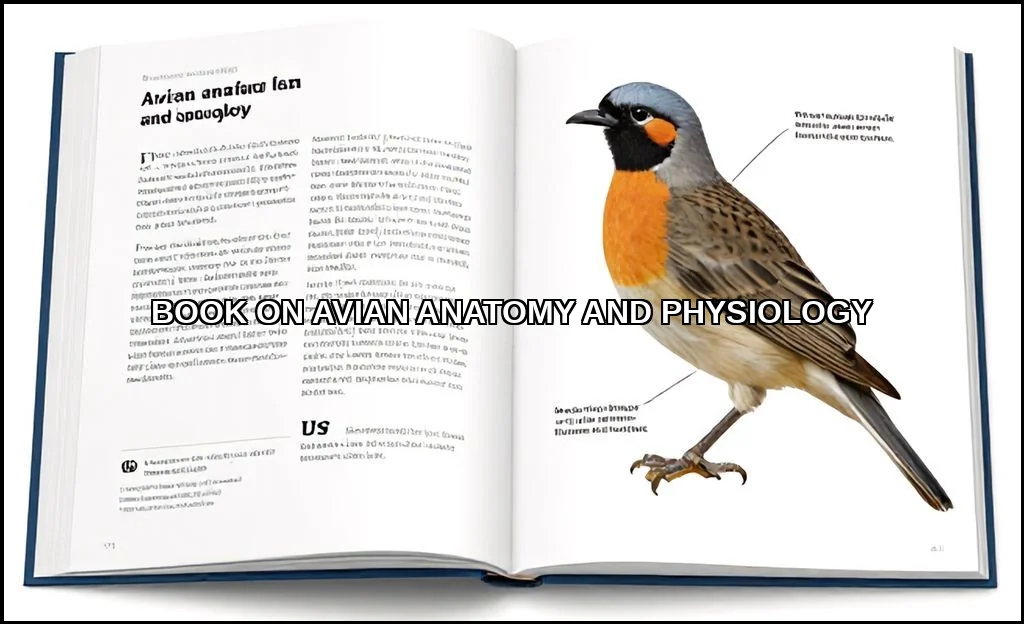
Navigating the World of Avian Reference Books
Not all books are created equal. The market splits into a few clear categories: dense academic textbooks, applied veterinary manuals, and comparative biology references. Your choice depends entirely on your goal.
Key Textbook Features and Target Audience
A top-tier avian anatomy and bird physiology book will have certain non-negotiable features. High-quality, labeled illustrations are a mustyou can’t learn morphology from paragraphs alone. Look for detailed indexes and glossaries for quick reference.
- For Veterinary Students & Professionals: These texts focus on clinical relevance. They often detail common pathologies, surgical approaches, and diagnostic imaging. Brands like Elsevier and Wiley-Blackwell dominate here with authoritative veterinary manuals.
- For Biology & Zoology Students: Academic presses like Academic Press publish texts with a stronger emphasis on evolutionary context and pure science. They delve deeper into cellular mechanisms and ecological adaptations.
- For Aviculturists & Dedicated Hobbyists: While less common, some references bridge the gap between professional and layperson. They explain systems in accessible language to help with advanced husbandry and health monitoring.
If you’re seeking the best book for avian anatomy students, prioritize those with chapter summaries, review questions, and companion websites with additional resources.
The Core of Comparative Anatomy: Birds vs. Mammals
You can’t truly grasp avian biology without constant comparison. A bird is not a furry, flying mammal. Their evolutionary path created profound differences optimized for flight and high metabolism.
Consider the skeletal system. Avian bones are famously lightweight, often pneumatized (filled with air sac extensions). The sternum boasts a massive keel for flight muscle attachment, a structure absent in most mammals. This is a perfect example of form following function.
The respiratory system is arguably the most distinct. Birds have a unidirectional flow system with air sacs, allowing for continuous oxygen absorption during both inhalation and exhalation. Mammals, us included, use a tidal, bidirectional system that’s less efficient. This superior avian biological system supports the immense oxygen demands of flight.
Detailed Coverage of Physiological Systems
A comprehensive ornithology reference guide will systematically break down each bird organ system. Beyond the standard chapters, the best books cover the often-overlooked areas.
Beyond the Basics: Missing Entities You Need
Many standard texts underplay key areas. A robust avian physiology reference should include:
- Avian Neurology & Sensory Systems: How does a bird’s brain process information for flight and navigation? How do their visual, auditory, and magnetic senses differ from ours? This is critical for understanding behavior.
- Flight Physiology: This isn’t just about wings. It’s an integration of musculoskeletal, cardiovascular, respiratory, and neural systems working at extreme performance. Look for dedicated chapters on this synergy.
- Integumentary System: Feathers are more than for flight; they are complex structures for insulation, display, and sensory feedback. Their growth and molting cycles are major physiological events.
For a reliable overview of common health issues from an official source, the Merck Veterinary Manual is an excellent, freely accessible authority guide for bird owners.
| System | Key Avian Adaptation | Primary Function |
|---|---|---|
| Respiratory | Air sacs, unidirectional flow | High-efficiency gas exchange for flight |
| Digestive | Crop, gizzard, rapid processing | Quick energy conversion; weight efficiency |
| Circulatory | Large heart, high cardiac output | Rapid oxygen delivery to muscles |
| Reproductive | Single ovary (in females), shell gland | Weight reduction; egg production |
How to Choose the Right Reference Book
With so many options, how do you decide? Start by honestly assessing your primary need. Is it for passing an exam, diagnosing a sick parrot, or satisfying a deep curiosity about how birds work?
- Audit the Table of Contents: Does it cover your required depth on the avian skeletal system and other bird body systems? Scan for those missing entities like sensory systems.
- Check the Publication Date: Comparative avian physiology is an advancing field. A book from the 1990s might miss modern discoveries in neurobiology or genetics.
- Review the Illustrations: Are diagrams clear, accurate, and plentiful? For anatomy, this is non-negotiable. Schematic drawings often teach more than photographs.
- Read Sample Pages: Does the writing style resonate with you? Is it impenetrably dense or clearly explanatory? The best bird anatomy textbook is the one you’ll actually use.
Remember, a single book may not suffice. You might pair a dense avian anatomy textbook for veterinary students with a more accessible reference book on bird organ systems for quick look-ups. Your library might also include specialized resources, like a guide on the best talking parrot species, to understand the behavioral output of those complex physiological systems.
And for those integrating technology into bird care, understanding anatomy can even inform choices like selecting the best monitored birdhouse to observe natural behaviors without intrusion.
Making the Investment Count
This isn’t a casual purchase. A good ornithology anatomy book is an investment in your expertise. It should sit within arm’s reach on your desk, its spine cracked from frequent use. Don’t just buy the first result you see; match the tool to the task.
The right book transforms confusion into clarity. It turns a mysterious symptom into a recognizable signpost within a known avian biological system. That’s the power of a well-chosen reference.
Ultimately, the landscape of avian science is vast. From the microscopic detail of a feather barb to the grand physiology of a transcontinental migration, it’s all connected. Your chosen book is your map. Prioritize clarity, completeness, and relevance to your journey. Whether you’re prepping for surgery or simply marveling at the mechanics of flight, a solid foundation in anatomy and physiology changes how you see every bird. It turns observation into understanding.
