Can Parrots Actually Understand Human Words?
Contents
You’ve heard a parrot say “hello” or ask for a cracker. It’s charming, a little uncanny, and it makes you wonder. Is that bird just making a noise, or is there a mind behind the words? The question of whether parrots really understand language is one of the most fascinating in animal cognition.
It’s not a simple yes or no answer. The truth lies somewhere between pure mimicry and genuine comprehension. To get to the heart of it, you need to look at the science, the behavior, and the remarkable stories of specific birds. Let’s explore what’s really happening when your feathered friend speaks.
Mimicry vs. Understanding: Defining the Difference
First, you need to separate the two concepts. Mimicry is the ability to accurately reproduce a sound. Many birds do this. Understanding, or comprehension, implies that a sound is connected to a specific meaning, object, or action.
A parrot mimicking a phone ring doesn’t think it’s a phone. It’s just repeating a sound it finds easy to copy or that gets a reaction. True comprehension involves associative learninglinking a word like “apple” to the actual fruit, its taste, or the action of eating it.
The Core of Parrot Speech Ability
So, do parrots understand language? In a limited, yet profound way, yes. They don’t grasp grammar or syntax like humans. Instead, they excel at learning that certain sounds are tied to specific outcomes. This is the foundation of parrot speech comprehension.
- Contextual Understanding: A parrot that says “hello” only when someone enters the room shows it associates that word with a specific event.
- Emotional Association: Words said with excitement or during play become linked to those positive feelings.
- Functional Use: Asking for “water” when thirsty or naming a “key” to request a toy demonstrates the word serves a purpose.
This is where training tools can be incredibly helpful. For building these associations clearly and consistently, many trainers use a clicker. A tool like the Getting Started Clicker can mark the exact moment your parrot does something right, making it easier for them to connect their action (or word) with a reward. It’s a simple way to enhance your communication.
The Science: How Parrot Brains Process Speech
Parrots aren’t just copying sounds randomly. They possess a specialized neural architecture for vocal learning. This sets them apart from most animals and puts them in an elite group with humans, dolphins, and some songbirds.
Their brains contain a “song system”a network of nuclei dedicated to learning and producing complex vocalizations. Research, including studies on the neural pathways of species like Budgerigars, shows this system interacts with brain areas used for higher-order processing. This suggests the potential for sounds to be more than just noise.
The Famous Case of Alex the African Grey
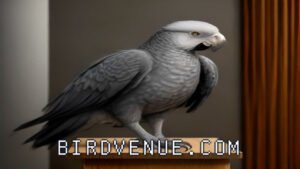
No discussion of parrot intelligence cognition is complete without Alex. Dr. Irene Pepperberg’s 30-year study with this African Grey Parrot shattered assumptions. Alex didn’t just mimic. He demonstrated:
- Object identification by name, color, and material.
- An understanding of concepts like “same” and “different.”
- The ability to combine labels to identify a unique object (e.g., “blue wood”).
Alex’s work provided strong evidence that at least some parrot species can use human speech referentiallyusing words as symbols for things. It’s a cornerstone study for understanding avian intelligence.
Evidence of Comprehension: Context, Association & Emotion
You can observe signs of understanding in your own interactions. It’s about looking for patterns beyond repetition.
Meaningful Communication in Action
Watch for these behaviors. They hint at a deeper level of parrot communication with humans.
- Appropriate Use: The word “bedtime” said as the cage cover comes out, not at noon.
- Emotional Labeling: Saying “ouch” after a mild pinch, or using a comforting phrase when you seem upset.
- Problem-Solving with Words: Asking for a specific toy by name when it’s out of reach.
This leads to a common long-tail question: can you have a real conversation with a parrot? Not in the human sense of exchanging novel ideas. But you can have a functional dialogue based on learned associations and social bonding. They can answer questions, make requests, and express preferences.
Species Differences in Talking Ability
Not all parrots are equal in their vocal prowess or cognitive potential. Parrot talking ability varies widely. Your chances of having a chatty companion depend heavily on species. For a deep dive into species traits, explore our guide on parrot species and their unique characteristics.
Heres a quick comparison of some top talkers:
| Species | Talking Propensity | Noted Cognitive Traits |
|---|---|---|
| African Grey Parrot | Exceptional clarity and large vocabulary; high comprehension. | Often considered the most intelligent; strong problem-solvers. |
| Amazon Parrot | Excellent, clear speech; socially motivated talkers. | Very social; speech is often used for direct interaction. |
| Budgerigar (Budgie) | Can learn large vocabularies, but often in a high, quick pitch. | Highly social; capable of associative learning. |
| Cockatoo | Can learn words, but are better known for sounds & whistles. | Extremely emotionally intelligent and needy. |
This naturally leads people to ask: what is the smartest talking parrot species? Based on research and anecdotal evidence, the African Grey consistently tops the list for combined vocal ability and demonstrated comprehension.
Enhancing Communication: How to Interact with a Talking Parrot
If you want to move beyond speech imitation toward meaningful communication, your approach matters. How parrots learn words is through consistent, positive, and context-rich interaction.
Practical Training Tips
- Start Simple & Be Consistent: Use clear, short words for daily items (water, nut, up). Say them in context.
- Make it a Social Activity: Parrots learn through social bonding. Sit with them, show enthusiasm, and treat speech as a game.
- Reward Attempts, Not Just Perfection: Reinforce any effort to vocalize in context with praise or a tiny treat.
- Label Everything: Narrate your actions. “I’m cutting an apple.” “This is your shiny key.” This builds vocabulary naturally.
- Respect Their Health: A healthy parrot is a engaged parrot. Did you know a safe diet is crucial? For instance, you can learn about what fruits like grapes are safe for parrots to ensure their nutritional needs are met.
Remember, the goal isn’t to create a recording device. It’s to build a shared system of signals that enriches both your lives. The question do parrots know what they are saying? can be reframed: they know that specific sounds produce specific, predictable results in their social world. That’s a powerful form of intelligence.
The journey into parrot vocal learning and cognition is ongoing. Scientists continue to study the nuances, like how different brain pathways handle nouns versus verbs, or how the depth of social bonding accelerates learning. For a broader scientific perspective on this unique trait, you can read about the evolutionary and biological reasons why parrots talk.
So, can parrots really understand words? They understand the meaning they have learned to assign to them. They build a functional lexicon based on association, context, and social feedback. Your parrot may not philosophize with you, but it can certainly tell you what it wants, react to your mood, and use words as tools within your shared environment. Thats not just mimicry. Thats the spark of genuine communication, and its what makes sharing your home with these incredible birds so uniquely rewarding.