
You hear your parrot talking. It says “hello” or maybe “pretty bird.” You might wonder, does it understand those words? More importantly, do parrots talk to each other in the wild like they seem to talk to us? The answer is more complex and fascinating than simple yes or no. Their world of sound is a sophisticated survival tool, not a casual chat.
Forget human conversation. Parrot communication is a high-stakes, action-oriented system of survival. It’s about immediate needs: warning of danger, maintaining contact, establishing bonds, and defending territory. If you want to truly understand your bird, you need to listen like a flock member. Start by recognizing their natural sounds. A tool like the Getting Started Clicker can help you mark and train desired behaviors, bridging the gap between their world and yours.
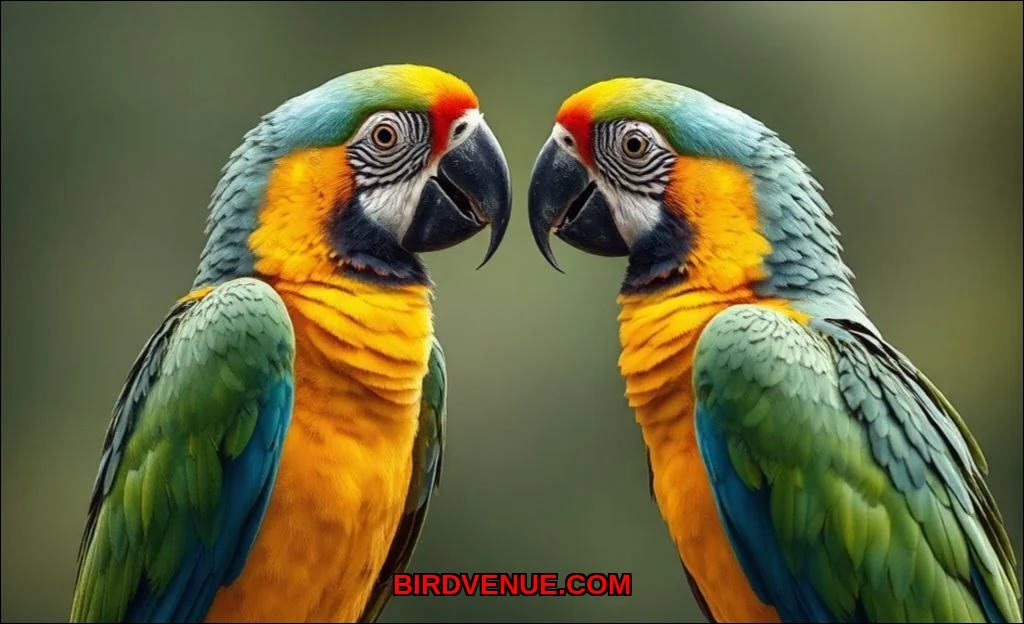
How Parrots Actually Communicate in the Wild
Parrots are intensely social birds. Their lives depend on the flock. Every sound has a job. This isn’t about philosophy or gossip. It’s about real-time coordination and safety.
What do parrots say to each other in the wild? They issue commands and reports.
- Contact calls: The most common parrot communication. Short, sharp chirps or squawks. It means “I’m here, where are you?” while foraging. A missing call triggers an immediate search. In your home, a contact call might happen when you leave the room.
- Flock flight calls: Loud, rhythmic screeches used when the group takes off. It synchronizes movement, a sonic “GO, NOW!”
- Alarm calls: Harsh, piercing screams. Universal danger signals. Even different species of parrots often understand these basic alarm calls.
- Food calls: Excited, specific noises at a food source. It attracts the flock to dinner.
This is their flock language. It’s urgent, direct, and leaves no room for ambiguity. Parrots communicate with each other constantly through this system of bird vocalizations meaning survival.
The Critical Role of Regional Dialects
Heres a nuance most miss. Parrot flocks develop regional accents. A group of Amazon Parrots in one valley will have slightly different contact calls than a flock 50 miles away. This reinforces group identity and helps birds recognize kin. It’s a layer of avian intelligence often overlooked.
The Science Behind Parrot Vocal Learning
This is where it gets incredible. Parrots are among the few animals capable of true vocal learning. They don’t just inherit sounds; they listen, practice, and modify. This ability is powered by specialized brain circuits and the syrinxtheir vocal organ.
Syringeal muscles give them astonishing control. They can mimic a car alarm, your voice, and another bird’s call with precision. But mimicry in the wild serves a purpose. Young parrots learn the flock’s specific calls from their parents. This parent-offspring teaching process is critical for integration.
Some species, like the African Grey Parrot, take this to a cognitive extreme. They can associate human words with meaning, objects, and actions. But even this advanced skill is rooted in their social drive to bond with their “flock”which now includes you. For a deeper dive into the “why” behind this talent, see this expert explanation on why parrots can mimic human speech.
Social Structure Drives Everything
Social structure is the engine of parrot communication. Every sound strengthens the group’s fabric.
- Pair Bonding: Mated pairs of Cockatoos or Macaws develop soft, private chatters. This is the closest thing to a “conversation”quiet, repetitive sounds that reinforce their bond.
- Mating Rituals: Communication becomes performance. Male parrots may showcase their vocal repertoire, combining learned calls and mimicry to impress a mate. Its a display of fitness and mental acuity.
- Flock Integration: A new bird must learn the local dialect. Its acceptance hinges on adopting the correct calls.
So, do parrots have conversations with each other? Not in our sense of exchanging abstract ideas. Their exchanges are functional, emotional transactions. A contact call is answered. A mating duet is performed. A warning is heeded. Action and reaction.
Human Speech vs. Parrot Sounds: The Stark Difference
This is the crucial disconnect. When your Budgerigar (Budgie) says “good morning,” it’s not greeting you. It’s using a sound that got a positive reaction.
| Human Speech | Parrot Vocalization |
| Symbolic, abstract language | Context-driven, functional sound |
| Discusses past/future concepts | Addresses immediate needs (now!) |
| Infinite combinatorial ability | Fixed repertoire with learned additions |
| Primary purpose: idea exchange | Primary purpose: social cohesion & survival |
Your parrot uses human words as super-stimuli contact calls. Saying “hello” when you enter the room serves the same function as a wild contact call. It’s brilliant social manipulation. To explore which species are most adept at this, check out our guide on which parrot species talk the most.
Recognize These Parrot Communication Types Now
Listen to your bird today. Decode its sounds. This knowledge changes your relationship.
1. The Contentment Sounds
Soft grinding of the beak. Low, melodic warbles. These are the sounds of a secure, happy bird. It’s the parrot equivalent of a cat’s purr. You’ve done your job.
2. The Demand Sounds
Loud, persistent squawking or repeating a word. This is a call to action. Your bird wants food, attention, or a change of scenery. Ignore the bad, reward the quiet.
3. The Alarm Sounds
A sudden, piercing shriek or frantic flapping. Your bird is scared. Identify the threata shadow, a new objectand remove it. Provide reassurance.
4. The Contact Calls
You walk out, a single chirp follows you. Call back “I’m here!” from the other room. You just answered your flock member. This reduces anxiety and unwanted screaming.
What About Different Species Understanding Each Other?
Can different species of parrots understand each other? On a basic level, often yes. Alarm calls and some body language are universal. But the nuances of their specific flock dialects are lost. A Macaw and an African Grey in the same home will learn each other’s “language” over time, creating a unique hybrid communication system.
If you’re fascinated by the champions of mimicry, you’ll want to read about the parrot species with the largest vocabularies.
Your Action Plan
Stop wondering. Start listening. Your parrot is talking to you every day in a language of action. Don’t just hear noise. Interpret the intent. Reward the calm contact calls. Address the cause of alarm sounds. Engage with their social nature.
Their world is built on sound. Your understanding of itrecognizing the difference between a true flock call and a demand for attentionis what builds trust. You become part of the flock. Thats the real conversation. Its not in the words. Its in the understanding.
