
You might picture a parrot in a cage, but their true home is a vast, complex world. To truly understand these intelligent birds, you need to explore where parrots live in the wild. Their survival is a masterclass in adaptation, shaped by geography, climate, and food sources.
This journey into avian ecology reveals how different species have become specialists. From the dense canopy of the Amazon to the arid Australian outback, each habitat demands unique solutions. For those wanting to bring a piece of this natural complexity home, many avian enthusiasts recommend a product like Natures Miracle Bird to support captive bird wellness, mirroring the rich environmental engagement they’d find in nature.
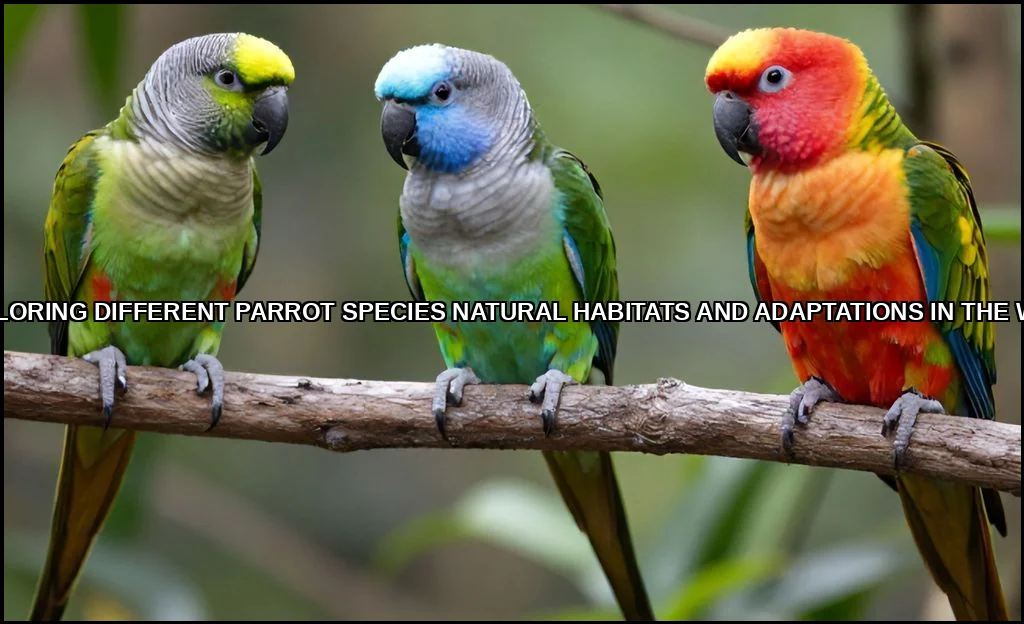
Parrot Habitats: A Global Map of Diversity
Parrots are not randomly scattered across the globe. Their distribution follows a clear pattern of zoogeography, concentrated in the Southern Hemisphere’s tropical and subtropical regions. You’ll find the highest biodiversity in three key areas: the Neotropics (Central and South America), Australasia, and to a lesser extent, Africa and Asia.
This continent-by-continent breakdown isn’t just about location. It’s about the specific ecological niches each region offers. A parrot’s physical form and behavior are direct responses to its home.
Rainforests: The Avian Metropolis
Think of tropical rainforests as bustling cities for parrots. The Amazon Basin is the most famous, housing iconic species like the Blue-and-yellow Macaw and countless Amazon parrots. Why are Amazon parrots suited for rainforest life? It comes down to a few key rainforest parrot adaptations.
- Zygodactyl Feet: Two toes forward, two back. This perfect for gripping branches and climbing.
- Strong, Curved Beaks: Designed to crack hard nuts and seeds, a primary food source.
- Vivid Coloration: In the dappled light of the canopy, bright colors aid in flock communication.
But look closer. Within the rainforest, parrots exploit micro-habitats. Some, like fig parrots, specialize in eating almost nothing but figs. Others nest in specific tree cavities or along riverbanks, showing incredible biome specialization.
Savannas, Deserts, and Alpine Zones
Not all parrots live in lush forests. Some thrive in harsh conditions that demand even more specialized foraging strategies and behaviors.
- Australian Outback: How do cockatoos survive in Australian outback? Species like the Galah and Major Mitchell’s Cockatoo endure scorching heat and limited water. They are nomadic, traveling vast distances to find food and waterholes.
- South American Savannas: The Hyacinth Macaw calls the Cerrado home. Its massively powerful beak is a key adaptation, perfectly evolved to crack open palm nuts. What adaptations help macaws crack hard nuts? An incredibly strong mandible with a specialized pressure point.
- Alpine and Temperate Zones: New Zealand’s Kea is a parrot of mountain ranges. It has a more omnivorous diet and remarkable problem-solving intelligence to exploit scarce resources.
Other unique micro-habitats include cliff faces used by species like the Thick-billed Parrot and mangrove forests inhabited by the Mangrove Parakeet. Seasonal changes dramatically affect these areas, forcing parrots into annual migrations or dietary shifts.
Built for Survival: Key Physical Adaptations
Every part of a parrot is an engineering marvel for survival. Their anatomy tells the story of their environment.
| Adaptation | Function | Example Species |
|---|---|---|
| Powerful, Hooked Beak | Cracking seeds/nuts, climbing, preening | Hyacinth Macaw, Palm Cockatoo |
| Zygodactyl Feet | Superior grasping and manipulation | Almost all parrot species |
| Short, Strong Legs | Stability while climbing and handling food | African Grey Parrot |
| Wing Shape & Flight Muscles | Maneuverability in dense forest or endurance for long flights | Swift Parrot (long-distance), Parakeets (agile) |
Consider the African Grey Parrot. Where do African grey parrots live in the wild? In the dense rainforests of West and Central Africa. Their sleek grey feathers provide camouflage in the shadowy canopy, while their exceptional cognitive abilities help them remember complex fruiting cycles.
The Social Network: Behavioral Adaptations
Wild parrot behavior is deeply social. You rarely see a parrot alone for long. Flocks provide security, knowledge sharing, and mating opportunities.
Flock Dynamics & Communication
Flock size can range from pairs to thousands. These groups are loud and communicative for good reason. Dawn and dusk often see a cacophony of callsthis is social bonding and coordination. Within the flock, complex vocalizations convey information about food sources, predators, and flock movement.
Diet & Foraging Intelligence
A parrot’s diet in the wild is varied and seasonal. It’s not just seeds. It includes fruits, nuts, berries, nectar, blossoms, and even insects or clay (for mineral supplementation). Their foraging strategies are intelligent. Some species, like the Kea, are known for their curiosity and tool-use potential. Others, like the Kakapo, have developed a nocturnal lifestyle to avoid diurnal predators.
This social and dietary complexity is what makes their psittacine environments so fragile. Disrupt one element, and the entire system suffers.
Conservation: The Fight for Wild Spaces
Understanding these adaptations makes the conservation crisis more urgent. The greatest threat to parrots is habitat loss. When a rainforest is cleared or a savanna converted to farmland, entire specialized ecosystems vanish.
Threats to Natural Habitats
Endangered parrot habitats are under siege globally. The primary drivers are:
- Deforestation: For agriculture, logging, and development.
- Illegal Wildlife Trade: Removing birds from the wild for the pet market.
- Climate Change: Altering fruiting cycles and increasing extreme weather.
- Invasive Species: Rats, stoats, and cats that prey on eggs and chicks, especially in places like New Zealand.
How You Can Help & Learn More
Supporting reputable organizations is a direct way to contribute. Groups like the World Parrot Trust and BirdLife International fund on-the-ground conservation, research, and advocacy. They work to protect critical nesting sites and restore degraded habitats.
To check the status of specific species, always refer to an official source like the IUCN Red List. It provides the most current and scientifically rigorous data on population trends and threats.
When you look at a parrot, you’re seeing millions of years of evolutionary fine-tuning. Their beak shape, foot structure, social calls, and nomadic flights are all answers to environmental questions. Protecting them isn’t just about saving a beautiful bird. It’s about preserving these intricate, ancient dialogues between life and landscape. Their survival in nature is a testament to adaptation, and their future depends on our understanding and action.
