
Spotting a distant flock of waterfowl can be thrilling. But turning that blur of wings into a positive identification? That’s the real art. Whether you’re a birder adding to your life list or a hunter ensuring ethical harvests, knowing your ducks, geese, and swans opens up a deeper connection to wetlands and waterways.
A reliable field guide is your first essential tool. For a comprehensive, visual resource, many professionals recommend Waterfowl of North. Its detailed plates and species accounts make it a fantastic companion in the field.
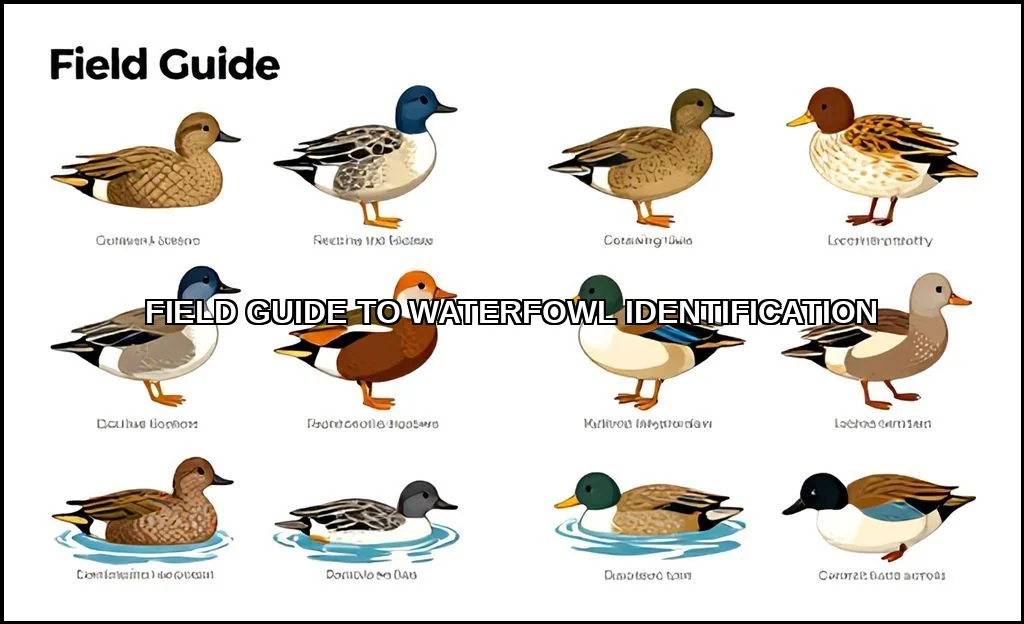
What to Look For: Key Identification Features
Waterfowl identification hinges on observing a suite of features. Don’t just look at color. Consider the whole picture the bird presents.
Plumage, Patterns, and the Speculum
Plumage is your primary clue, but it’s tricky. Males (drakes) often sport bright breeding colors, while females (hens) wear camouflaged browns and grays. Many species also have an eclipse plumagea drabber set of feathers males molt into after breeding. Look for specific patterns: facial stripes, cheek patches, or contrasting wing bars.
A critical feature on many ducks is the speculum. This is a colored patch on the secondary flight feathers, often iridescent blue or green, bordered in white or black. It’s frequently visible on resting birds and is a key field mark for species like the Mallard.
Size, Shape, and Silhouette
Is the bird the size of a crow or a goose? Shape often tells you more than color, especially at a distance or in poor light. Observe the profile:
- Head shape: Rounded like a Gadwall? Sleek and sloping like a Pintail?
- Bill shape: Long and spoon-shaped? Short and stubby? High at the base like a Canvasback?
- Body posture: Does it sit high or low in the water? This is a primary clue for separating dabbling vs diving ducks.
Dabblers tip-up to feed, with their tails pointing skyward. Their legs are centered, allowing them to walk easily on land and spring directly into flight. Divers sit lower, submerge completely to feed, and need a running start across the water to become airborne.
Major Waterfowl Groups and Species Profiles
Breaking waterfowl into groups simplifies the process. Here are the primary categories you’ll encounter.
Duck Identification: The Core Challenge
This is where most birders and hunters spend their time. Beyond dabbling vs diving, consider these common groups:
- Puddle Ducks (Dabblers): Mallard, American Black Duck, Northern Pintail, Gadwall, American Wigeon.
- Diving Ducks: Canvasback, Redhead, Ring-necked Duck, Greater and Lesser Scaup.
- Sea Ducks: Bufflehead, Common Goldeneye, Long-tailed Duck, scoters.
- Whistling-Ducks: Long-legged, tree-perching ducks like the Black-bellied Whistling-Duck.
A classic puzzle is how to tell the difference between mallard and black duck. Look at the speculum: the Mallard’s is blue with white borders; the Black Duck’s is iridescent purple without bold white borders. Also check the bill: a male Mallard’s is yellow, while a Black Duck’s is greenish-yellow to olive.
Goose Identification and Swan Identification
Geese and swans are larger, often found in flocks. For goose identification, focus on head and bill color, breast color, and size. Distinguishing a Cackling Goose from a Canada Goose now relies heavily on size and bill proportions. For swan identification, bill color and pattern are paramountthe black facial knob of the Mute Swan versus the yellow lore patch of the Trumpeter Swan.
An often-overlooked challenge is hybrid waterfowl identification. Mallards commonly hybridize with American Black Ducks, Mottled Ducks, and even domesticated breeds. Look for intermediate or muddled features, a task where a detailed guide like Waterfowl of North proves invaluable.
Beyond the Book: Habitat, Behavior, and Seasons
Where and when you see a bird provides massive clues. A field guide’s range map is just the start.
Habitat Preferences and Migration Patterns
You won’t find a Canvasback on a tiny woodland pond. They prefer large, open water. A Hooded Merganser favors wooded swamps. Understanding migration patterns is also key. Some species, like the Northern Shoveler, migrate early. Others, like many diving ducks, move later as northern waters freeze.
Regional knowledge is powerful. A best field guide for beginner waterfowl watchers might be a general North American guide, but supplementing it with a state-specific booklet from your local Audubon Society chapter or US Fish & Wildlife Service office can work wonders.
Behavior and Vocalizations
How does it feed? How does it fly? Identifying ducks in flight vs water requires noting wing beat speed, flock formation, and overall silhouette. A teal’s swift, twisting flight differs greatly from a goldeneye’s rapid, direct wingbeats.
Sound is a huge, underutilized tool. Learning waterfowl calls can identify birds hidden in reeds or flying overhead at night. The high whistle of a Wigeon, the grating “kra-kra” of a hen Mallard, the melodious cooing of a Wood Duckthese sounds cement an ID. For detailed sound/call analysis resources, the Cornell Lab of Ornithology’s website is an authority guide you should bookmark.
Gearing Up: Recommended Tools & Resources
Your eyes and ears are the primary tools, but the right gear elevates your skills.
Choosing Your Field Guide and Tech
The classic bird identification book isn’t dead. Peterson Field Guides use intuitive arrows. Sibley Guides offer meticulous illustrations with multiple poses. National Geographic Field Guides provide stunning photography. Compare them and see which visual style your brain prefers.
Mobile apps like Merlin Bird ID or Audubon Bird Guide are revolutionary. They offer sounds, photos, and even AI-powered ID from a photo. They’re perfect for quick reference, though a printed field guide never runs out of batteries and is easier to page through for comparison.
Optics and Hunter-Specific Considerations
Good binoculars (8×42 or 10×42 are standard) are non-negotiable for serious observation. For waterfowl, a spotting scope is a game-changer for scanning distant rafts of birds.
For those pursuing duck hunting identification, the stakes are higher. Ethical and legal hunting demands absolute certainty before taking a shot. This requires practicing waterfowl identification tips for hunters: studying silhouettes in low light, recognizing species by their wing sound, and knowing bag limits for each. Organizations like Ducks Unlimited provide excellent hunter education materials focused on ID for compliance and conservation.
And for a unique, modern twist on birding, you can always bring the observation indoors by checking out the best birdhouses with integrated cameras to study behavior up close.
Putting It All Together
Start with the big picture: habitat, size, and shape. Zoom in to plumage details and key marks like the speculum. Listen. Consider the season. It’s a puzzle where each clue narrows the possibilities.
Don’t get discouraged by the difficult days. Even experts stare at confusing ducks sometimes. The joy is in the learning, in the gradual shift from seeing “a bunch of ducks” to recognizing a mixed flock of Gadwall, American Wigeon, and a few Northern Shovelers. It changes how you see a wetland forever. And if your interests extend to other avian families, you might find the challenge of learning which parrots are the most vocal to be a fascinating parallel pursuit. Grab your guide, your binoculars, and head out. The water is waiting.
