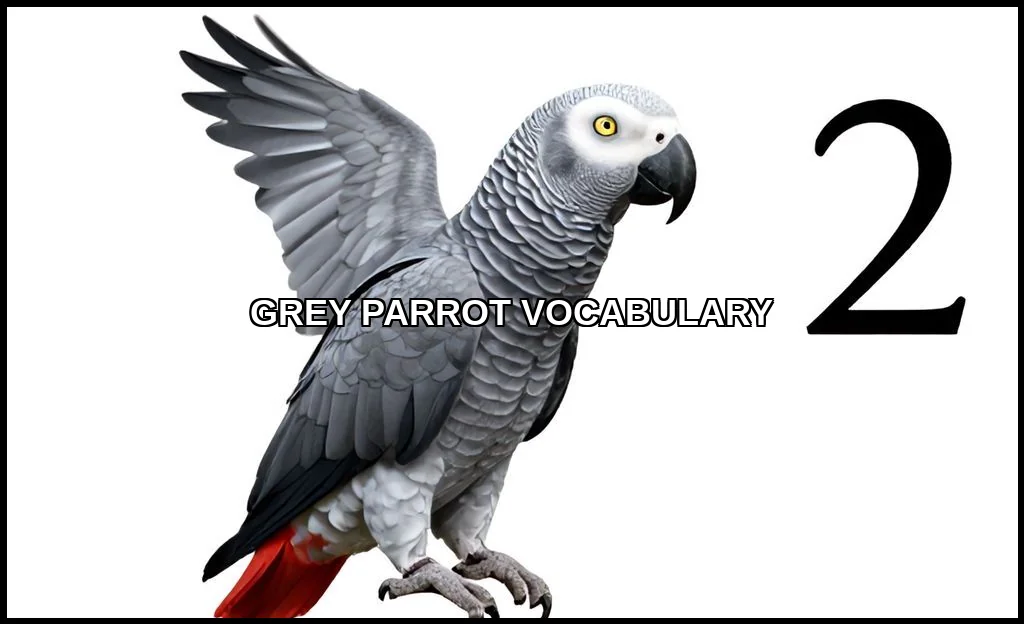
You’ve probably seen the videos. A grey parrot asks for a nut, counts colored blocks, or even seems to express frustration. It’s captivating. But what’s really happening inside that feathered head? The question of grey parrot vocabulary isn’t just about counting words. It’s a window into avian intelligence and the nature of communication itself.
These birds are more than just feathered recorders. Their ability to acquire and potentially use words contextually has reshaped our understanding of animal minds. For anyone curious about vocabulary acquisition or the line between mimicry and understanding, the African grey is a fascinating case study.
How Many Words Can a Grey Parrot Learn?
So, how many words can a parrot learn? The answer isn’t a simple number. It varies wildly. A typical, well-socialized pet African grey might learn 50 to 200 words and sounds. But that’s just the average. Some exceptional birds blow past those figures.
The record-holder is often cited as having a vocabulary of nearly 1,000 words, though this includes sound effects and phrases. The key isn’t raw quantity, but quality of use. A bird using 20 words appropriately is arguably more impressive than one randomly spouting 200. When considering bird vocabulary size, context is king. This depth of ability is a big part of what makes them a contender for the title of smartest talking bird.
Famous Grey Parrots and Their Vocabularies
No discussion is complete without Alex the parrot. Dr. Irene Pepperberg’s groundbreaking work with Alex demonstrated something revolutionary: referential communication. Alex didn’t just mimic labels. He used words to identify objects, colors, shapes, and quantities. He could combine concepts, showing a grasp of categories like “bigger” or “different.”
Other famous greys, like N’kisi and Einstein, have also shown astonishing abilities, from inventive word combinations to apparent telepathy (though that’s hotly debated). These cases prove the upper limits of grey parrot parrot language ability are far beyond simple repetition.
How Grey Parrots Learn and Use Vocabulary
This is where it gets interesting. Grey parrots don’t learn like a student memorizing flashcards. Their process is deeply social and contextual, rooted in social modeling. They learn by observing their flockwhich, in a home, is you.
They are masters of association. They link a sound (“apple”) with an object (the red fruit you’re eating), an action, or an emotional state. This is the foundation of vocabulary acquisition. The big question is: can grey parrots understand what they say? Evidence from studies like Pepperberg’s suggests that, in some cases, yes. They can use words as symbolic representations, not just associated noises. This moves beyond mimicry vs. understanding into a grey area of genuine avian intelligence.
For a deep dive into the science behind this, this official source from Audubon provides excellent context.
Step-by-Step Guide to Teaching Your Grey Parrot
Want to know how to teach a grey parrot new words? It’s about strategy, not just repetition. Patience and consistency are your best tools. Heres a practical framework for parrot speech training.
1. Set the Stage for Success
Training works best in a quiet, distraction-free zone. Your bird should be calm, alert, and a little hungry (using a favorite treat as a reward is powerful). Keep sessions short5 to 10 minutes. Boredom is the enemy of learning. For structured guidance, many owners find a dedicated resource invaluable. A book like Parrot Training A can provide a professional system for these early stages and beyond.
2. Choose Your First Words Wisely
Start with high-value targets. Words associated with things your bird loves.
- Food items: “Nut,” “apple,” “water.”
- Greetings: “Hello,” “Hi bird.”
- Your bird’s name or a simple “good.”
Say the word clearly and enthusiastically right as you offer the item or action.
3. Use the Model/Rival Technique
This is a powerful method inspired by research. Have a second person (the “rival”) with you. You ask the rival for the object (e.g., “Want the nut?”). When the rival says the target word correctly (“Nut!”), they get the nut. Your parrot observes this exchange and often learns faster, understanding the word has a functional purpose. It taps directly into their social learning instincts.
4. Reward and Reinforce Immediately
The instant your bird makes any sound resembling the target word, reward it! Even a mumbled approximation deserves a treat and praise. This shapes the behavior toward the correct pronunciation. Consistency here is how you build their parrot lexicon.
5. Build Context and Combinations
Once a word is solid, add context. Hold up an apple and ask, “What’s this?” Pause. Give them a chance to respond. Eventually, you can combine words they know: “Red apple,” “Want water?” This is where you see the spark of comprehension, moving toward the best methods to increase parrot vocabulary meaningfully.
Factors That Affect Vocabulary Development
Not every grey parrot will become a chatterbox. Several key factors influence their ultimate African grey talking potential.
| Factor | Positive Influence | Negative Influence |
|---|---|---|
| Social Interaction | Daily, engaged conversation and bonding. | Isolation, lack of mental stimulation. |
| Training Consistency | Short, regular, positive reinforcement sessions. | Inconsistent or frustrated training attempts. |
| Individual Personality | Naturally curious, bold, and attention-seeking. | Shy, nervous, or easily distracted disposition. |
| Age of Acquisition | Exposure to speech and training from a young age. | Starting training later in life (still possible, but may be slower). |
| Environment | Rich, stimulating home with various sounds. | Quiet, predictable environment with little novelty. |
Remember, a talking bird isn’t necessarily a “better” pet. Some wonderfully intelligent greys are quiet observers. Their value isn’t measured in their African grey parrot speech alone. If you’re curious about how other species compare, our guide on which parrots talk breaks it down.
Beyond the Word Count: The Bigger Picture
Focusing solely on “what is the average vocabulary of a pet African grey” misses the forest for the trees. The true marvel is their cognitive capacity. These birds can grasp concepts of same/different, absence, and even demonstrate the emotional intelligence to use phrases like “I’m sorry” appropriately after biting.
This complexity means owning a grey is a decades-long commitment to mental partnership. It requires providing not just toys, but puzzles. Not just a cage, but a enriching environment. Even practical tools, like finding the best travel carrier, contribute to their overall well-being and receptiveness to learning.
Their talent forces us to reconsider the boundaries of animal consciousness. It’s not just about the words in their repertoire, but the potential thoughts behind them.
Grey parrot vocabulary is a journey, not a destination. It starts with simple mimicry but canwith patience, intelligent training, and a deep social bondblossom into something resembling true two-way communication. Whether your bird learns ten words or a hundred, the process of connecting, teaching, and observing their unique mind is the real reward. Listen closely. They might just be telling you more than you think.
