
Where Do Parrots Live? Habitat, Climate & Region Guide
Contents
Picture a parrot. You likely imagine a flash of green in a lush jungle or a vibrant blue soaring over a river — and for many species, that mental image is spot on. But the full story of a parrot’s habitat is far more diverse than the rainforest cliché. It’s a story of adaptation, stretching from arid Australian outback to misty Andean peaks, each environment tied to very specific survival needs.
For parrot lovers, understanding this natural environment isn’t just trivia — it shapes everything from conservation priorities to how we care for a companion bird at home. Replicating elements of the wild is one of the best things an owner can do, and it starts with giving your bird the kind of vertical space, sturdy perches, and room to climb that a tree would naturally offer. We’ll point you toward a few setups worth a look further down the page.
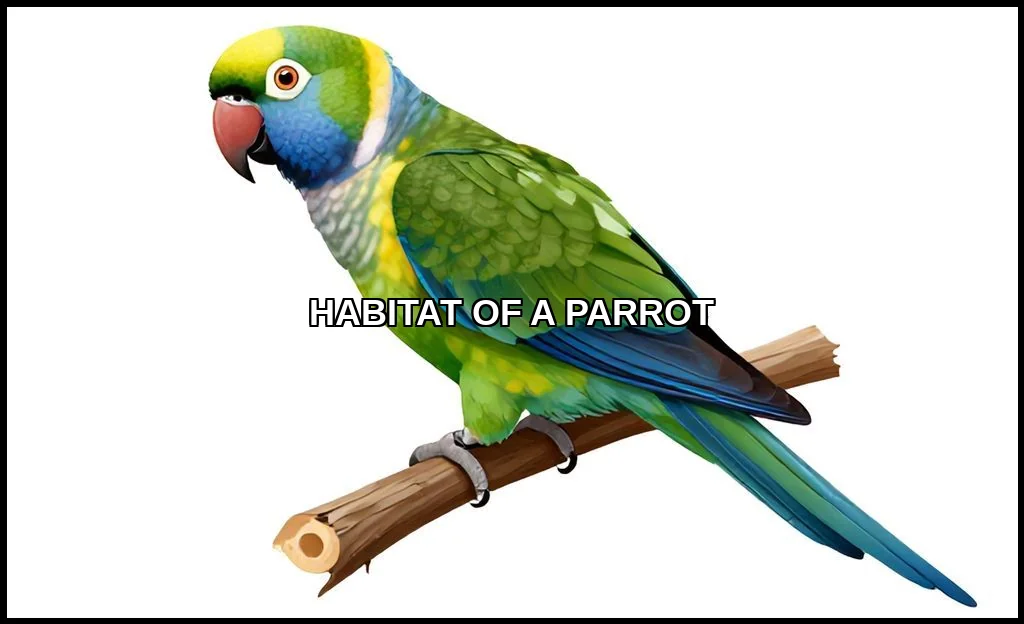
Where in the World Do Parrots Live?
Parrot distribution is, overwhelmingly, a Southern Hemisphere story. You won’t find a single native parrot species in Europe or Antarctica. Their stronghold runs through the tropics and subtropics, with pockets of staggering diversity concentrated in a handful of regions across the globe.
South & Central America
The Macaw & Amazon Heartland
Home to the richest parrot diversity on Earth — macaws, Amazons, conures, and caiques fill the canopy from the Amazon Basin through Central America and into Mexico.
Sub-Saharan Africa
Forest Edges & Savanna
African Greys favor dense equatorial forest, while lovebirds and Senegal parrots range across drier savanna and woodland from West to East Africa.
South & Southeast Asia
Monsoon Forests & Hills
Ringnecked parakeets and hanging parrots (which sleep upside down) occupy everything from lowland monsoon forest to Himalayan foothills.
Australia & Oceania
Outback to Rainforest
The most climate-flexible parrots on the planet — budgies and cockatiels thrive in arid inland scrub, while galahs and cockatoos colonize open woodland and even cities.
While rainforests get the spotlight, parrots have conquered several major biomes well beyond the jungle, and their adaptability across these zones is genuinely impressive.
Major Habitat Types
Tropical Rainforests: This is the quintessential parrot home for species like Amazons and Macaws. The dense, multi-layered canopy provides endless food, shelter, and nesting sites, and a constant warm, humid climate supports year-round fruit and nut production.
Woodlands and Savannahs: Species like Australia’s Galah and many African lovebirds thrive in open, drier woodlands. These habitats offer grass seeds, acacia pods, and tree hollows for nesting, set against a climate of distinct wet and dry seasons.
Montane Forests: Parrots aren’t afraid of heights. The Kea of New Zealand and various conure species in the Andes live in cooler, misty mountain forests, tolerating lower temperatures and exploiting food sources unavailable at sea level.
Coastal Mangroves & Islands: Some species, like certain lories and the now-extinct Carolina Parakeet, specialized in coastal mangroves. Island endemism runs high here, with unique species evolving in isolation — the Puerto Rican Amazon being a prime example.
So what is the natural habitat of a macaw, specifically? It depends entirely on the species. The Scarlet Macaw is a classic lowland rainforest bird, while the Hyacinth Macaw prefers the open palm savannas of Brazil. That nuance — habitat varies wildly even within one genus — is the whole point.
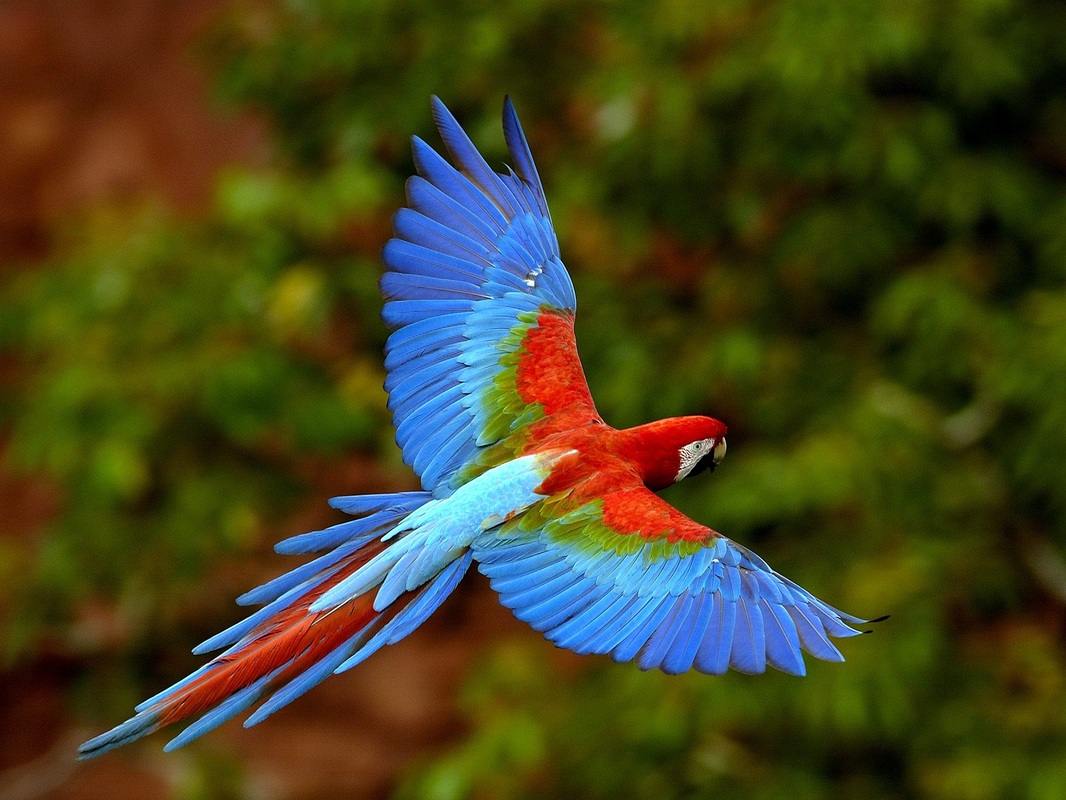
⚠️ PLACEHOLDER — swap for a free Scarlet Macaw / rainforest-canopy photo. See note below.
The Specifics: Climate, Food, and Shelter
Survival in any of these regions hinges on a precise balance. A parrot’s habitat isn’t just a location on a map — it’s a dynamic set of conditions, and disrupting just one of them can cause the entire system to falter.
Climate & Environmental Needs
Most parrots need warmth and generally avoid freezing temperatures — though a few notable exceptions, like the thick-billed parrot, the maroon-fronted parrot, and the Kea, have adapted to snowy alpine conditions and are sometimes nicknamed “snow birds.” High humidity aids feather condition and supports the lush plant life most species depend on. Rainfall patterns dictate food availability, which is why many parrots are nomadic, following fruiting trees as seasons shift. The canopy layer of a rainforest even creates its own microclimate, buffering temperature extremes and wind.
Food Source Availability
Parrots are primarily granivores and frugivores. Their habitat must supply a reliable, year-round mix of nuts, seeds, fruits, flowers, and — in some cases — insects. This is exactly why biodiversity is non-negotiable for them: a monoculture plantation is, in effect, a food desert for most wild parrots.
| Habitat Type | Primary Food Sources | Example Species |
|---|---|---|
| Tropical Rainforest | Palm nuts, figs, canopy fruits, flowers | Blue-and-yellow Macaw, Eclectus Parrot |
| Dry Savannah | Grass seeds, acacia seeds, ground forage | Galah, Cockatiel |
| Montane Forest | Berries, leaf buds, roots, insects | Kea, Austral Conure |
Home Life: Nesting and Social Structure
Finding food is one challenge — raising the next generation safely is another. This is where the physical structure of a habitat becomes paramount.
Nesting Sites and Roosting Behavior
The vast majority of parrots are obligate cavity nesters. They can’t excavate their own holes, so they depend entirely on existing tree hollows formed by decay, woodpeckers, or branches breaking off. Wild parrots build their nests almost exclusively in these secure, dark cavities, which creates intense competition for a limited resource — a suitable nesting tree must be old, large, and often partially dead, qualities that are frequently the first to be removed by forestry operations.
Social structure tracks closely with habitat richness. Flocks range from tight pairs to communal roosts of hundreds — and in the case of species like the budgerigar, sometimes even up to a thousand birds gathering at a single roost tree. This offers powerful protection from predators, and the noise at dawn and dusk is one of nature’s great spectacles. Understanding their vocalizations is part of appreciating the complexity here too — some species are renowned for mimicry, and you can explore which parrots are the most adept talkers.

⚠️ PLACEHOLDER — swap for a free Australian-woodland parrot photo (e.g. a Galah or Sulphur-crested Cockatoo from Wikimedia Commons). See note below.
🏡 Bring a Slice of the Wild Home
A parrot’s natural world is built on vertical space, constant movement, and room to forage. If you’re keeping a companion bird, these are the three upgrades that come closest to recreating that — and reader favorites for good reason.
For the Canopy-Dweller
For Big Macaws & Cockatoos
Reader Favorite
Yaheetech 63″ Extra-Large Flight Cage
If your bird’s wild cousins spend their lives moving through multi-layered canopy, a standard cage is the opposite of that life. This one gives a mid-to-large parrot actual vertical territory to climb, an open play-top for supervised perching, and rolling wheels so you can chase the sunniest spot in the house — the closest thing to forest light a living room can offer.
Check Price on Amazon →Parrot Wizard Large Stainless Steel Play Stand
Wild macaws don’t sit still — they range, climb, and forage across huge territories every single day. This US-made stand was built specifically for the birds standard playgyms ignore: Hyacinth Macaws, Green-Winged Macaws, and Moluccan Cockatoos. The oversized hardwood perch flexes underfoot just like a real branch, so out-of-cage time actually feels like exercise instead of a timeout.
Check Price on Amazon →Yaheetech 69″ Wrought Iron Play Stand
The one already mentioned above for a reason — it’s the easiest first step toward a habitat-style setup. Tall, sturdy, and built around the same logic as a tree’s structure: multiple perch heights, room to climb, and a footprint that holds up to years of an active bird’s daily routine.
Check Price on Amazon →As an Amazon Associate, Bird Venue earns from qualifying purchases. Prices and availability are accurate as of the date of publishing and are subject to change on Amazon.
The Fragile Balance: Human Impact and Conservation
Here’s the hard truth — parrot habitats are under siege globally. The very features that make a place ideal for parrots — old trees, biodiversity, large wild spaces — are frequently the first things lost to human development.
Conservation Status & Threats
The leading threat is deforestation. It’s not just about clearing land; it fragments the landscape, isolating populations and making them far more vulnerable. Deforestation removes food sources, eliminates nesting cavities that take decades to form naturally, and exposes birds to predators and the elements all at once. The fight to protect parrot habitat is, in large part, a fight to protect the last intact forest tracts still standing.
Other major threats include the illegal pet trade, which directly removes birds from wild populations, and climate change, which can alter fruiting cycles and increase extreme weather events. For a sobering look at the scale of the challenge, the IUCN Red List serves as the definitive official source on species threat levels.
What’s Being Done — and What You Can Do
- Protecting and legally designating key forest areas as parks and reserves.
- Installing artificial nest boxes to supplement the lack of natural hollows in recovering forests.
- Community-based programs that make live parrots more valuable through ecotourism than through the pet trade.
- Supporting sustainable agriculture and certified forestry that maintains habitat corridors.
For the pet owner, the connection is direct. Choosing a reputable breeder — never a wild-caught bird — providing a species-appropriate environment, and supporting conservation groups are all actions that genuinely matter. Ensuring your bird has safe, engaging equipment is part of that care too — finding the best travel carrier for vet visits, for example, reduces stress and supports their wellbeing.
Quick Answers: Where Do Parrots Live?
Where do parrots live in the wild?
Mainly across the Southern Hemisphere’s tropics and subtropics — South and Central America, sub-Saharan Africa, South and Southeast Asia, and Australia. Most live in lowland rainforest, but savanna, mountain forest, and even arid scrub all support thriving parrot populations.
Do all parrots live in the jungle?
No. While rainforest gets the spotlight, large numbers of species — budgies, cockatiels, galahs, and lovebirds among them — live in dry woodland, savanna, or even semi-arid outback, far from any jungle canopy.
What is a parrot’s natural habitat made up of?
Three non-negotiables: a year-round food supply (fruit, seed, or nectar depending on the biome), tree cavities or rock crevices for nesting, and cover from predators. Remove any one of these and the habitat stops supporting the population.
Where do parrots live in cold or snowy climates?
A handful of species buck the warm-climate trend entirely. New Zealand’s Kea thrives in alpine snow, and the thick-billed and maroon-fronted parrots of Mexico live in cool, high-elevation pine forest, feeding on pinecone seeds.
Why do parrots need tree hollows specifically?
Parrots can’t excavate their own nesting holes the way woodpeckers can. They depend entirely on pre-existing hollows from decay, storm damage, or other animals — which is why old-growth trees are irreplaceable habitat, not just scenery.
A parrot’s habitat is a complex, interconnected system — not just trees and weather, but a grocery store, a nursery, a fortress, and a social network all in one. From the dense Amazonian canopy to the arid Australian outback, these birds have evolved in delicate balance with their surroundings. That balance is now precarious. Understanding the depth of their environmental needs — the specific nesting requirements, the precise climate tolerances — is the first step in advocating for their future. Their survival depends on us valuing the intricate ecosystems they call home, not just the charismatic birds themselves.