
Eight chickens have a total of 16 legs, as each chicken has 2 legs.
Eight chickens have 16 legs. Each chicken has two legs, so multiplying 8 chickens by 2 legs each gives you 16 legs total. This basic math applies to all healthy chickens, as they are bipedal animals with two legs each.
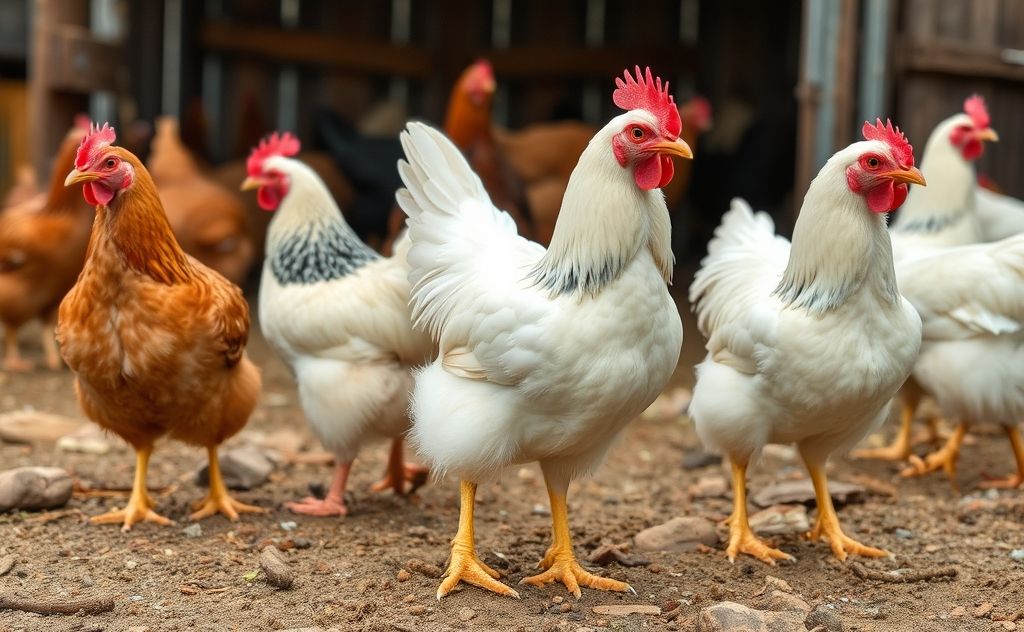
Understanding Chicken Anatomy
Chickens, like all birds, have two legs designed for walking, scratching, and perching. Their legs consist of:
- Thigh (upper leg)
- Drumstick (lower leg)
- Foot with three forward-facing toes and one backward-facing toe
- Claws for scratching
Common Chicken Leg Variations
While normal chickens have two legs, some rare conditions can affect leg count:
| Condition | Leg Count | Frequency |
|---|---|---|
| Normal chicken | 2 legs | 99.99% |
| Polydactyly (extra toes) | 2 legs (with extra digits) | Rare |
| Genetic mutation | 3-4 legs | Extremely rare |

Why This Question Matters
Understanding chicken anatomy helps with:
- Proper chicken care and health monitoring
- Accurate counting for farming operations
- Basic math education for children
- Planning coop space requirements
Real-World Applications
Farmers regularly count chicken legs when:
- Taking inventory
- Checking for injuries
- Planning processing
- Designing chicken runs
Chicken Leg Facts and Figures
Some interesting statistics about chicken legs:
- The average chicken takes about 8,000-10,000 steps per day
- Chicken legs contain both white and dark meat
- Drumsticks make up about 17% of a chicken’s total weight
- Chickens can run up to 9 mph on their two legs
Nutritional Value
Chicken legs are a popular food source worldwide. According to The Culinary Exchange, chicken legs offer:
- High protein content
- Rich flavor compared to breast meat
- Affordable price point
- Versatility in cooking methods
Common Misconceptions
Some people mistakenly believe:
- Chickens can have more than two legs (extremely rare)
- All chicken legs are the same size (varies by breed)
- Chickens use their wings as legs (wings are for balance)
As noted by Shepherd’s Hill Farm, many children today don’t even recognize chicken legs as food due to the prevalence of processed nuggets.
Breed Variations
While all chickens have two legs, some breeds have distinctive leg features:
- Silkies: Black skin and five toes instead of four
- Polish: Clean-legged varieties
- Cochins: Heavy feathering on legs
Mathematical Applications
The “how many legs” question helps teach:
- Basic multiplication (8 chickens × 2 legs = 16 legs)
- Problem-solving skills
- Real-world math applications
- Pattern recognition
Advanced Calculations
For larger flocks:
- 10 chickens = 20 legs
- 50 chickens = 100 legs
- 100 chickens = 200 legs
Chicken Behavior and Leg Use
Chickens use their two legs for:
- Walking and running
- Scratching for food
- Perching at night
- Dust bathing
- Establishing pecking order