
You look at your African Grey parrot, and you wonder. How does this feathered companion learn to speak with such clarity? It’s not just a party trick. It’s a window into a remarkable mind.
Their ability to master human speech stems from a powerful combination of biology, intelligence, and social need. To teach them effectively, you need to understand how they learn. This guide breaks down the science and gives you practical steps.
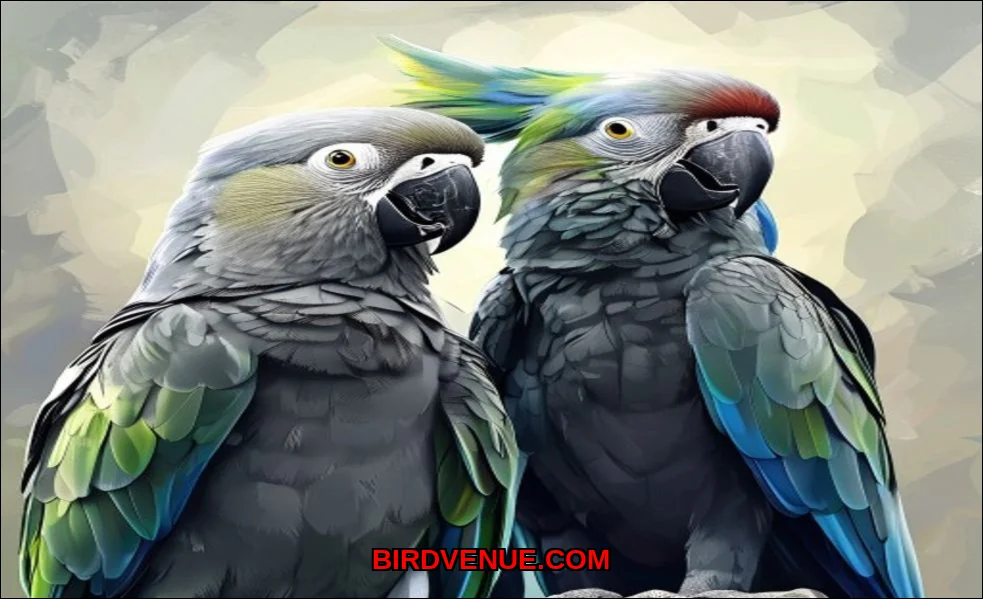
The Cognitive Foundation: Why African Greys Can Talk
African Greys aren’t just mimicking sounds randomly. They possess cognitive abilities rivaling those of a young child. Studies on the species Psittacus erithacus show they can associate words with meanings, colors, and numbers. This intelligence is the bedrock of their vocal mimicry.
Biologically, they lack vocal cords like ours. Instead, they use a specialized organ called the syrinx, controlled by intricate syringeal muscles. This gives them incredible control over pitch and tone. Specific brain regions, often called song nuclei, are highly developed for processing and reproducing complex sounds.
Compared to other talking birds like Amazons or Cockatoos, African Greys often show a deeper understanding of context. They don’t just repeat “hello” they learn to say it when you enter the room. This cognitive development is what sets them apart.
How Their Brain and Body Work Together
The process is fascinating. They hear a sound, their brain processes it in the song nuclei, and then sends precise signals to the syrinx. It’s a sophisticated feedback loop. Their bird intelligence allows them to practice and refine these sounds until they match what they heard.
This biological capability is why their African Grey parrot talking ability is so renowned. It’s a perfect storm of hardware and software.
The Learning Process: How They Acquire Speech
So, how do parrots mimic? It starts with listening. Your Grey is constantly auditing its environment, from your conversations to the microwave beep. This auditory absorption is the first step in parrot vocal learning.
There’s a critical learning period, typically from about 6 to 18 months of age. This is when their brains are most plastic and receptive to new sounds. This leads to a common owner question: at what age do African Grey parrots start talking? You might hear first attempts around 12 months, but it varies.
They practice quietly, often at dawn or dusk, babbling and experimenting with sounds before producing clear words. This practice is crucial for their cognitive development.
Social Factors in Vocal Development
Parrots are flock animals. For them, vocalization is about bonding and integration. Your Grey wants to be part of your “flock.” Their speech is a form of social learning, a way to connect with you.
This is why a socially isolated parrot may not talk much, or may develop problematic screams. They learn best through positive, interactive relationships. Your engagement is the key motivator. You’re not just a trainer; you’re their social companion. For a deeper dive into the mechanics behind this, explore how parrots produce human speech.
Practical Training Techniques for Owners
Now for the hands-on part. How long does it take for an African Grey to learn words? It depends on consistency, but you might see results with simple words in a few weeks. Patience is non-negotiable.
Here are the best methods to teach African Grey to talk:
1. Start with Clear, Consistent Modeling
- Choose simple words: “Hello,” “Step up,” or their name.
- Say them clearly and with the same enthusiastic tone each time.
- Associate words with actions: Say “Step up” every time you offer your hand.
2. Master Reinforcement Training
This is the cornerstone. The moment your parrot attempts a sound or word, immediately reward them. This reinforces the connection between the action and a positive outcome.
- Use high-value treats: A small piece of nut or a favorite fruit.
- Offer enthusiastic praise: “Good bird!” in a happy voice.
- Be instant: Timing is everything. The reward must follow the attempt within seconds.
For this, many trainers find a clicker incredibly effective. It provides a consistent, clear marker sound the instant the desired behavior happens. A tool like the Getting Started Clicker can simplify this process, making your speech training sessions more precise.
3. Create a Learning-Rich Environment
Bird toys and avian enrichment aren’t just for play. Puzzle feeders and foraging toys sharpen the cognitive skills needed for speech. A stimulated mind is a learning mind. Even diet plays a role; a balanced diet rich in nutrients supports overall brain health and cognitive function.
Consider a routine that looks like this:
| Time of Day | Activity | Speech Focus |
| Morning | Interaction & Training | Practice 2-3 target words with treats. |
| Afternoon | Independent Play | Audio enrichment (calm music, audiobooks). |
| Evening | Wind-down & Bonding | Casual conversation near the cage. |
Common Challenges and Solutions
You’ll hit roadblocks. Every owner does. The key is to adapt.
Problem: Mumbling or Unclear Speech
Solution: Go back to basics. Enunciate extremely clearly. Slow down. Reward any clearer attempt immediately. Sometimes they learn the rhythm of a word before the precise consonants.
Problem: Learning “Bad” Words or Sounds
Solution: Ignore it completely. No reaction, negative or positive. Reinforce the words you do want to hear with extra enthusiasm. They often pick up words said with strong emotion, so mind your language!
Problem: Seeming Lack of Interest
Solution: Assess the environment. Is your bird stressed or bored? Increase general enrichment and bonding time. Ensure they are physically healthy. Not every Grey is a chatterbox, but most will engage if the motivation is right. For more perspectives on the learning journey, this external resource on how parrots learn and communicate offers valuable insights.
Unlocking Their Potential
So, why are African Greys such good talkers? It’s the synergy of a powerful brain, a specialized vocal apparatus, and an innate drive for social connection. Your role is to nurture all three.
Start with a strong bond. Make training a fun, short, daily game. Use clear modeling and instant rewards. Remember, you’re not programming a machine. You’re having a conversation with a highly intelligent creature. Celebrate the small stepsthe first clear syllable, the first contextually correct word. That’s where the real magic happens. Your patience and understanding are the final, crucial ingredients in unlocking their incredible bird communication skills.
