
You hear your parrot say “hello.” It’s clear. It’s perfect. But what does it mean? Is it just noise, or is there a mind behind the mimicry? You need to know. This isn’t about cute tricks. This is about unlocking the true cognitive abilities of the creature in your home. Stop wondering. Start measuring.
Forget everything you think you know about bird brain size. Intelligence isn’t about volume. It’s about connection, problem-solving, and emotional depth. You can see it. You can test it. And you can build it. Start with the right tools. For cognitive enrichment, many owners use versatile toy sets like the Skylety 10 Pcs to create dynamic challenges that stimulate true problem-solving.
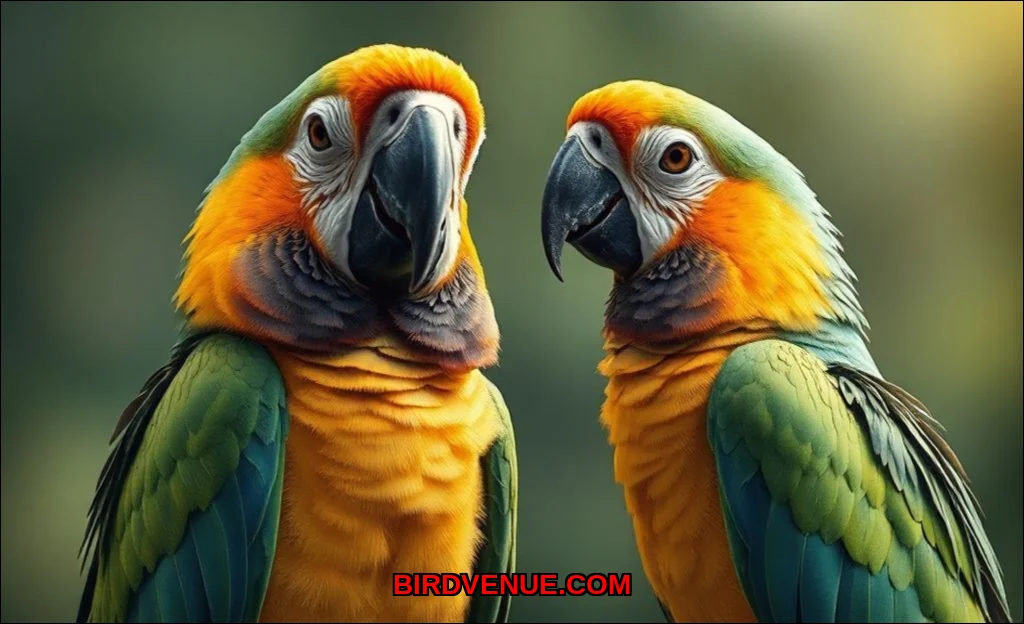
Measure Parrot Intelligence: Beyond Mimicry
Mimicry is a party trick. True animal cognition is the main event. Your parrot’s parrot IQ isn’t shown by vocabulary size alone. It’s revealed by application. Does the bird use words contextually? Does it solve puzzles to get a treat? That’s the metric that matters.
You must separate vocal learning from understanding. The first is mechanical. The second is cognitive. A parrot can replicate the sound “water” perfectly. The intelligence question is: does it say “water” when it’s thirsty? That shift from repetition to request is everything. It’s the cornerstone of avian speech comprehension.
The Core Tests of Avian Intelligence
To gauge your bird’s mind, implement these assessments now. Track results over weeks.
- Object Permanence: Hide a favored treat under one of three identical cups. Shuffle them. Does your parrot track the correct cup? This tests working memory and visual processing.
- Tool Use: Present a food item just out of reach, with a stick nearby. Does the bird use the stick to retrieve the food? This indicates advanced problem-solving and causal reasoning.
- Labeling: Hold up two different items (e.g., a key and a cork). Ask for one by name. Can your parrot correctly identify it? This tests associative learning and word-object correlation.
These aren’t just games. They are concrete intelligence tests for owners, providing the metrics to track cognitive progress you won’t find elsewhere.
Decode Speech Comprehension: What They Actually Understand
So, can talking parrots understand what they say? The answer is a conditional, powerful yes. Comprehension isn’t binary. It’s a spectrum. Your parrot may associate “apple” with the fruit it eats. It may not grasp “apple” as a concept in a story. Focus on functional understanding.
Landmark research, like that with the famous African Grey Alex (the parrot), proved parrots could use language referentially. Alex didn’t just name colors and shapes. He combined them to identify unique objects. He expressed desires. He demonstrated a parrot memory for dozens of labels. This external research, like the studies on budgie brains and human speech parallels, shows the neural capacity is there. Your job is to activate it.
Speech comprehension builds through consistent, contextual pairing. Every time you give a nut, say “nut.” Every time you fill the water dish, say “water.” The action defines the word. This is your step-by-step training protocol to develop intelligence.
Rank Smartest Species: From African Greys to Budgies
Not all talking birds are equal in cognitive horsepower. An intelligence ranking helps set realistic expectations. Heres a breakdown of key species known for their parrot cognitive abilities.
| Species | Talking Proficiency | Cognitive Hallmark |
|---|---|---|
| African Grey Parrot | Exceptional clarity, large contextual vocabulary | Highest documented reasoning, understanding of concepts like same/different, zero |
| Amazon Parrot | Excellent clarity, enthusiastic singers | Strong social intelligence, emotional responsiveness |
| Cockatoo | Moderate, often less clear | Extreme problem-solvers (often destructive), profound emotional intelligence |
| Budgerigar (Budgie) | Large vocabulary but often high-pitched & fast | Surprisingly adept at associative learning and pattern recognition |
So, what is the smartest talking parrot species? For pure linguistic and analytical intelligence, the African Grey reigns. But “smart” varies. A Cockatoo’s genius lies in mechanical problem solving and emotional connection. Your choice depends on the type of intelligence you want to engage with. For more on species adept at speech, explore our guide on parrots that are good at talking.
Where Does Emotional Intelligence Fit?
Do parrots have emotional intelligence? Absolutely. They read your tone, your body language, your mood. They form deep bonds and can exhibit jealousy, empathy, and grief. This isn’t anthropomorphism. It’s observed social cognition. A parrot that sulks when you’re on the phone, or preens you gently when you’re sad, is demonstrating complex emotional processing. This is a critical part of their overall avian intelligence scale.
Test Cognitive Abilities: Problem-Solving & Memory
Stop guessing. Start testing. How to test your parrot’s intelligence is a hands-on process. Design challenges that require multiple steps to solve. This moves beyond simple mimicry into the realm of executive function.
- The Foraging Puzzle: Place a treat inside a closed but unlockable container. Place that container inside a simple cardboard box. Does your parrot open the box, then manipulate the container to get the reward? This tests sequential planning.
- The Delayed Gratification Test: Offer a mediocre treat now, or wait 30 seconds for a high-value treat. Can your bird inhibit its immediate impulse? This tests self-control, a marker of advanced cognition.
- The Associative Chain: Teach that ringing a bell means “step up.” Then teach that bringing you a red ring means you’ll ring the bell. Can the bird initiate the chain by bringing you the ring to get a ride? This tests complex associative parrot memory.
Document these attempts. Success rate and speed are your key metrics. This is how you move from anecdote to data.
Boost Their Intelligence: Actionable Training Methods
Intelligence isn’t fixed. It’s a muscle. You must train it daily. Your environment is your primary tool. Boredom is the enemy of parrot brain function.
Your Cognitive Enrichment Blueprint
- Rotate Toys Weekly: Novelty is non-negotiable. This includes Parrot Toys designed for foraging and manipulation. Don’t just give toys; create puzzles with them.
- Train in 5-Minute Sessions: Multiple short sessions beat one long one. Focus on one new concept at a time. Use high-value Training Treats as reinforcement.
- Introduce Complex Commands: Move beyond “step up.” Teach “fetch the blue block” or “put the coin in the cup.” This combines vocabulary with physical action, engaging multiple brain centers.
- Social Modeling: Parrots learn by watching. Let your bird see you “solve” a puzzle toy. They will often mimic the solution, demonstrating social learning.
Remember, a key part of enrichment is understanding their entire nature. For a deeper dive into how different types think and behave, consider the key differences between macaws and other parrots.
Invest in proper Cognitive Enrichment Tools. Puzzle feeders, treat-dispensing balls, and unlockable boxes aren’t luxuries. They are gym equipment for your parrot’s mind. A stagnant environment leads to a stagnant brainand often, behavioral issues.
You now have the framework. The question of how smart are parrots is answered not by a label, but by action. Their intelligence is a latent resource. It’s your responsibility to mine it. Implement the tests. Apply the training. Observe the nuanced responsesthe thoughtful pause before solving, the creative use of a learned word. This is where mimicry ends and mind begins. Start today. Your parrot’s potential is waiting.
