
You’re looking at a stunning, colorful bird and wondering: is that a macaw or a parrot? It’s a common question, and the answer is more nuanced than you might think. All macaws are parrots, but not all parrots are macaws. Think of it like squares and rectangles. Understanding the distinction helps with identification, care, and even appreciating their unique roles in the ecosystem.
For anyone diving into the world of these intelligent birds, especially if a macaw is on your radar, a dedicated resource is invaluable. Many new owners find a comprehensive guide like the MACAW HANDBOOK A incredibly helpful for navigating their specific needs from day one.
Parrot Taxonomy: Family vs. Subgroup
Let’s clear up the classification first. All parrots belong to the order Psittaciformes. This large group is then broken down into families. The most well-known family is Psittacidae, often called the true parrots. This is where most of the familiar pet birds reside, including macaws, Amazons, and African Greys.
Macaws are a specific subgroup within the true parrots. They are classified as New World parrots, meaning their natural habitat is the Americas, from Mexico through Central and South America. Other New World parrots include conures and Amazon parrots. So, when you’re trying to identify parrot species, you’re often distinguishing between these subgroups within the larger family.
The Core Macaw vs Parrot Difference
The main difference between a macaw and a parrot is that “parrot” is the broad categorical term, while “macaw” specifies a distinct genus (Ara, Anodorhynchus, Cyanopsitta, etc.) within that category. Are all macaws considered parrots? Absolutely. But they have a set of defining features that set them apart from other parrot family birds.
Key Physical Differences: Size, Beak, and Coloration
This is where identification gets visual. Macaws are the giants of the parrot world, making them one of the most recognizable large parrot species.
Size and Proportions
Macaws are notably long. This length comes from their impressive tail feathers, which can be longer than their body. A Hyacinth Macaw, the largest flying parrot, can reach 40 inches from head to tail tip. Compare that to a popular Amazon parrot, which typically maxes out around 15 inches. When considering what size cage does a macaw need compared to other parrots, you’re looking at a massive enclosure to accommodate both wingspan and tail.
The Signature Beak and Facial Patch
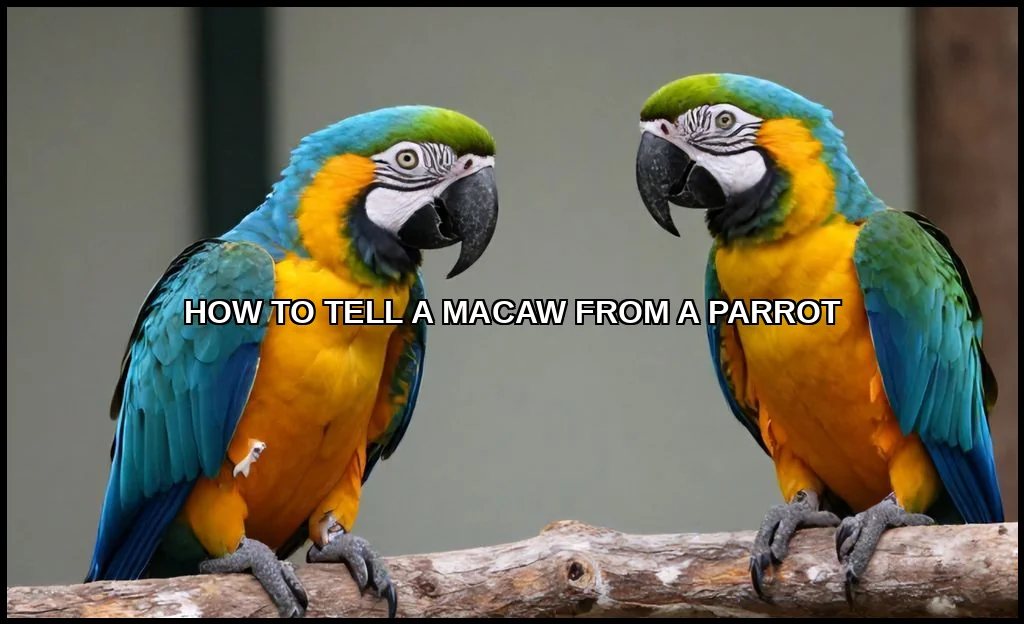
A macaw’s beak is a powerful tool. It’s large, curved, and incredibly strong, designed to crack open the hardest nuts and seeds. Their faces are also distinctive. Most macaw species have a unique, often featherless, facial patch. This patch of bare skin shows lines of small feathers, which can flush with color when the bird is excited. Other parrots, like African Greys, have fully feathered faces.
Coloration and Patterns
Macaws are the rainbows of the avian world. Their plumage is often a vibrant, solid block of color or a striking two-tone pattern. How to identify a blue and gold macaw is a classic example: look for a brilliant blue back and wings with a rich golden-yellow underside and a green forehead. While other parrots can be colorful, few match the bold, saturated hues and large, clean color fields of a macaw.
All parrots, including macaws, share zygodactyl feet. This means they have two toes pointing forward and two pointing backward, perfect for climbing and manipulating objects. It’s a key feature of the entire order.
Behavioral Contrasts: Noise, Intelligence, and Social Needs
Behavior is a huge part of identification. Macaws have personalities as large as their stature.
Vocalizations and Noise Level
Macaws are loud. Their natural contact call is a powerful, far-carrying squawk or scream that can be heard over long distances in the rainforest. While all parrots can be vocal, the volume and depth of a macaw’s call are in a league of their own. If you’re curious about vocal abilities in other species, you can explore which parrots are known for clearer speech mimicry.
Intelligence and Demeanor
Macaws are profoundly intelligent and emotionally complex. They form deep, lifelong bonds and require immense social interaction. Boredom or neglect can lead to severe behavioral issues like feather plucking. Their intelligence is often paired with a “clownish” demeanorthey love to play, hang upside down, and engage in dramatic antics. This need for mental stimulation is a critical part of their macaw characteristics.
Habitat and Care Requirements
Caring for a macaw is a major commitment, distinctly different from caring for many other parrots. Their size dictates everything.
- Space: They need the largest cages available, plus ample out-of-cage time in a bird-safe room.
- Diet: Their powerful beaks require a specialized diet of high-quality pellets, nuts, and fresh fruits/vegetables.
- Destruction: A macaw’s beak is a natural wrecking ball. They need a constant supply of heavy-duty wooden toys to destroy. This isn’t misbehavior; it’s a necessity.
- Lifespan: Be prepared for a lifelong companion. Macaws can live 50 to 80 years with proper care.
For smaller parrots, like a Meyers, equipment needs differ significantly. Finding the best travel carrier is a good example of how species size impacts practical care products.
Popular Macaw Species and Their Identifying Features
Looking at a macaw species list, a few stand out as most common in aviculture. Heres a quick identification guide:
| Species | Key Identifying Features | Approximate Size |
|---|---|---|
| Blue and Gold Macaw | Blue back/top of wings, golden underside, green forehead, black throat. | 30-36 inches |
| Scarlet Macaw | Vivid red body with yellow and blue wing feathers, white facial patch. | 32-36 inches |
| Green-winged Macaw | Mostly red body with green wing stripes (not blue), larger facial patch. | 35-37 inches |
| Hyacinth Macaw | Solid cobalt blue, yellow eye ring and chin patch, massive beak. | 40 inches |
| Military Macaw | Mostly green plumage, red forehead, and blue flight feathers. | 27-30 inches |
Each has subtle differences in coloration, facial patch pattern, and size. A good parrot identification guide will focus on these specific markers.
Beyond the Giants: Mini-Macaws
Not all macaws are enormous. Species like the Severe Macaw, Hahn’s Macaw, and the Illiger’s Macaw are considered “mini-macaws,” ranging from 12 to 20 inches. They possess the classic macaw looklong tail, large beak for their size, and facial patchbut in a more compact package. Their care requirements, while still significant, are somewhat more manageable.
Distinguishing a macaw from other parrots hinges on a combination of factors. Look for the large size, long tail, powerful beak, distinctive facial patch, and often blocky, vibrant coloration. Remember their behavioral profile: highly social, intensely intelligent, and vocally powerful. For a deeper dive into the scientific and conservation perspective, this authority guide from Audubon is an excellent official source.
Whether you’re a birding enthusiast or a potential owner, understanding parrot taxonomy and these key distinctions enriches your appreciation. It moves you from seeing just a “big parrot” to recognizing a specific, awe-inspiring lineage of New World parrots with their own unique story and needs. Choose your avian companion with your eyes wide open to these differences.
