
Seeing in the dark isn’t just about vision; it’s about reach. The quest for the longest range night vision binoculars pushes the boundaries of what’s possible after sunset, whether for professional surveillance, wildlife observation, or serious outdoor pursuits. It’s a technical arms race where every meter of detection range matters, governed by optics, sensor technology, and a deep understanding of light itself.
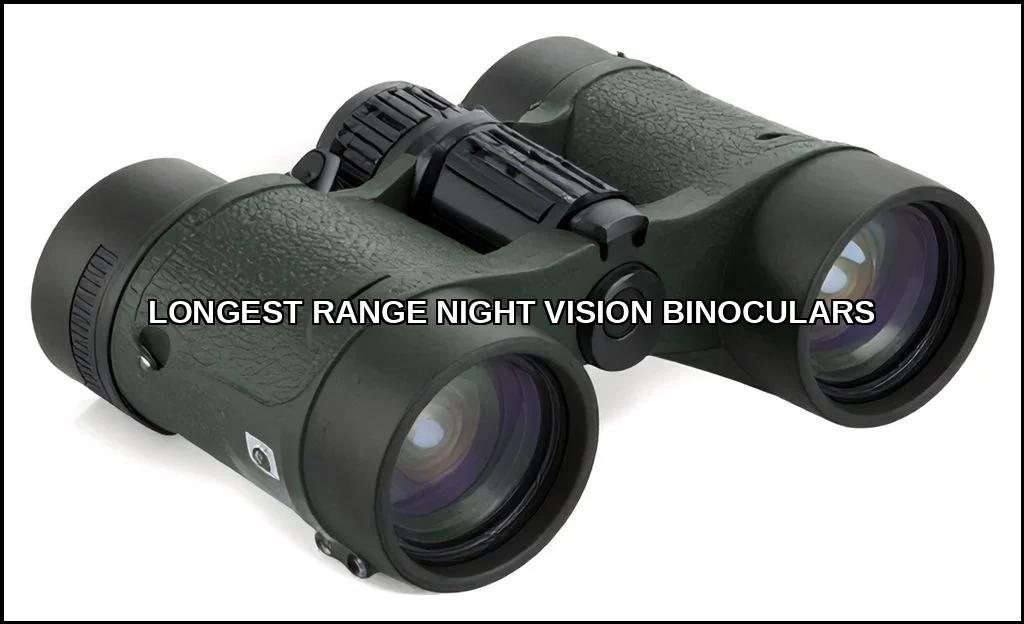
For hobbyists and professionals alike who need reliable performance without a military budget, the JDZ Night Vision binoculars offer a compelling entry point. They integrate key features like a powerful infrared illuminator and digital magnification that make long-distance observation more accessible, providing a practical tool for those asking, what is the maximum detection range for night vision binoculars?
How Night Vision Range is Measured and Calculated
Manufacturers love to tout impressive range figures. But what do they actually mean? The key is understanding the difference between two critical metrics: Detection Range vs. Recognition Range. Detection range is the maximum distance at which you can tell something is therea blurry shape or a heat signature. Recognition range is the much shorter distance where you can identify what that something isa human, a specific animal, or a vehicle model.
Calculating effective range isn’t simple. It’s a function of multiple variables:
- Objective Lens Diameter: A larger front lens (e.g., 50mm vs. 25mm) gathers more ambient light, directly boosting range and image clarity.
- Sensor sensitivity (for digital) or tube performance (for analog).
- Atmospheric conditions: Fog, rain, and humidity scatter light and infrared, drastically reducing observed range.
This is why asking how to calculate effective range of night vision binoculars? requires looking at the whole system. An official source like the Night Vision FAQ can provide deeper technical benchmarks.
Key Technologies for Maximizing Viewing Distance
Pushing the limits of long distance night vision relies on three core technological paths. Your choice defines your capability.
Digital Night Vision & Thermal Imaging
Digital night vision uses a CMOS sensor, like a digital camera, to amplify available light. Its range is often tied to the power of its built-in infrared illuminator. High-end digital models can rival mid-tier analog. Thermal imaging binoculars are a different beast. They detect heat signatures (infrared radiation) emitted by objects, making them exceptional for detection through obscurants like light fog or foliage, though they typically offer lower magnification for identification.
Analog Image Intensifier Tubes: Gen 2+ and Beyond
For ultimate range and clarity, analog tubes are still king. Generation 2+ tubes offer excellent performance for most users. True military grade Gen 3 tubes provide the longest effective ranges, measured in hundreds of meters, due to their superior Signal-to-Noise Ratio and photocathode sensitivity. Their performance is often quantified by figures of merit (FOM) and resolution (lp/mm).
Supporting Hardware for Extended Range
Technology alone isn’t enough. The housing matters. Look for units with large objective lenses (50mm+). Pay attention to the Infrared Spectrum output of illuminators; some are covert. Understanding the Field of View (FOV) in degrees or Milliradians (mrad) tells you how much area you can scan at your target distance. It’s a trade-off with magnification.
Top Models for Long-Range Night Vision (2024)
This year’s landscape for professional night observation binoculars is defined by hybrid approaches and clearer digital outputs. Brands like ATN and Pulsar lead in digital and thermal fusion, while Night Owl provides solid value in analog-enhanced digital. Heres a snapshot of categories pushing range limits.
| Category | Example Tech | Range Advantage | Consideration |
|---|---|---|---|
| High-End Digital | 4K Sensors, AI Enhancement | Excellent detection to ~300m with IR | Battery life, potential lag |
| Gen 2+/Gen 3 Analog | White Phosphor Tubes, High FOM | Superior recognition range in pure starlight | Cost, tube lifespan, export restrictions (ITAR) |
| Uncooled Thermal | 640×480 Core, High Thermal Sensitivity | Detection through obscurants, day/night | Lower resolution for ID, higher price |
Side-by-side performance in specific environmental conditions like heavy rain or dust is a missing entity in many reviews. Thermal often wins in fog, while high-spec analog may win on a clear, moonless night.
Critical Features Comparison: Digital vs. Analog
So, are digital or analog night vision binoculars better for long range? The answer is nuanced and depends on your definition of “better.”
- Digital Pros: Often more affordable, no risk of tube burn-in, can record video, daytime use. Models like the JDZ Night Vision make the tech accessible.
- Digital Cons: Can have a “laggy” image refresh, especially in cheaper models. Range is artificially limited by IR illuminator power.
- Analog Pros (Gen 2+/3): Unbeatable clarity, zero lag, superior performance in extremely low light without an active IR illuminator. The gold standard for high power night vision optics.
- Analog Cons: Very expensive (especially Gen 3), tubes have a finite lifespan (10,000+ hours), can be damaged by bright light exposure. They are also subject to strict ITAR regulations, controlling their export from the U.S.
For most civilians seeking the best night vision binoculars for long range, a high-quality digital unit or a Gen 2+ analog model provides the best price-to-performance ratio. It’s akin to choosing the right specialized tool for a specific taskmatching the technology to the need is everything.
Buyer’s Guide: Choosing Binoculars for Your Use Case
Forget the spec sheet for a moment. Start with your mission. What features increase the viewing distance of night vision binoculars? The right ones for you.
Identify Your Primary Application
- Wildlife Observation: You need silence, good magnification power (8x-12x), and durability. A digital unit with a zoom function lets you spot and then identify. Consider a model with a removable IR illuminator to avoid spooking animals with “white” IR light.
- Property Security/Surveillance: Detection range is paramount. Thermal can be excellent for spotting intrusions. Long battery life and rugged, waterproof housing (ANVIS Standards are a good reference) are critical.
- Maritime/Navigation: Here, performance in humidity is key. Look for nitrogen-purged, waterproof optics. A wide field of view is often more useful than extreme magnification.
Decode the Specifications for Range
Look beyond the headline “1000m detection” claim. Scrutinize the objective lens diameter and the lumen output of the IR illuminator (if digital). For analog, research the tube’s actual generation and FOM. Think of it like researching the best features for observationthe details make the experience.
Plan for Longevity and Legality
This is where competitors often fall short. For analog, understand tube lifespan care: always use lens caps, avoid pointing at bright lights, and store properly. For all devices, know your local laws. Using high-power night vision for hunting may be restricted. And if traveling internationally with military grade equipment, ITAR compliance is not optional.
The pursuit of the longest range is a balance of physics, technology, and practicality. There’s no single “best” option, only the best tool for your specific darkness. Whether you choose a capable digital device, a sensitive thermal imager, or invest in the unparalleled clarity of Gen 3 analog, your decision should be rooted in how you’ll actually use them. Test specifications against real-world conditions. Consider maintenance and legality. With the right knowledge, you can extend your vision far into the night, clearly seeing what was once hidden.
