
You see a flash of brilliant blue and red soaring through a rainforest canopy. You hear a raucous, intelligent squawk. Is it a parrot? Absolutely. Is it a specific kind of parrot? That’s where the fascinating details begin. The relationship between macaws and parrots is a perfect example of biological classification in actiona story of family ties and distinctive traits.
Think of it like this: all squares are rectangles, but not all rectangles are squares. In the avian world, all macaws are parrots, but not all parrots are macaws. Macaws are the spectacular, often giant, members of the parrot family, carrying all the core parrot characteristics while turning the volume up to eleven. For bird enthusiasts looking to capture that vibrant essence, many turn to high-quality art supplies. Creating a detailed painting of a Scarlet Macaw, for instance, often requires rich, pigmented colors. For this kind of project, many avian artists recommend using the 2 Color Extra set to truly do justice to their dazzling plumage.
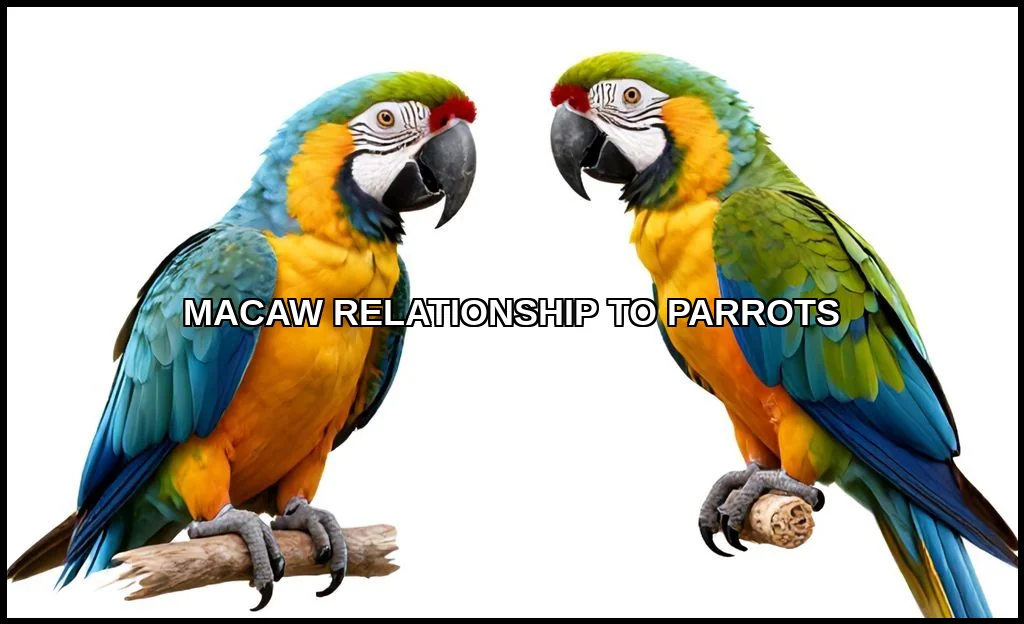
What is a Macaw? Defining the Bird
Macaws are large, long-tailed, neotropical parrots known for their powerful beaks and strikingly vibrant feathers. They are the celebrities of the Psittacidae familyimpossible to ignore. Their size alone commands attention, with some species like the Hyacinth Macaw reaching nearly 3.5 feet from beak to tail tip. But their identity is deeply rooted in their scientific classification.
Taxonomic Family: Macaws within Psittacidae
To understand are macaws a type of parrot, we must look at taxonomy. All parrots belong to the order Psittaciformes. Within that order, the primary family is Psittacidaethe “true” parrots. This massive family is then split into subfamilies. Macaws belong to the subfamily Arinae, which are the New World Parrots.
This places them alongside other American parrots like conures, Amazon parrots, and parrotlets. They share a common evolutionary history separate from Old World parrots (like African Greys) and cockatoos (which are in their own family, Cacatuidae). So, when pondering how are macaws related to cockatoos, they are distant cousins within the same order, not close siblings.
- Order: Psittaciformes (All parrots)
- Family: Psittacidae (True parrots)
- Subfamily: Arinae (New World parrots)
- Tribe/Genera: Arini (Includes macaws (Ara, Anodorhynchus, etc.) and similar parrots)
Shared Traits: What Macaws Have in Common with All Parrots
Macaws exemplify classic parrot characteristics. These shared traits are the glue that binds the parrot family together. You see them clearly in macaw behavior and physiology.
Universal Parrot Features
- Zygodactyl Feet: Two toes forward, two toes back. This design is perfect for climbing and manipulating objects, turning their feet into highly skilled hands.
- Powerful, Curved Beak: Built for cracking the toughest nuts and seeds. It’s a tool, a third foot for climbing, and a precision instrument.
- High Intelligence: Macaw intelligence is legendary, but it’s a trait of parrots globally. They exhibit problem-solving skills, complex social learning, and emotional depth.
- Vocal Ability: While not all parrots talk, they all have the vocal anatomy for complex mimicry. Macaws are loud communicators, using calls to maintain flock contact over vast forest distances. If you’re curious about which parrots excel at mimicry, the spectrum is wide.
Key Differences: What Sets Macaws Apart
So if they share all the basics, what makes a macaw different from other parrots? The differences are a matter of degree and specific adaptation. The parrot vs macaw comparison often boils down to scale and spectacle.
Size, Proportion, and Habitat
The most obvious difference is scale. Macaws include the largest parrot species in the world. The Hyacinth Macaw is the heavyweight champion by length and wingspan. Even smaller macaws, like the Severe Macaw, are substantial birds.
Their long, graceful tail feathers are a signature trait, often longer than their body. This differs from the stockier build of an Amazon parrot or the compact frame of a Caique. Their large size is directly tied to their native habitat: the vast rainforests and open woodlands of Central and South America, where their loud calls and bright colors are adaptations for life in a large, noisy flock.
| Trait | Typical Macaw | Many Other Parrots (e.g., Conure, Amazon) |
|---|---|---|
| Average Length | 30 inches to 40+ inches | 10 to 18 inches |
| Tail Proportion | Very long, tapered | Short to medium, square or rounded |
| Facial Feathering | Often have distinctive bare facial patches (skin) | Usually fully feathered face |
| Beak Size | Exceptionally large & powerful | Large, but proportionally smaller |
The macaw vs parrot size and lifespan question is key for potential owners. Macaws aren’t just larger; they often live longer. It’s not uncommon for a well-cared-for macaw to reach 60 years or more, a lifelong commitment that dwarfs that of many smaller parrot species.
Macaw Species, Habitat, and Relationship with Humans
The term “macaw species” encompasses a stunning variety. From the iconic blue-and-yellow macaw to the rare and mystical Ara macao (Scarlet Macaw), each has adapted to a specific ecological niche.
Conservation: A Pressing Reality
This relationship with humans has a dark side. Habitat destruction and the illegal pet trade have pushed many species to the brink. Several macaws are now critically endangered. Checking an official source like the IUCN Red List reveals the sobering status of many wild populations. Conservation efforts are a race against time.
Care & Ownership Considerations
Owning a macaw is not like owning a smaller parrot. Their intelligence, emotional needs, and physical power are immense. They require:
- Vast Space: An enormous cage is just a sleeping quarters. They need a safe, macaw-proofed room to fly and explore.
- Mental Stimulation: Boredom in a bird this smart leads to destructive behavior and psychological distress. Puzzles, foraging, and training are daily necessities.
- Specialized Equipment: Everything must be heavy-duty. This includes finding the best travel carriersbut scaled up significantly for a macaw’s strength and size.
- Lifelong Commitment: You are making a commitment that will likely outlive many of your other life choices.
Their vocalizations are not apartment-friendly. That beautiful, intelligent squawk is incredibly louda natural adaptation for communicating over miles of dense forest. It’s a core part of who they are.
The macaw’s relationship to parrots is one of brilliant specialization within a remarkable family. They are parrots in their most extravagant, powerful, and demanding form. They remind us that the parrot family, Psittacidae, is incredibly diverse, housing everything from tiny parrotlets to the majestic, sky-blue Hyacinth Macaw. Understanding this relationship is the first stepwhether your interest is in avian biology, conservation, or the profound responsibility of sharing your life with one of these magnificent New World Parrots. They are a lifetime of wonder, and a lifetime of work.
