
You’re looking at a stunning blue-and-gold macaw and a vibrant green Amazon parrot. Both are clearly parrots, right? But you might be wondering about the exact relationship. Is a macaw just a type of parrot, or is it something else entirely? The answer lies in taxonomy, the science of classification. It’s a fascinating family tree that explains how all these brilliant birds are connected.
Think of it like cars. All sedans are cars, but not all cars are sedans. Similarly, all macaws are parrots, but not all parrots are macaws. Understanding this hierarchy helps you appreciate the diversity within the Psittaciformes order. It also clarifies care needs. For instance, larger species like macaws require exceptionally spacious and sturdy enclosures. For owners of big birds, finding the right habitat is key. Many aviculturists recommend the Extra Large Elegant cage for its robust construction and ample room, which is crucial for their well-being.
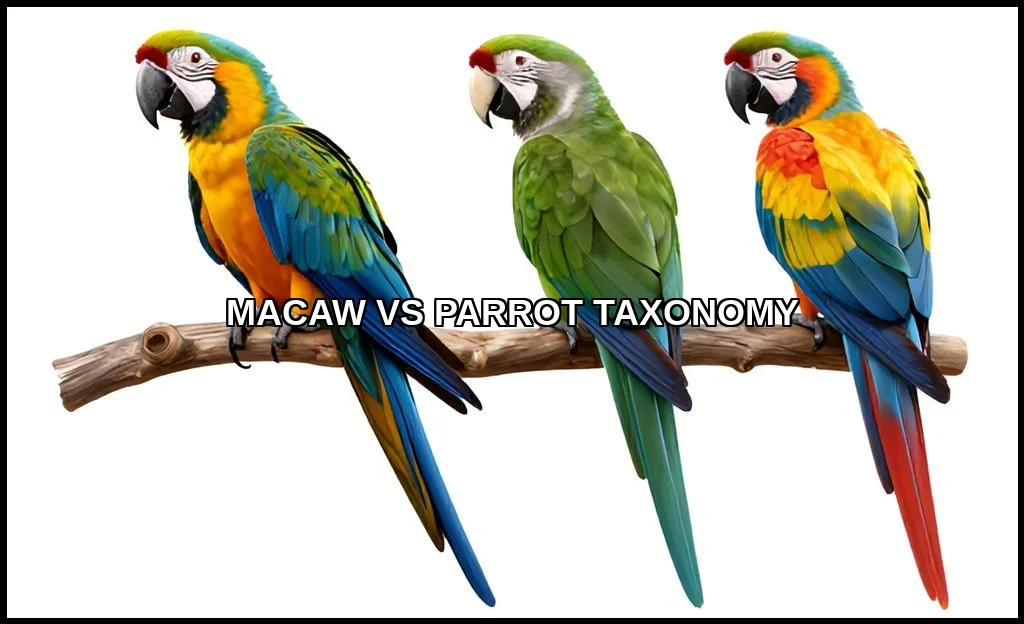
The Taxonomic Hierarchy: Where Macaws Fit In
Let’s break down the scientific ranking system. It starts broad and gets very specific. This structure is the official parrot family tree.
The Order: Psittaciformes
This is the biggest umbrella. Every single bird we call a parrot, cockatoo, or macaw belongs to the Psittaciformes order. The defining features? A curved beak, zygodactyl feet (two toes forward, two back), and high intelligence. This order contains about 400 different parrot species.
The Family: Psittacidae (True Parrots)
Within Psittaciformes, there are a few families. The most prominent is Psittacidae, often called “true parrots.” This family excludes cockatoos but includes the vast majority of species we know. It’s here we find Amazons, African Greys, lovebirds, and macaws. They are often categorized as New World parrots (Americas) and Old World parrots (Africa, Asia).
The Genus and Species: The Macaw’s Specific Address
This is where macaws get their unique identity. Most macaws belong to the Ara genus. The macaw scientific name always starts with Ara. For example, the Scarlet Macaw is Ara macao. The Ara genus is a classic group within the psittacidae family. So, for the question “are macaws parrots?” The taxonomy is clear: Order Psittaciformes > Family Psittacidae > Genus Ara. Yes, absolutely.
| Taxonomic Rank | Macaw Example | Other Parrot Example |
|---|---|---|
| Order: Psittaciformes | All Macaws | All Parrots & Cockatoos |
| Family: Psittacidae | Macaws, Amazons, Conures | African Grey, Eclectus |
| Genus: Ara | Scarlet Macaw (A. macao) | N/A (Amazon parrot is genus Amazona) |
| Species: macao | Scarlet Macaw | Double Yellow-headed Amazon |
Key Differences: Macaws vs. Other Parrots
While united by taxonomy, macaws stand out. A macaw vs parrot size comparison is the most obvious difference, but it goes deeper.
Physical Characteristics & Size
- Size: Macaws are the giants. The Hyacinth Macaw can reach 40 inches long. Compare that to a Budgie at 7 inches. Even among larger parrot species list entries, macaws dominate.
- Facial Patch: Most Ara macaws have a unique bare facial patch of skin. This distinguishes them from other parrots with fully feathered faces.
- Tail Shape: They possess famously long, tapered tails. Many parrots have short, square, or rounded tails.
So, macaw vs parrot which is bigger? Macaws win, almost every time. Their size is a primary factor in their care and housing needs.
Behavioral Differences & Intelligence
All parrots are smart. But expressions of intelligence vary. Macaws are powerful, sometimes boisterous, and deeply social. They can be more physically demonstrative. An African Grey might solve a puzzle quietly; a macaw might try to dismantle it with impressive beak strength.
Vocal abilities differ too. While macaws can talk, species like African Greys and Amazons are often noted for clearer speech. If you’re curious about vocal prowess, our guide on which parrots talk delves deeper into that nuance.
Habitat & Geographic Distribution
Macaws are exclusively New World parrots. Their native range stretches from Mexico through Central and South America. Other parrot families have a global distribution, including Africa, Asia, and Australasia. This geographic isolation helped shape the distinct macaw types we see today.
Similarities: What Unites All Parrots
The shared traits within the psittaciformes classification are what make parrots so recognizable and beloved.
- The Beak: That iconic curved, powerful beak is for cracking nuts, climbing, and manipulation. It’s a universal tool.
- Foot Structure: Zygodactyl feet are perfect for grasping food and climbing. It’s a signature trait.
- Diet: Most are primarily granivores and frugivores, eating seeds, nuts, fruits, and berries.
- Cognitive Abilities: Advanced problem-solving, social learning, and communication skills are hallmarks of the order.
- Longevity: Parrots often have exceptionally long lifespans, especially larger species. This commits you to a decades-long relationship.
Care Requirements as Pets
The taxonomic similarities dictate core care needs. All parrots require:
- Complex mental stimulation and foraging opportunities.
- A varied, species-appropriate diet beyond just seeds.
- Extensive social interaction. They are flock animals.
- Substantial, safe housing. This need escalates dramatically with size. Proper equipment, like the best travel carrier, is also vital for vet visits and safety, regardless of species.
The main difference in care stems from size and power. A macaw’s bite force, noise level, and space requirements are of a different magnitude than a conure’s. A macaw parrot classification chart would show the Ara genus at the top for physical demands.
Macaws as a Parrot Subset
So, are all macaws considered parrots? Unequivocally, yes. They are a spectacular subset defined by grandeur. The psittaciformes order is a diverse dynasty. Macaws are its most flamboyant aristocratslarger, louder, and adorned with those signature long tails and facial patches.
Choosing between a macaw and another parrot isn’t just about color or talking ability. It’s about acknowledging the scale of commitment their taxonomy implies. Their place in the Ara genus within Psittacidae signals specific needs. They are parrots, distilled to their most powerful and majestic form. Understanding this helps you provide the right home, whether you’re drawn to the gentle chatter of a smaller species or the magnificent presence of a macaw.
