
You want to see farther. To pull distant details into crisp, clear view, whether it’s a bird in a far-off tree or the craters of the moon. That’s the promise of the most powerful zoom binoculars. But more power introduces more complexity. It’s not just about the highest number; it’s about the quality of the view you get at that magnification.
For enthusiasts ready to tackle that challenge, a model like the 15-35×70 Binoculars ults offers a compelling entry point. Its substantial objective lens diameter and wide zoom range provide the raw optical power for long-range observation, making it a popular choice for those exploring the limits of handheld viewing before committing to a tripod.
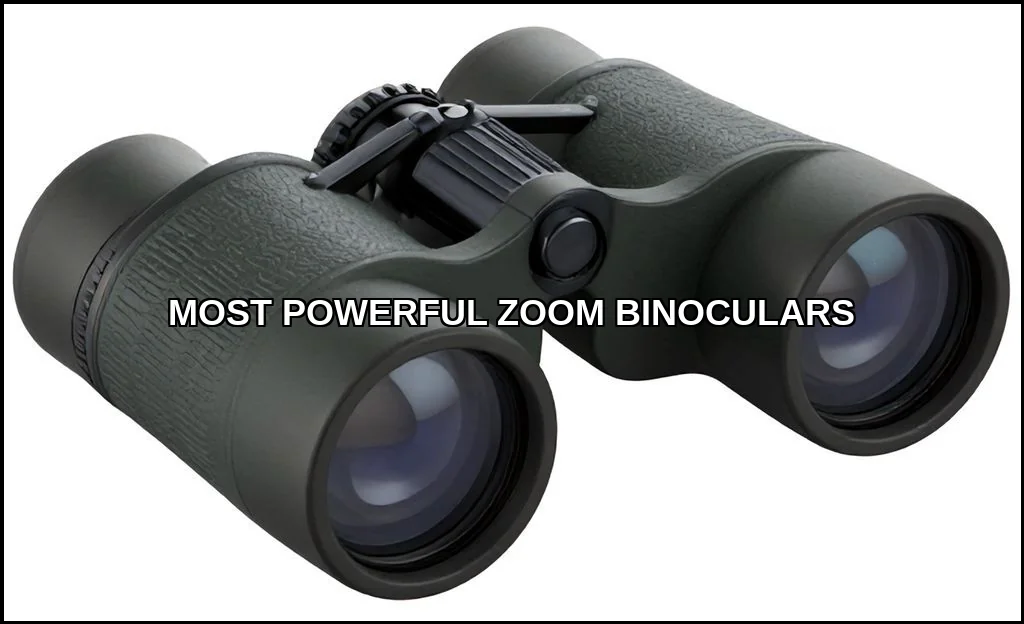
Zoom Magnification: Power and Its Optical Limits
Zoom binoculars, or variable power binoculars, let you adjust magnification on the fly. You might start at 15x for scanning and then zoom to 35x to inspect a specific detail. This flexibility is their biggest selling point. However, powerful zoom optics come with inherent trade-offs that fixed-power models often avoid.
As you increase magnification, three things typically happen. The field of view narrows dramatically, making it harder to locate and track subjects. Image brightness and clarity can diminish due to smaller exit pupil sizes and increased susceptibility to atmospheric haze and hand shake. This is why the highest magnifications are best used with a solid support system. It’s also critical to distinguish optical zoom from digital zooma feature in some electronic models. Optical zoom uses lenses to magnify the image genuinely, preserving quality. Digital zoom simply crops and enlarges the image, often resulting in a pixelated, poor-quality view.
Key Specifications That Define Performance
Beyond the zoom numbers, several core features determine if your high magnification binoculars will deliver a usable image or a frustrating, shaky blur.
- Objective Lens Diameter: Measured in millimeters (like the “70” in 15-35×70), this is the size of the front lenses. Larger lenses gather more light, which is crucial for maintaining a bright image at high power, especially in low-light conditions for astronomy or dawn/dusk wildlife viewing.
- Fully Multi-Coated Lenses: This isn’t optional for quality optics. Multiple anti-reflective coatings on all air-to-glass surfaces maximize light transmission, enhance contrast, and reduce glare. It’s the difference between a dull, hazy image and a vibrant, sharp one.
- Prism Type & Quality: Most serious optics use BaK-4 prisms, made from high-density barium crown glass. They provide a sharper, brighter image with a rounder exit pupil compared to cheaper SK7 glass prisms. Always verify BaK-4 prisms are used.
- Eye Relief: The distance your eye can be from the eyepiece while still seeing the full field of view. Longer eye relief (15mm+) is essential for eyeglass wearers. It’s a spec often overlooked until you try to use the binoculars with glasses on.
Where Powerful Zoom Binoculars Shine: Top Use Cases
These tools aren’t for casual use. They excel in specific, demanding applications where their capabilities are necessary.
Astronomy and Celestial Observation
High power binoculars for astronomy offer a breathtaking, wide-field view of the night sky that telescopes can’t match. They’re perfect for scanning the Milky Way, observing star clusters like the Pleiades, and getting detailed views of the moon’s surface. The large aperture (lens diameter) is king here for gathering faint starlight. Stability is non-negotiable; a sturdy tripod is mandatory for any serious astronomical viewing.
Long-Range Wildlife and Birding Surveillance
Are zoom binoculars good for bird watching? The answer is nuanced. For stationary observation of a known nest or perch at extreme distance, they can be excellent. For tracking fast-moving birds in flight or in dense brush, their narrow field of view can be a hindrance. Many birders prefer fixed-power models for their reliability and wider view, but a quality zoom can be a versatile second pair. For other wildlife observation or surveillance, the ability to zoom in on a distant ridge or shoreline without moving is invaluable.
Specialized Applications: Marine and Hunting
In marine environments, long range binoculars help identify channel markers, other vessels, or shoreline details from afar. Here, durability and waterproof/fog-proof construction are as important as magnification. For hunting, the question of how to choose zoom binoculars for hunting revolves around low-light performance and quick target acquisition. A hunter might use lower power to glass a wide valley, then zoom in to assess an animal’s size or antler details. However, the same stability and field-of-view challenges apply.
An emerging category combines traditional optics with digital tech. Some super zoom binoculars now incorporate digital sensors, and a few high-end models even merge thermal imaging for ultimate low-light and camouflage-penetrating capability. Another modern convenience is smartphone adapter compatibility, allowing you to digiscope photos and videos through your binoculars.
Navigating the Trade-Offs: A Realistic Comparison
Every choice in optics is a balance. Let’s break down the central debate and look at some leading models.
Zoom vs. Fixed Power Binoculars
The core dilemma. Fixed-power binoculars (like standard 8×42 or 10×50 models) generally offer superior optical quality, a wider field of view, and brighter images for their size and price. They are simpler, with fewer moving parts, which often means better durability. Zoom lens binoculars trade some of that optical perfection for versatility. They are a “do-it-all” tool that can cover multiple scenarios, from wide-angle to telephoto, in one device. Your priorityultimate image quality or adaptable functionalitydecides the winner.
| Consideration | Zoom Binoculars | Fixed Power Binoculars |
|---|---|---|
| Primary Strength | Versatility & Adaptability | Optical Quality & Reliability |
| Field of View | Narrows at high power | Consistently wider |
| Ease of Use | Can be complex; requires more skill | Simple, point-and-view |
| Best For | Static, long-range observation | Dynamic tracking (e.g., birding, sports) |
Spotlight on Leading Models and Brands
In any zoom binoculars review, brands like Celestron, Bushnell, and Nikon are consistently mentioned for their engineering. Celestron dominates the astronomy segment with large-aperture models. Bushnell offers robust options for hunting and outdoors, often with excellent price-to-performance ratios. Nikon brings its legendary lens-making expertise to the category, frequently leading in clarity and color fidelity. When researching the best zoom binoculars 2024, look beyond marketing claims. Scrutinize user reviews for real-world notes on sharpness at full zoom and overall build quality. Brand reputation and warranty support are key factors, as these are precision instruments.
The Essential Companion: Stability and Mounting Solutions
This cannot be overstated. The primary problem with high zoom binoculars is image shake. At magnifications above 12x, the natural tremor in your hands is amplified to the point of making the view unusable. There are two solutions.
- Tripods: The universal answer. A solid, fluid-head tripod transforms your high-power binoculars from a shaky mess into a stable observation platform. It’s not an accessory; for magnifications over 20x, it’s a requirement.
- Image Stabilization Technology: Offered by brands like Canon and Fujinon, these binoculars have built-in gyroscopic or electronic systems to counteract hand shake. They are a game-changer for handheld use at high power, but they come at a significant cost, require batteries, and add weight.
Your choice depends on your use case. For a stationary setup like a backyard astronomy platform, a tripod is perfect. For a wildlife scout who needs to move quickly and observe from variable positions, image stabilization might be worth the investment. For birders who enjoy setting up in a blind, a compact tripod paired with a standard model might be the ideal compromise, especially when trying to capture footage with the best birdhouses that include monitoring systems.
Making Your Decision: A Practical Buying Guide
So, what is the most powerful zoom for binoculars that still makes sense? Commercially available models often top out around 20-60×80 or 25-125×80. But the “sweet spot” for most users, balancing power with usability, is often in the 15-45x or 20-60x range when paired with a 70mm or 80mm objective lens. Heres your action plan:
- Define Your Primary Use: Astronomy demands aperture. Wildlife demands clarity and often, weatherproofing.
- Budget for Support: If you’re looking at high power, allocate at least 25% of your budget for a quality tripod and head.
- Test if Possible: Feel the zoom mechanism. Is it smooth? Check the image quality at minimum and maximum zoom. Does it stay sharp?
- Consider the Ecosystem: Do you want which parrots you’re observing to be crystal clear, or are you scanning horizons? Your subject dictates the tool.
Remember, the best optic is the one you’ll use effectively. A monstrous 80mm zoom binocular left at home because it’s too heavy is worse than a capable 50mm model you always have with you. For the most comprehensive, unbiased technical deep-dive, always consult an authority guide from dedicated hobbyist communities.
Powerful zoom binoculars open a world of detail invisible to the naked eye. They demand more from youin terms of technique, support, and understanding of their limits. But when matched to the right task and used correctly, they are uniquely powerful tools. Don’t just chase the highest number. Chase the clearest, steadiest view you can practically achieve. That’s where the real magic happens.
