
When you need to see the craters of the moon in stunning detail or identify a bird on a distant ridge, standard binoculars just won’t cut it. That’s where Oberwerk long range observation binoculars come in. These are not your average field glasses; they are serious optical instruments designed for those who demand clarity at extreme distances. For enthusiasts stepping into this world, a fantastic entry point is the Oberwerk Sport ED. It offers exceptional value with premium features, making it a top recommendation for anyone wanting to experience high-quality observation without an astronomical price tag.
Oberwerk, based in Delaware, Ohio, has carved out a respected niche by focusing purely on high-performance observation optics. They cater to a dedicated crowd: astronomy enthusiasts, meticulous bird watchers, and nature observers who spend hours scanning horizons. Their philosophy is simplebuild durable, optically superb instruments that deliver a “window-like” view. This commitment has made them a go-to brand for anyone seeking giant binoculars and high magnification systems that truly perform.
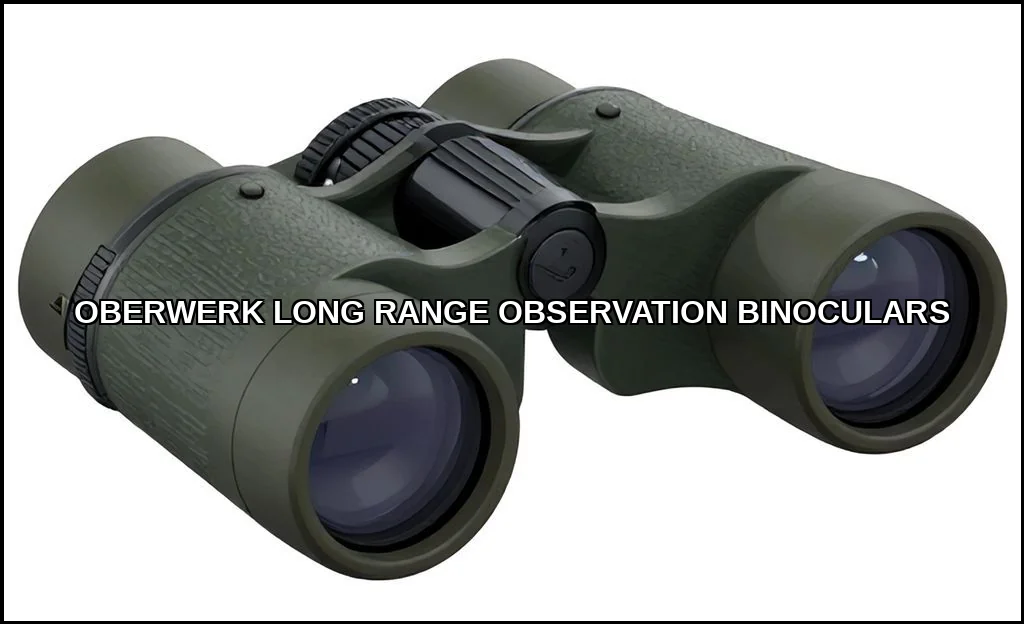
Key Features and Technical Specifications
What separates Oberwerk from the pack is its relentless focus on optical quality and user-centric design. These are instruments built for the long haul, both in terms of durability and viewing sessions.
Optical Construction and Clarity
The heart of any good binocular is its glass, and Oberwerk doesn’t skimp. Their premium lines consistently feature several key technologies:
- ED glass: Extra-low Dispersion glass is critical. It minimizes chromatic aberrationthat color fringing you see on high-contrast edges. The result is a sharper, truer color image.
- BaK-4 prisms: Made from high-density barium crown glass, these prisms provide brighter images with better contrast and a perfectly round exit pupil compared to cheaper alternatives.
- Fully multi-coated optics: Every air-to-glass surface receives multiple anti-reflective coatings. This maximizes light transmission, giving you a brighter view in low-light conditions essential for astronomy or dawn wildlife watching.
Physical Design and Usability
These are substantial instruments. Understanding their physical specs is key to a good experience.
- Magnification and Objective Lenses: Models range from powerful 15x70s to massive 25x100s. The first number is magnification; the second is the objective lens diameter in millimeters. Larger objectives gather more light.
- Most Oberwerk binoculars are designed as tripod mounted binoculars. At high magnifications, hand-holding is impossible due to image shake. A sturdy tripod is non-negotiable, which is why guides on how to use Oberwerk binoculars with tripod are so popular.
- Close focus distance varies by model. Some allow you to focus on objects just 15-20 feet away, adding versatility for closer terrestrial viewing.
- The angular field of view determines how wide a slice of the sky or landscape you can see. A wider field makes locating objects easier, especially for astronomy.
Performance Review: Astronomy and Terrestrial Use
This is where Oberwerk binoculars truly shine. Their performance splits neatly into two worlds: the celestial and the earthly.
Astronomical Observation Binoculars
For stargazing, large Oberwerk models are arguably more enjoyable than a small telescope for many people. They offer a more natural, binocular view of the heavens. You can sweep across the Milky Way’s star clouds, resolve dozens of stars in a single cluster like the Pleiades, and see the moons of Jupiter as tiny pinpoints of light. The combination of high light grasp and wide fields makes them perfect for deep-sky observing. Astronomy enthusiasts love them for their “rich-field” views that smaller optics can’t match.
Terrestrial Viewing and Specialized Applications
While stellar for the stars, they’re equally capable on Earth. The high resolution allows for incredible detail at long distances.
- Wildlife & Birding: Observing eagles in a nest a quarter-mile away or identifying shorebirds across a marsh becomes effortless. For those interested in avian behavior, knowing which parrots talk is one thing, but watching intricate social interactions from afar requires optics like these.
- Long Range Surveillance: This is a missing entity many reviews overlook. Oberwerk optics are used by some military, law enforcement, and security professionals for long-range observation posts. Their clarity and durability suit these demanding applications.
- Educational & Institutional Use: Universities and nature centers use them for group observation. They are fantastic tools for teaching ornithology, astronomy, or geology, allowing multiple students to share the same immersive view.
- Scenic Viewing: From mountain tops to coastal lookouts, they transform a pretty vista into a detailed exploration.
Comparison with Competing Brands and Models
Oberwerk doesn’t exist in a vacuum. How do they stack up against other giants in the premium observation equipment space? Let’s break it down.
Oberwerk vs. Celestron and Orion
The debate of Oberwerk binoculars vs Celestron for astronomy is common. Celestron and Orion offer excellent value and are fantastic brands. However, Oberwerk often uses higher-grade optical glass and more robust mechanical construction in comparable price brackets. Celestron might win on included accessories, but Oberwerk frequently wins on pure optical performance and longevity. It’s the choice between a feature-packed tool and a precision instrument.
Oberwerk vs. Nikon and Camera Brands
Nikon makes superb binoculars, but their focus is often on portable, lower-magnification models for sports and hunting. For dedicated high power binocular systems and giant binoculars, Oberwerk’s specialized catalog is more extensive. You’re comparing a generalist’s excellent tool to a specialist’s entire toolkit.
| Consideration | Oberwerk Strength | Typical Competitor Focus |
|---|---|---|
| Optical Clarity | Superior glass (ED, BaK-4) as standard in mid/high-tier | May reserve ED glass for flagship models only |
| Build Quality | Metal-heavy, rugged construction | More plastic components to reduce cost |
| Specialization | Dedicated to high-mag, tripod-based viewing | Broader range including hand-held models |
| Value Proposition | Optical performance per dollar | Bundle value (tripod, case included) |
Choosing the best Oberwerk model for long range surveillance or astronomy depends on your portability needs and budget. The larger the objective lens, the better the performance in low lightbut the heavier and more tripod-dependent the system becomes.
Buying Guide and Final Recommendations
Ready to invest in a pair? Let’s navigate the final steps. Knowing where to buy Oberwerk long range binoculars is as important as choosing the model.
Selecting the Right Model
- Define Your Primary Use: Is it mostly astronomy? Prioritize aperture (the second number). Mostly daytime terrestrial viewing? A slightly lower magnification with a wider field might be better.
- Consider Your Budget: Prices range from a few hundred to several thousand dollars. The sweet spot for most serious amateurs is in the mid-range with ED glass.
- Factor in the Total System: Remember, you need a quality, fluid-head tripod. The binocular is just one part of the long range observation optics system. Don’t pair a $1000 binocular with a $50 tripod.
Where to Buy and What to Expect
Purchase from authorized dealers or directly from Oberwerk for warranty assurance. Major astronomy retailers and specialty optics shops are your best bet. Be wary of deals that seem too good to be true on general marketplaces. When your pair arrives, expect a learning curve. Finding objects at high power is a skill. Start with easy targets like the moon.
For wildlife observers who also want to monitor activity at home, pairing these binoculars with a birdhouse camera setup creates a complete observation stationmacro and micro.
Oberwerk long range binoculars are a commitment to seeing more. They bridge the gap between casual hobbyist and dedicated observer. Whether you’re mapping the lunar surface, documenting wildlife behavior for research, or simply satisfying a deep curiosity about the far-off details of your world, they offer a portal. You won’t just look; you’ll discover. The right pair doesn’t magnify the worldit reveals a new one.
