
You’ve got a parrot. A brilliant, feathered friend with a personality bigger than its wingspan. You’ve seen the videosparrots waving, fetching, talking up a stormand you want in on that magic. But where do you even start? The secret often lies not just in your patience, but in the right step-by-step guide. A great parrot trick training book is your roadmap, translating avian psychology into actions you both understand.
Think of it as a partnership manual. It decodes the “why” behind the behavior, making the “how” of training click for both of you. For many new trainers, a book like Parrot Training A serves as a fantastic foundation. It’s praised for breaking down complex concepts into beginner-friendly lessons, making that first foray into trick training less daunting and more fun. Let’s find the right guide for your journey.
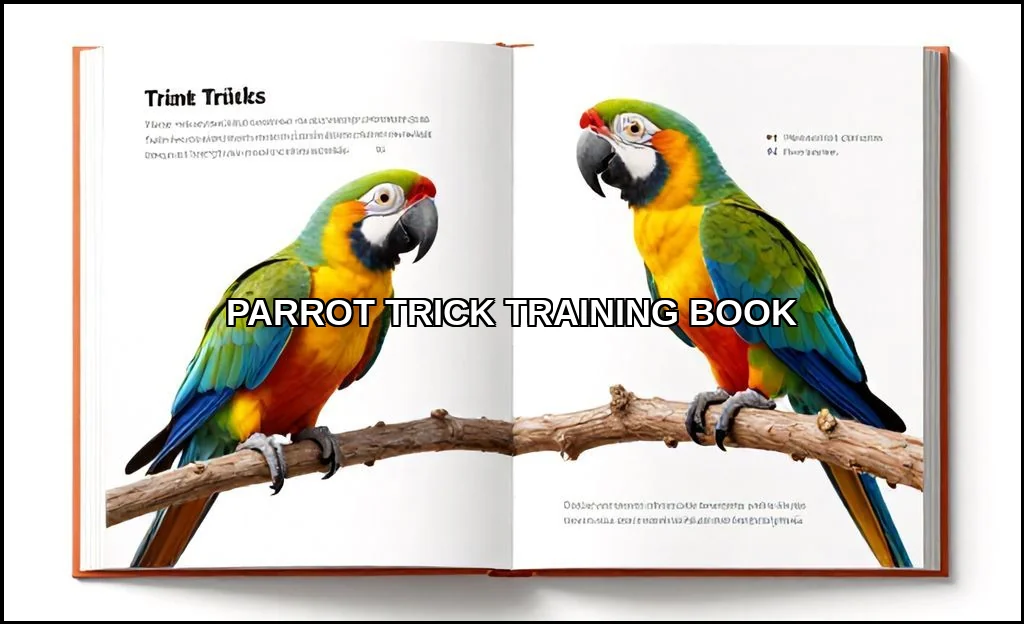
Top Parrot Training Books: A Curated Review
Not all avian training manuals are created equal. Some are dense theory, others are pure picture books. The best blend science, practical technique, and genuine empathy for your bird. Heres a look at five highly-regarded options that cover different needs.
1. For the Science-Based Trainer
This category is for you if you love understanding the mechanics behind the behavior. These books dive deep into learning theory and positive reinforcement, often influenced by pioneers like Karen Pryor Clicker Training. They teach you how to think like a trainer, giving you the tools to solve problems and invent your own tricks. Expect detailed explanations of timing, shaping, and marker signals.
2. The Visual Learner’s Dream
Some birds (and people!) respond best to seeing the action. Books rich with photographs or clear illustrations are invaluable, especially for visual tricks like “wave” or “turn around.” They’re perfect for a parrot trick training book for beginners. Brands like BirdTricks have built their reputation on this approach, often pairing books with DVDs. If you’re looking for an African Grey training book with pictures, scrutinize the visual clarity in the sample pages.
3. The Problem-Solving Manual
Maybe your goal isn’t just tricks, but curbing screaming or biting. Some manuals focus heavily on modifying problem behaviors through trust-building and communication. These are essential for many rescue parrot rehabilitation techniques. They often provide frameworks for assessing your bird’s environment and stress levels, topics covered in depth by resources like this authority guide on avian stress.
4. The Species-Specific Guide
A Macaw and a Cockatoo learn differently. An Amazon Parrot might have different motivational triggers than a Conure. Some books specialize, offering tailored advice for your parrot’s natural inclinations and common challenges. This specificity can accelerate training. Don’t overlook guides for smaller birds either; a good budgerigar/parakeet training book can work wonders.
5. The Comprehensive “Bible”
This is the hefty volume that aims to cover it all: behavior, training, diet, enrichment, and health basics. It’s the one you’ll pull off the shelf for years. While it may not have the deepest dive on advanced trick chains, it provides the holistic context needed for a happy, trainable companion. It’s your best parrot training manual for the long haul.
Core Techniques You’ll Master
Regardless of which book you choose, certain foundational methods will be your bread and butter. Understanding them now helps you evaluate a book’s approach.
The Power of Positive Reinforcement
This isn’t just bribery. It’s the science of increasing a behavior by adding a desirable consequence immediately after it occurs. Your bird steps up? It gets a pine nut. The timing is critical. Most modern parrot training guides are built entirely on this ethical framework. It builds trust and enthusiasm, turning training into a game.
Clicker Training Demystified
Clicker training is a form of positive reinforcement that uses a distinct sound (a click) to “mark” the exact moment your bird does the right thing. The click says, “Yes! That’s what I want,” and promises a reward is coming. It’s incredibly precise. Books from the Karen Pryor school excel here. It’s a game-changer for complex tricks.
Shaping & Targeting
You don’t just wait for a full trick to happen. You “shape” it by reinforcing small steps toward the final goal. Targetingteaching your bird to touch a stick with its beakis often the first shaped behavior. It then becomes the building block for everything else: turning, fetching, moving through hoops. A strong bird trick book will have detailed shaping plans.
Wondering about verbal skills? While some species are famed chatterboxes, training a bird to talk on cue involves its own nuances. You can explore more on which parrots are naturally inclined toward mimicry.
Choosing Your Perfect Training Partner (The Book)
With so many options, how do you pick? Match the book to your specific situation. Ask these questions.
- Your Experience Level: Are you a total novice? Seek out “beginner-friendly” explicitly. Look for clear glossaries and chapters on building initial trust.
- Your Parrot’s Profile: Consider species, age, and history. A young African Grey might thrive with a challenging cognitive guide. A senior parrot or a shy rescue needs a book emphasizing senior parrot training adaptations and patience. The pace changes.
- Your Learning Style: Do you love text-heavy explanations or need photos for every step? Check the “Look Inside” feature on retailers.
- Your Primary Goal: Is it party tricks? Bonding? Solving a screaming issue? Ensure the book’s table of contents aligns with your mission. A best book to teach my parrot to wave will focus on simple, visual trick sequences.
| Your Situation | Book Type to Prioritize |
|---|---|
| First-time bird owner, nervous | Beginner-focused, heavy on bonding & trust |
| Experienced, wants advanced tricks | Science-based manual on shaping & chains |
| Parrot with behavioral issues | Problem-solving & rehabilitation guide |
| Owner of a specific species (e.g., Macaw) | Species-specific training resource |
Beyond the Book: Building a Complete Toolkit
A book is your core curriculum, but your education doesn’t stop there. The best trainers use a multimedia approach. Think of it as supplementing your parrot obedience guide.
Video Resources & DVDs
Seeing training in motion is irreplaceable. Many authors, like the Parrot Wizard, offer video courses that bring their book lessons to life. You observe timing, body language, and the bird’s incremental progress. It’s the perfect companion to a text.
Online Communities & Forums
Have a question about your Conure’s progress on a trick? Hit a plateau? Online forums and social media groups are filled with fellow trainers. You can share videos for feedback and get moral support. It reminds you that every trainer faces challenges.
Essential Training Supplies
Your toolkit isn’t complete without a few physical items. A clicker, a target stick, and a treat pouch keep sessions smooth. And speaking of treats, knowing what motivates your bird is key. While training treats are special, their overall diet is foundational. For a fun look at virtual bird care, you can see what to feed parrots in popular games, but always consult an avian vet for real-world nutrition.
- Clicker: A consistent marker signal.
- Target Stick: A chopstick or commercial stick for guiding movement.
- High-Value Treats: Tiny, irresistible morsels reserved for training.
- Training Perch/Station: A designated, distraction-free spot for sessions.
The right parrot trick training book opens a door. It transforms confusion into clear communication. It turns “I wish” into “watch this.” Remember, the goal isn’t a perfectly obedient robot. It’s a deeper bond forged through mutual understanding and fun. It’s about enriching your feathered friend’s life with mental stimulation and joy. Start with a book that speaks to your situation, embrace the process of positive reinforcement, and celebrate every tiny step. Your brilliant bird is ready to learn. Are you ready to teach?
