
You’re thinking about bringing a large, colorful bird into your life. That’s exciting. But you’ve probably heard the terms “parrot” and “macaw” used, sometimes interchangeably. It’s time to clear the air. All macaws are parrots, but not all parrots are macaws. It’s a classic square-and-rectangle situation. Understanding this family tree, scientifically known as Psittaciformes, is your first step toward making an informed choice.
This isn’t just semantics. The choice between a general parrot species and a specific macaw impacts everything from your daily noise tolerance to your long-term financial planning. We’ll dive into the physical traits, the deafening screams, the brilliant minds, and the decades-long commitment. For anyone considering a large bird, investing in proper housing from day one is non-negotiable. Many owners of big parrots find that an Extra Large Double flight cage provides the essential space for wing-stretching and mental health, forming a critical foundation for your future together.
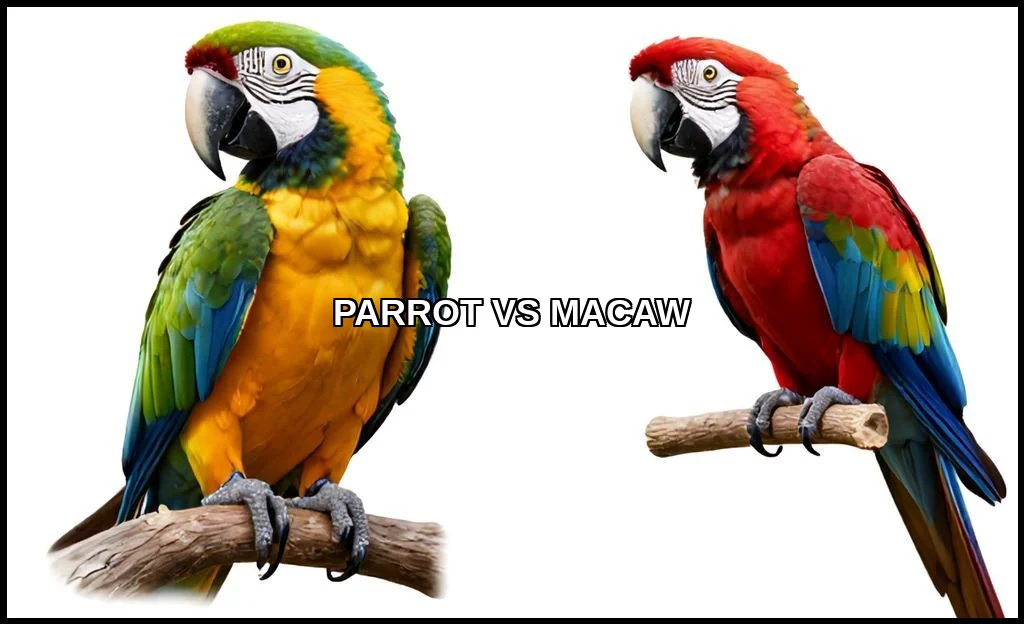
Visual & Physical Comparison: Size, Colors, and Features
Look at a budgie, then look at a hyacinth macaw. The difference is staggering. This is the most immediate way to see the distinction in the parrot species comparison.
The Scale of Things: From Compact to Colossal
When we talk about macaw characteristics, size leads the conversation. Macaws are the giants of the parrot world. The hyacinth macaw can reach a breathtaking 40 inches from head to tail tip. Even smaller macaws, like the severe macaw, are substantial birds. Other popular “large parrot pets” like African greys or Amazons typically max out around 12-15 inches. The sheer physical presence of a macaw is its most defining feature.
A Rainbow on Wings: Plumage and Beak Structure
Color is another giveaway. Macaws are famous for their vibrant, often neon-bright plumage in solid blocks of colorscarlet, cobalt blue, canary yellow. Many other parrots sport more intricate, scalloped, or muted patterns. Then there’s the beak. A macaw’s beak is a powerful, crushing tool, visibly larger and more hooked relative to its head than most parrots. It’s designed to crack open palm nuts that would break a hammer.
- Macaw Hallmarks: Very large size, bold solid colors, massive hooked beak, long tapered tail.
- Other Parrot Hallmarks: Wide size range, often patterned feathers, proportionally smaller beak, varying tail shapes.
Behavior & Personality: Noise, Intelligence, and Bonding
This is where the rubber meets the road in your daily life. The parrot macaw difference in temperament is profound.
The Decibel Debate: Who’s Louder?
Let’s be blunt: both can be extremely loud. But macaws have a biological advantage in volume. Their contact call is designed to travel miles through dense rainforest. It’s a deafening, resonant screech. While a cockatoo might be more persistently noisy, a macaw’s call hits a peak volume that is hard to match. They are, without doubt, one of the premier noisy parrot species. If you have close neighbors or a low tolerance for sudden, extreme noise, this is a critical factor.
Minds of Feather: Intelligence and Talking
Where does intelligence rank? High, for both. African greys are often lauded for their cognitive and linguistic prowess, a common point in any macaw vs african grey debate. Macaws are incredibly smart but in a different way. They are more physical problem-solvers and show intelligence through manipulation and play. Their talking ability is generally good, but often not as clear or prolific as an African grey or some Amazons. For the best talking parrot, macaws aren’t typically the top pick, though individuals can surprise you. You can explore more on that specific topic in our guide on which parrots talk.
Personality and Bonding
Macaws are often described as “gentle giants” with strong, clownish personalities. They can also be emotionally needy and prone to behavioral issues without constant engagement. The cockatoo vs macaw comparison often centers on neediness; cockatoos might edge them out, but macaws are close contenders. They form intense, lifelong bonds. This leads to a key question for potential owners: are macaws more aggressive than parrots? Not inherently. But their size and power mean any behavioral problem, like territoriality or fear-biting, has much more serious consequences.
Care & Commitment: Diet, Space, Lifespan, and Cost
This is the long-haul reality. A proper parrot care guide for these birds isn’t a suggestion; it’s a requirement for their welfare.
The Lifespan Lottery
You are making a commitment that will likely outlive a car, a job, or even a mortgage. Macaws and other large parrots routinely live 50 to 80 years. The difference between macaw and parrot lifespan isn’t vast among the larger species, but it’s always measured in decades. You need a plan for their care in your will. This isn’t hyperbole.
Space: Their Kingdom and Your Home
A macaw cannot live in a cage. It needs an enclosure the size of a small room or a massive, custom-built flight cage. They require several hours daily outside of it to fly, explore, and destroy (yes, destroy) designated toys. This need for space is absolute. For smaller large parrots, like a Meyer’s, choosing the right travel setup is also key, as discussed in our review of the best travel carrier.
Diet and Specialized Care
Seed mixes are a hard no. Their diet must be based on high-quality pellets, fresh vegetables, nuts, and fruits. Macaws, in particular, have higher fat needs. You must also budget for an avian veterinarian. These are exotic specialists, and their fees reflect that. Annual check-ups and emergency care are significant line items.
The True Cost of Ownership
So, what’s the cost of owning a macaw vs a parrot? The initial purchase is just the entry fee. Macaws are generally more expensive to buy. But the ongoing costs dwarf it.
| Cost Factor | Macaw (Approx.) | Other Large Parrot (e.g., Grey, Amazon) (Approx.) |
|---|---|---|
| Initial Purchase | $1,000 – $3,500+ | $800 – $2,500 |
| Proper Cage/Setup | $800 – $2,000+ | $500 – $1,200 |
| Monthly Food & Supplies | $100 – $200 | $80 – $150 |
| Annual Vet Care | $200 – $500+ | $200 – $400 |
| Toys (Monthly) | $50 – $100 (they destroy them!) | $30 – $70 |
You must also consider the “time cost.” The weaning period for a baby bird is just the start. These animals demand hours of social interaction every single day, without fail. Boredom leads to depression, screaming, and self-mutilation.
Which Bird is Right For You? A Practical Guide
This isn’t about which bird is “better.” It’s about which bird is better for you and your lifestyle. Your avian pet selection is a major life decision.
Choose a MACAW if:
You have extensive experience with large birds. Your home is sound-forgiving (or you live alone on acreage). You have a robust budget for food, vet care, and constant toy replacement. You can provide a room-sized space. You want a physically interactive, “big personality” companion and are less focused on pristine speech.
Choose another large PARROT (like an African Grey, Amazon, or Eclectus) if:
You might be a first-time large bird owner. You still need a quiet-ish home (they are loud, but differently). You have slightly more modest space constraints. You are fascinated by mimicry and cognitive puzzles. You want a deeply bonded but perhaps slightly less physically demanding pet.
For a fantastic, detailed official source on taxonomic and behavioral distinctions, the Audubon Society provides a great authority guide that’s worth your time.
Ultimately, the question which is better pet parrot or macaw has no universal answer. It’s a deeply personal calculation of your space, time, finances, and noise tolerance. Visit breeders, spend time with both types of birds, and be brutally honest with yourself. These magnificent creatures aren’t decorations; they are lifelong, intelligent partners. Your choice will shape the next half-century for both of you. Choose with your head, not just your heart.
