You’re relaxing at home when your parrot lets out a perfectly clear expletive. It’s shocking, maybe a little funny, but mostly confusing. Why does your feathered friend, a creature of such beauty and intelligence, choose those words? The answer is a fascinating mix of advanced biology, social dynamics, and simple accident.
Parrot swearing isn’t about malice or a dirty mind. It’s a window into their incredible cognitive abilities and how they interact with our world. To manage this behavior effectively, you need to understand why it happens in the first place. This knowledge transforms a frustrating problem into an opportunity for better communication and bonding.
The Science of Parrot Vocal Learning
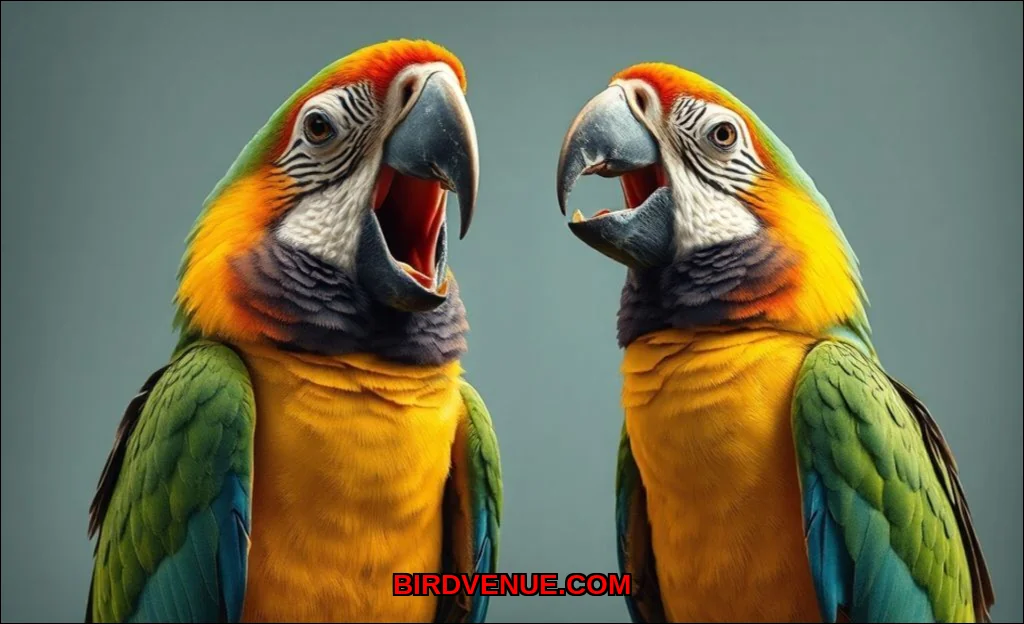
Not all birds can talk. Parrots, along with songbirds and hummingbirds, belong to an elite group known as vocal learners. This means they can hear a sound, memorize it, and reproduce it by manipulating their vocal tract. It’s a rare skill in the animal kingdom, shared only with a few species like dolphins, bats, and humans.
The foundation of this ability is neurological. Studies, including those on budgerigar (budgie) brains, show parrots have specialized neural pathways connecting auditory regions to vocal motor areas. They don’t just squawk; they analyze, practice, and refine. This complex mimicry is a core part of their natural behavior, used in the wild to identify flock members and fit into their social group.
For a deeper dive into the biology behind this talent, the article “Why Do Parrots Talk?” on Britannica offers excellent scientific context. In your home, you become their flock. The sounds you makeconversations, laughter, reactionsare the sounds they are evolutionarily programmed to learn. This incredible intelligence is also a key reason for their complex social needs, which you can explore further in our article on why parrots are so friendly and social.
Why Parrots Pick Up Swear Words
So, if they can learn any word, why the bad ones? The reasons are often unintentionally reinforced by you.
- Emotional Salience: Swear words are rarely said calmly. They’re exclaimed in moments of surprise, frustration, or pain. This heightened emotional charge makes them stand out acoustically. To a parrot, it’s a loud, interesting, and attention-grabbing sound patternprime material for mimicry.
- Social Reinforcement: This is the biggest factor. When your parrot swears, what’s your reaction? Do you laugh, gasp, or say “No!” in a sharp tone? Any reaction is a reward. You’ve just given the behavior your full, engaged attention. From the parrot’s perspective, they made a sound and the most important member of their flock responded dramatically. It works.
This learning through consequence is called associative learning. The parrot associates the act of swearing with a desired outcome: your attention. It doesn’t matter if the attention is “positive” (laughter) or “negative” (scolding); it’s still interaction. This principle is central to all parrot training. For redirecting unwanted vocalizations, many trainers find a Getting Started Clicker invaluable for marking desired behaviors with precise timing.
The Social and Environmental Triggers
Your parrot’s environment is a classroom. Certain situations make swearing more likely, acting as triggers for this learned behavior.
Common Triggers for Parrot Swearing:
| Trigger | Why It Happens |
| Greetings or Goodbyes | High-energy, emotional moments where loud vocalizations are common. |
| Phone Conversations | The parrot vying for attention when you’re focused elsewhere. |
| Presence of Guests | A new social stimulus that can cause excitement or anxiety. |
| Boredom or Lack of Stimulation | A default behavior when there’s nothing else engaging to do. |
| Frustration (e.g., cage door closed) | An emotional outburst, mirroring how they’ve heard you express frustration. |
Species like the African Grey Parrot, Amazon parrot, and cockatoo are particularly adept vocalists and may be more prone to picking up these emotionally loaded sounds. Their long lifespans, a topic covered in our guide to why parrots live so long, mean these habits can become deeply ingrained without intervention.
Can Parrots Understand What They’re Saying?
This is the million-dollar question: are parrots aware they are swearing? The answer lies in the nuance of animal cognition. Parrots possess remarkable avian intelligence, including the ability to use words contextually. A famous African Grey named Alex could label objects, colors, and quantities, suggesting a level of referential communication.
However, swearing is different. Most evidence points to parrots not understanding the abstract, offensive meaning of a curse word. They understand the context in which it gets a reaction. They learn that saying “&@%!” when a stranger walks in makes people gasp and look at them. They’ve associated the word with a social outcome, not its semantic meaning.
This is a critical distinction between true communication and sophisticated mimicry. They are masters of social cause-and-effect, which is a form of intelligence in itself, even if it’s not human-like comprehension of profanity.
How to Manage and Redirect This Behavior
Now for the practical part. Punishment doesn’t work. Yelling “No!” when your parrot swearing is just more interesting social reinforcement. The goal is to make the unwanted behavior ineffective and replace it with something better. Heres your action plan for how to stop a parrot from swearing.
Step 1: Eliminate the Reward (Completely)
This is the hardest but most crucial step. You must train yourself first.
- Zero Reaction: When the swear word occurs, show no reaction. No eye contact, no talking, no facial expression. Turn away or leave the room for 30 seconds if you must. Be a stone.
- Consistency is Key: Every person in the household must do this. One person laughing ruins the training.
Step 2: Employ Redirect Training
You can’t just take away a behavior; you must give an alternative. Redirect training teaches your parrot what you want them to say or do instead.
- Identify a Replacement: Choose a fun, positive word or phrase. “Banana!” “Pretty bird!” “Hello!” or even a whistle.
- Capture and Reward: The moment your parrot says the desired word or makes a pleasant sound, immediately reward them. Use enthusiastic praise, a favorite treat, or a click from a training clicker to mark the exact moment they did right.
- Make it Fun: Practice this new word during happy, calm training sessions. You’re building a new, stronger association: “When I say ‘Banana,’ I get great stuff!”
Step 3: Address the Root Cause
Often, why does my parrot keep swearing is a symptom of a broader need.
- Increase Mental & Physical Enrichment: Boredom is a major trigger. Provide foraging toys, puzzle feeders, new perches, and daily out-of-cage time.
- Manage the Environment: Be mindful of your own language. If you drop a hammer on your toe, try to react with a silly, bird-safe phrase like “Pickle chips!” instead. You might be surprised what they learn.
- Be Patient: An old habit won’t vanish overnight. The swear word may initially increase as your parrot tries harder to get the old reaction (a phenomenon called an “extinction burst”). Stay calm and consistent.
Your parrot’s ability to swear is, ironically, a testament to their brilliant minds and social nature. They aren’t being bad; they’re using their powerful tools of vocal learning and mimicry to navigate their world with you. By understanding the social reinforcement at play and shifting to proactive redirect training, you turn a behavioral hiccup into a chance to deepen your bond. You’re not just stopping a swear word. You’re having a better conversation with a fascinatingly intelligent creature.
