
You’re probably here because you’ve seen a stunning scarlet macaw and thought, “That’s a parrot, right?” Well, yes. And no. It’s a classic case of the square and the rectangle. All macaws are parrots, but not all parrots are macaws. The distinction matters, especially if you’re considering one of these intelligent companions.
This isn’t just about labels. It’s about understanding a whole world of feathery personalities, care needs, and lifelong commitments. We’re going to break down the scarlet macaw vs parrot question, moving from broad categories to the specific, vibrant bird that captures so many hearts.
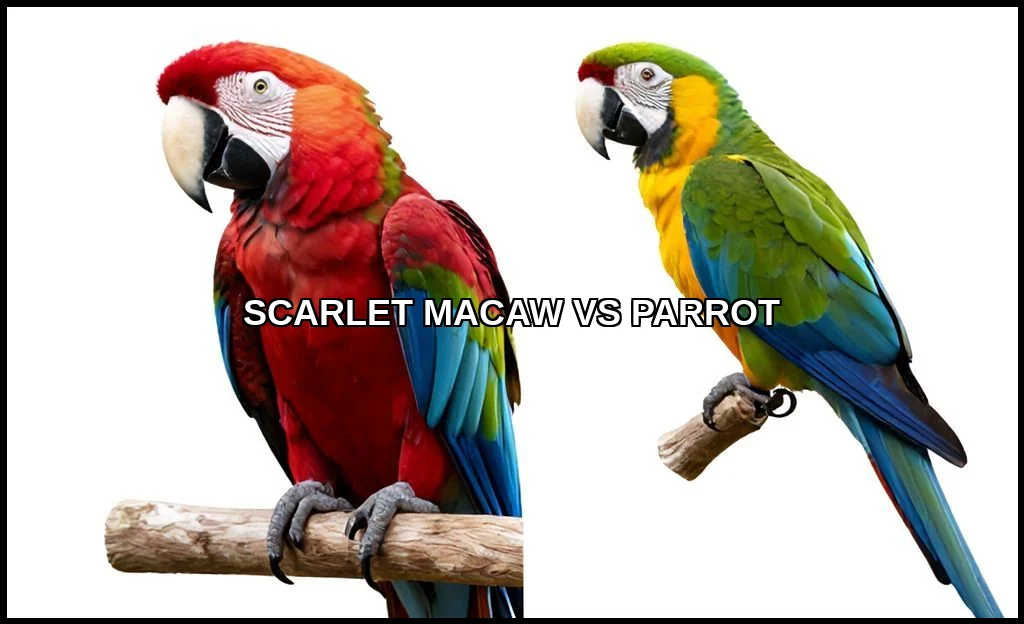
Understanding Parrot Classification: The Big Picture
First, let’s get our terms straight. When we say “parrot,” we’re usually referring to the entire order Psittaciformes. This is a massive family tree with over 350 species. Think of it like “dog.” A Chihuahua and a Great Dane are both dogs, but they’re wildly different. The parrot family includes cockatoos, lovebirds, Amazon parrots, African Greys, and of course, macaws.
These psittacine birds share some core traits: curved beaks, zygodactyl feet (two toes forward, two back), and high intelligence. But within that framework, the variation is immense. This is where our bird comparison truly begins.
Defining the Terms: What is a Parrot? What is a Macaw?
A parrot is the overarching category. A macaw is a specific type within it, known for its large size, long tail, and bare facial patch. Macaws are the giants of the parrot world, native to Central and South America. They are one of the most recognizable parrot types.
So, comparing a scarlet macaw to a “parrot” is like comparing a specific sports car to the entire concept of “vehicle.” To make it fair, we need to compare the scarlet macaw to other specific members of the parrot family. That’s where the real pet bird differences become clear.
Scarlet Macaw Deep Dive: The Iconic Ara macao
Meet the scarlet macaw, scientifically known as Ara macao. It’s the poster child for tropical beauty. But behind those brilliant red, yellow, and blue feathers is a complex creature with specific needs.
Physical Characteristics & Appearance
The scarlet macaw size is commanding. They typically reach about 32 inches from head to tail tip. Their wingspan can be over three feet. This isn’t a bird for a small apartment. Housing them properly is non-negotiable. For any large parrot, a spacious, sturdy Large Bird Cage is the foundational piece of equipment. It’s their home, gym, and safe space.
Their appearance is unmistakable:
- Vivid scarlet red covering most of the body.
- Bright yellow and blue bands on the wings.
- White face patch with delicate red feather lines.
- Powerful black beak designed for cracking nuts.
Behavior & Temperament
Scarlet macaws are social, loud, and incredibly smart. Their parrot intelligence is on full display in their problem-solving abilities and emotional sensitivity. They form incredibly strong bonds, which can lead to behavioral issues like screaming or plucking if they’re bored or neglected.
They are playful clowns one minute and stubborn toddlers the next. Their vocalizations are not just loud calls; they are capable of learning words and phrases, though their scarlet macaw talking ability vs other parrots like African Greys is often considered less precise and more limited. For a broader look at vocal talents, see our guide on which parrots talk.
Care Requirements & Lifespan
This is the commitment clause. The avian lifespan of a scarlet macaw is staggeringthey often live 50 to 75 years with proper care. You are making a lifelong pact. Their care is intensive and expensive.
The cost to care for a scarlet macaw compared to smaller parrot is exponentially higher. You’re looking at:
- Massive, high-quality cages and play stands.
- Significant amounts of fresh fruits, vegetables, and specialized pellets.
- Constant supply of destructible toys (they will destroy them).
- Potential vet bills for an exotic avian specialist.
So, is a scarlet macaw a good first bird? Almost universally, the answer is no. Their needs are too great for a novice.
Comparing Scarlet Macaws to Other Popular Parrot Types
To see where the scarlet macaw fits, let’s put it side-by-side with other beloved macaw species and parrots.
Scarlet Macaw vs. African Grey Parrot
The classic difference between macaw and african grey is often brains versus beauty. But that’s simplistic. African Greys are famed for their cognitive and verbal prowess. Scarlets are famed for their color and dramatic presence.
| Trait | Scarlet Macaw | African Grey |
|---|---|---|
| Personality | Bold, outgoing, theatrical | Cautious, analytical, sensitive |
| Noise Level | Extremely loud, piercing calls | Moderate volume, but constant muttering/sounds |
| Key Strength | Visual spectacle, bonding | Mimicry, puzzle-solving |
Both require immense dedication, just of different kinds.
Macaw vs. Cockatoo: The Emotional Giants
Another comparison in the large parrots category is the macaw vs cockatoo debate. Cockatoos are often even more emotionally needy and prone to self-destructive behaviors without near-constant interaction. They are also prolific dust producers, a major consideration for allergy sufferers. Both are incredibly demanding, but the “flavor” of demand differs.
The Generalist vs. The Specialist
Here’s a useful framework. Many common parrots, like some conures or cockatiels, are generalist vs specialist generalists. They adapt more readily to various environments and routines. The scarlet macaw is a specialist. It evolved with specific social, dietary, and spatial needs. In captivity, we must replicate that specialist environment as closely as possible, or we see problems.
Specialists are harder to keep well. It’s that simple. For transporting any bird, having secure, comfortable carrier is key. Check out our review of the best travel carrier for principles that apply to many species.
Which Bird is Right For You?
This isn’t about which bird is “better.” It’s about which bird’s natural traits align with your lifestyle, resources, and experience. Ask yourself these hard questions:
- Time: Can you provide 3-5 hours of direct, out-of-cage interaction daily, for decades?
- Space & Noise: Do you have the room for a large cage and the tolerance (and neighbors’ tolerance) for very loud vocalizations?
- Budget: Are you prepared for ongoing costs that rival a car payment?
- Experience: Have you successfully cared for smaller, less demanding parrots?
If you hesitated on any of these, a scarlet macaw is likely not your match right now. And that’s perfectly okay. The goal is a successful, happy life for both you and the bird.
Start smaller. Build your skills with a more forgiving species. The parrot world is vast and wonderful. The vibrant scarlet macaw is a dream for many, but it’s a dream that requires a rock-solid foundation of knowledge and preparation. For definitive information on their wild behavior and conservation status, the official source from Audubon is an invaluable read. Sometimes, loving a bird means admiring it in the wild, or in a capable sanctuary, rather than in your living room. That’s a responsible choice too.
