
You’re out on the water, scanning the horizon. Or maybe you’re in a blind, glassing a distant ridge. Your hands are steady, but the image in your binoculars still dances. That tiny, involuntary shake is the enemy of clarity. It blurs details, causes eye strain, and makes long observation sessions a chore. This is where the game changes. Enter image stabilization technology, a feature that transforms the viewing experience from frustrating to phenomenal.
For hunters, birders, and mariners, this tech isn’t a luxury; it’s a critical tool. While several brands offer stabilized optics, Sig Sauer has carved out a serious reputation with its Electro-Optics division. Their Sig Sauer Electro-Optics line brings military-grade precision to the civilian market. If you’re looking for a reliable pair of stabilized binoculars, understanding what Sig brings to the table is key. For those on a different budget or seeking a classic option, many enthusiasts also praise the Canon 12×36 Image stabilized binoculars, known for their proven performance.
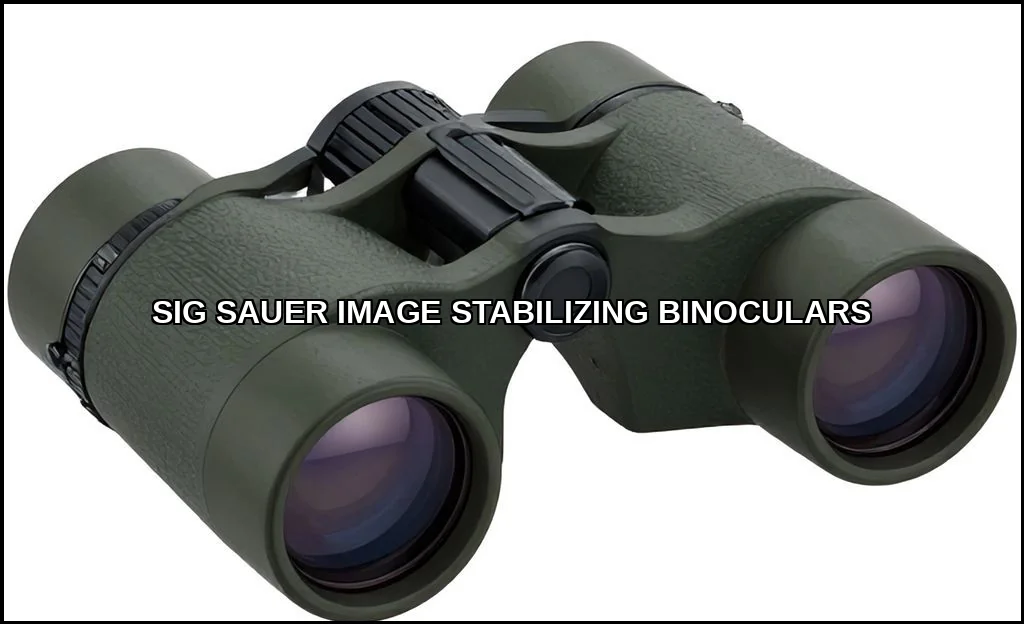
How Sig Sauer’s Image Stabilization Works: The Tech Behind the Steady View
So, how does Sig Sauer image stabilization work? It’s not magic, but clever engineering. Unlike some systems that move the entire prism assembly, Sig Sauer’s approach is often more direct. Their system typically uses sensors to detect angular movementthe shake from your hands. A microcomputer processes this data in milliseconds, then sends a corrective signal to a stabilizing lens element. This lens shifts in the opposite direction of the shake, neutralizing the motion before it reaches your eye.
The result is a rock-solid image, even at higher magnifications where shake is most pronounced. This optical performance boost is immediate. You press the button, and the jittery world snaps into a locked, detailed picture. Its particularly transformative for tasks like identifying distant game or reading boat names on a choppy sea. This core optical stabilization is what defines the category of IS binoculars.
Key Components: More Than Just a Gyro
The stabilization system is the star, but it’s supported by top-tier optics. Sig Sauer binoculars often feature the ABK prism system. This high-density glass prism design is engineered for maximum light transmission and color fidelity. When combined with fully multi-coated lenses, it ensures the stabilized image is also brilliantly bright and sharp. Battery life is a common concern with electronic optics. Sig Sauer models are generally efficient, often running for hours on common AA or CR123 batteries. A pro tip: always carry spares in your kit.
Sig Sauer’s Flagship Models: Zulu6 and Zulu6 HDX
Sig Sauer’s reputation in the stabilized binoculars market rests largely on two shoulders: the Zulu6 series. These models are frequently at the center of any IS binoculars review.
Sig Sauer Zulu6: The Performance Standard
The Zulu6 is the workhorse. Available in 10×42 and 16×42 configurations, it’s built for the field. The stabilization is effective, cutting down perceived shake by a significant margin. The optics are sharp, the body is rubber-armored for a secure grip, and it’s both fog-proof and waterproof. For hunters who need to glass canyons or wildlife observers tracking animals, the 16×42 model offers incredible reach. The question, “are Sig Sauer stabilized binoculars waterproof?” is answered with a definitive yes for these models, making them suitable for harsh environments.
Sig Sauer Zulu6 HDX: The Premium Tier
Step up to the Zulu6 HDX, and you get enhanced optics. The “HDX” denotes extra-low dispersion glass. This material corrects chromatic aberrationthose color fringes you sometimes see on high-contrast edges. The view is crisper, with truer colors. If ultimate clarity is your goal, especially in low-light conditions at dawn or dusk, the HDX variant is worth the investment. It represents the pinnacle of Sig Sauer optics for the discerning user.
| Feature | Zulu6 | Zulu6 HDX |
|---|---|---|
| Core Stabilization | Yes | Yes |
| Prism System | ABK Prism | ABK Prism with HDX Glass |
| Key Benefit | Robust Stabilization & Durability | Superior Color Fidelity & Sharpness |
| Ideal For | All-purpose field use | Critical observation where detail is paramount |
Practical Use Cases: Where These Binoculars Excel
Great specs are meaningless without real-world application. Heres where Sig Sauer’s stabilized models earn their keep.
Hunting Optics: Seeing the Difference
For the hunter, time spent glassing is time spent hunting. Stabilized binoculars reduce eye fatigue dramatically. You can scrutinize a bedded animal’s antler points or judge its size without the constant micro-adjustments. The stable image lets you see more, faster. It’s a tangible advantage, especially from unsteady positions like sitting or leaning against a tree. When every detail counts, stabilization counts more.
Marine Binoculars: Conquering the Chop
On the water, nothing is still. A boat’s vibration and wave action make traditional binoculars nearly useless. This is the absolute best-case scenario for marine binoculars with stabilization. Identifying channel markers, spotting wildlife, or watching other vessels becomes a clear, simple task. The waterproof and fog-proof construction is non-negotiable here, and Sig Sauer’s models are built for this saline, demanding environment.
Wildlife & Birding Observation
Patience is a virtue in observation, but shaky optics test that virtue. Stabilization allows for prolonged, detailed study of animal behavior or bird plumage. It’s perfect for digiscopingusing your smartphone with the binoculars. If you’re curious about avian intelligence, you might enjoy reading about which parrots are the most vocal; a stable view helps appreciate such complex creatures. For stationary observation, pairing your binoculars with one of the best birdhouses with cameras can create a complete wildlife monitoring system.
Comparison & Market Context
How do they stack up? The debate of stabilized vs non-stabilized is straightforward: stabilization wins for any application involving movement or high magnification. The real comparison is between stabilized brands.
Sig Sauer Image Stabilizing Binoculars vs Steiner
Steiner is a major player, especially in the marine space. The comparison often comes down to ergonomics and stabilization feel. Some users find Steiner’s stabilization to have a slightly different “dampening” characteristic. Sig Sauer often competes favorably on price-to-performance, offering robust features at a accessible point. The Sig Sauer Zulu6 price and where to buy is a common search because it represents a strong value proposition against premium European brands.
Against the Optical Elite: Zeiss & Swarovski
Zeiss and Swarovski set the bar for pure, un-aided optical brilliance. Their non-stabilized glass is arguably the best in the world. However, they have only recently entered the electronic stabilization arena, often at a significantly higher price point. For many users, Sig Sauer provides a compelling blend of excellent optics and effective stabilization without the ultra-premium cost. It’s a balance of technologies.
Final Verdict & Smart Buyer Considerations
Sig Sauer’s image stabilization binoculars are a serious tool for serious users. They deliver on the core promise: a radically steadier view that enhances capability in the field, on the water, or in the blind. The Zulu6 is a fantastic all-rounder, while the HDX is for the detail-obsessed.
Before you buy, consider these often-overlooked factors from our entity analysis:
- Warranty & Support: Investigate the detailed warranty information. Sig Sauer typically offers a strong warranty, but know the terms. What does it cover, and for how long?
- Authorized Dealers: Purchase from an authorized dealer network. This ensures you get a genuine product, valid warranty, and support. Check the official source for a dealer locator.
- Maintenance Tips: For the IS mechanism, avoid extreme shocks. Store them without the stabilization button accidentally engaged. Use clean, dry batteries to prevent corrosion. If storing long-term, remove the batteries.
Are they among the best stabilized binoculars? For their price bracket, unequivocally yes. They offer military-proven durability, effective technology, and Sig Sauer’s performance-oriented ethos. Your choice ultimately hinges on whether the value of a perfectly steady world is worth the investment. For those who rely on their optics, the answer is usually a resounding yes.
