
Parrots are more than just colorful mimics. They are evolutionary masterpieces, shaped by millions of years of life in complex, often challenging environments. Their survival hinges on a suite of remarkable special adaptations, from their iconic beaks to their social intelligence. Understanding these traits reveals why they thrive where other birds might not.
These avian adaptations are a direct response to their ecological niches, primarily in tropical rainforests and diverse woodlands. Every physical feature and behavioral quirk serves a purpose. It’s a fascinating case study in bird evolutionary biology. For parrot owners, appreciating these innate needs is key. Providing enrichment, like the stimulating Bird Toys Parrot set, helps satisfy their natural foraging and problem-solving instincts in a domestic setting.
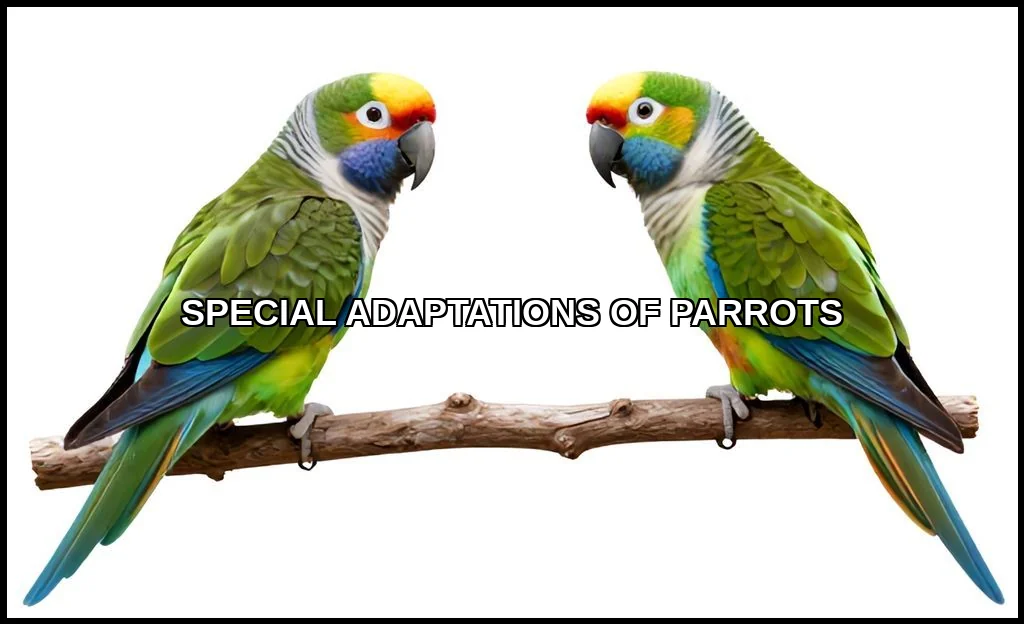
Physical Adaptations: The Parrot’s Toolkit
The most obvious parrot adaptations for survival are physical. Their anatomy is a specialized toolkit perfectly suited for a life spent climbing, cracking, and communicating in the forest canopy.
The Power of the Beak
Ask anyone why do parrots have curved beaks, and they might say “for cracking nuts.” That’s only part of the story. The hooked, powerful beak is a multi-purpose marvel. It acts as a third foot for climbing, a precise tool for grooming feathers, and a formidable weapon for defense. Its strength allows them to access hard-shelled foods other animals can’t, a key dietary adaptation.
- Prehensile function for climbing and manipulation.
- Extreme force for cracking nuts and seeds.
- Delicate precision for grooming and feeding chicks.
Zygodactyl Feet: Nature’s Best Grippers
Look at a parrot’s foot, and you’ll see two toes facing forward and two facing backward. This is the zygodactyl feet structure. It creates a powerful, vice-like grip perfect for clinging to branches and climbing. It also answers the question of how do parrots use their feet to eat. They are essentially left-handed or right-footed, using their dominant foot to hold food up to their beak with incredible dexterity, much like we use our hands.
Feathers for More Than Flight
While flight is crucial, parrot feathers serve other roles. Their vibrant colors are used in social signaling and mating displays. The structure provides insulation and is essential for waterproofing. In many species, specialized powder-down feathers produce a fine keratin powder that helps clean and condition other feathers, a unique tropical bird feature for maintaining plumage in humid environments.
Behavioral and Cognitive Adaptations
Beyond physical traits, parrot intelligence and communication are their most astounding adaptations. Their complex social structures in the wild demand sophisticated cognitive abilities.
The Complexity of Mimicry
Parrot mimicry adaptation is often misunderstood. In the wild, it’s not about entertainment. It’s a profound social tool used for integration and bonding within a flock. Mimicking the calls of other flock members strengthens social cohesion. This innate capacity is what allows some species to mimic human speech so well. An official source like Audubon details the specialized brain structures behind this talent. If you’re curious about which species excel at this, it often correlates with their highly social nature in the wild.
Problem-Solving and Social Learning
Parrots exhibit remarkable problem-solving skills, memory, and the ability to use tools in some cases. This intelligence is a survival adaptation for locating seasonal food sources and navigating vast, complex habitats. They learn from observation, a trait known as social learning. A young parrot learns what’s safe to eat and how to find it by watching the elders in its flock.
Dietary and Foraging Adaptations
How parrots survive in the wild is deeply tied to their diet. They are primarily granivores and frugivores, and their bodies have evolved specific traits to handle this.
The Specialized Digestive System
Parrots have a muscular pouch called a crop at the base of their neck. This allows them to store food quickly in a safe location and digest it latera huge advantage when foraging in the open. Their gizzard, a part of the stomach, uses ingested grit to help mechanically grind down tough seeds, complementing the work of their powerful beak.
Adaptations for Rainforest Life
So, how have parrots adapted to rainforest life? It’s a combination of all these traits. Their strong, curved beaks and zygodactyl feet make them agile canopy climbers. Their bright colors aid in communication in dense, dim foliage. Their social flocks and intelligence help them locate unpredictable food sources. Even their digestive system, with its fast processing of fruit sugars, is tuned to the energy demands of an active life in the trees. For travel, ensuring their comfort and safety with the best carrier is crucial, mimicking the security of a sturdy branch.
| Adaptation Type | Specific Feature | Primary Survival Purpose |
|---|---|---|
| Physical | Hooked, Powerful Beak | Foraging, climbing, manipulation |
| Physical | Zygodactyl Feet | Gripping, climbing, handling food |
| Behavioral | Vocal Mimicry | Social bonding, flock integration |
| Dietary | Crop & Gizzard | Food storage and processing tough seeds |
The Evolutionary Success Story
The parrot survival traits we see today are the result of immense evolutionary pressure. Their unique parrot features aren’t random. They are interconnected solutions to the challenges of their environment. The intelligence that drives complex social bonds also fuels innovative foraging. The beak that cracks a Brazil nut is the same tool used to gently preen a flockmate.
This holistic package explains their global success across continents and ecosystems. From the macaws of the Amazon to the cockatoos of Australia, the core parrot anatomy and behavioral blueprint remains, finely tuned to local conditions. Their story is one of resilience, intelligence, and extraordinary specialization. It reminds us that every trait has a history, a reason for being that goes far deeper than mere appearance.
