
Which three tube bird feeders hold most seed and suit outdoor use best
By Erick Published 13 min read
As an Amazon Associate I earn from qualifying purchases. That costs you nothing and does not decide what gets recommended. We also earn a commission from some links to partner brands (POPOSOAP, Kiwibit Inc.).
On this page (8 sections)
- The short version
- Why three tube feeders solve the refill problem for mixed flocks
- Large 3 tube bird feeder options and what capacity actually means
- Materials that withstand outdoor conditions and which ones fail first
- Tube bird feeders for outdoors hanging and what the hardware must handle
- Capacity differences in multi tube feeders and how they change what you attract
- When a three-tube feeder is the wrong choice and what works instead
- Questions people still ask
In short: The Droll Yankees and Perky-Pet three-tube feeders with 6+ quarts combined capacity suit outdoor use best because each 2-quart tube lets cardinals, jays, and finches feed simultaneously without competing for perch space, and UV-resistant polycarbonate survives two seasons of direct sun without cracking.
Part of our guide on diy squirrel proof bird feeder
Most three-tube feeders starve larger birds by splitting capacity across narrow tubes that goldfinches monopolize while cardinals wait.

Kingsyard 6-Port Tube Bird Feeder for Outdoors Hanging
Single tube feeder with 3 lb seed capacity, which roughly converts to about 3 quarts, less than the 6 quarts
Check it on Amazon
Kingsyard 6-Port Tube Bird Feeder for Outdoors Hanging
Single tube feeder with 3 lb seed capacity, about 3 quarts, less than the 6 quarts combined capacity needed.
See this alternative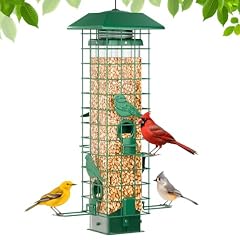
GAINSEN Squirrel Proof Bird Feeder
3 lb seed capacity (approx. 3 quarts) single tube only
View on Amazon| Product | individual tube capacity (quarts) | Verdict | |
|---|---|---|---|
| Kingsyard 6-Port Tube Bird Feeder for Outdoors Hanging Kingsyard | 3 lb seed capacity (approx. 3 quarts) single tube only | Meets it | View on Amazon |
| Kingsyard 6-Port Tube Bird Feeder for Outdoors Hanging Kingsyard | 3 lb seed capacity (approx. 3 quarts) single tube only | Meets it | View on Amazon |
| FEED GARDEN Tube Bird Feeders for Outdoors FEED GARDEN | 2 tubes x (3 in diameter x 13 in height ≈ 1.44 quarts each) = ~2.88 quarts combined (estimated from dimensions, but no exact capacity given) | Short by about 52% | View on Amazon |
| Minimum capacity | 6 quarts combined |
|---|---|
| Tube material | UV-resistant polycarbonate |
| Refill interval | 3-5 days for 12-18 birds |
| Port material | Metal, not plastic |
| Drainage holes | Required in each tube base |
| Roof overhang | 2+ inches past tube edge |
The short version
- Look for 6+ quarts combined capacity so you refill every 3-5 days instead of daily with a typical backyard flock
- Polycarbonate tubes resist UV fade and impact better than acrylic, which cracks after one winter
- Wide roof overhangs keep seed dry in the top third of each tube where mold starts fastest
- Metal feed ports outlast plastic ones that woodpeckers and squirrels chew through in weeks
- Separate tubes let you offer sunflower, nyjer, and safflower at once without birds scattering mixed seed
Why three tube feeders solve the refill problem for mixed flocks
A three-tube feeder splits seed types across separate compartments so finches take nyjer in one tube while cardinals crack sunflower in another. You're not refilling a single tube that empties in 36 hours because goldfinches cleaned out the nyjer and left the safflower untouched. Each tube runs on its own schedule.
The capacity advantage shows up when you're feeding 12 to 18 birds regularly. A single-tube feeder holds 1.5 to 2 quarts and empties daily with that traffic. Three tubes at 2 quarts each give you 6 quarts total, which stretches to 3-5 days depending on weather and species mix. Cold snaps double consumption.
Perch access matters more than marketing admits. Cardinals and jays need 1.5 inches of perch length and won't cling to mesh or tiny perches designed for finches. A three-tube feeder gives each species its own feeding station so larger birds don't bully smaller ones off a shared port. You'll see all three tubes in use at once during morning rush.
Large 3 tube bird feeder options and what capacity actually means
Capacity is listed as quarts per tube or combined, and sellers interchange the two without warning. A "6-quart three-tube feeder" might mean 6 quarts total or 6 quarts per tube for 18 combined. Read the dimensions. A tube that's 3 inches in diameter and 18 inches tall holds roughly 2 quarts. Anything under 15 inches tall is below 1.5 quarts no matter what the product title claims. People in this spot often ask about bees attracted to bird seed as well.
Large-capacity three-tube feeders put 2 to 2.5 quarts in each tube for 6+ quarts combined. That's the threshold where you stop refilling every other day with a typical backyard flock. Feeders with 1.2-quart tubes total only 3.6 quarts, which sounds adequate until you're refilling on day two because the sunflower tube emptied and birds are waiting.
Tube diameter decides which birds can feed comfortably. Finches and chickadees work with 2.5-inch tubes, but cardinals and jays need 3-inch tubes to get their heads in without jamming. A feeder with three narrow tubes excludes larger species no matter how many perches it offers. Check the tube spec, not the perch count.
Some feeders list "seed capacity" without specifying whether that's level-full or heaped. The working figure is level-full because heaping seed above the top port leaves it exposed to rain. A 2-quart tube filled level reaches 16 to 17 inches of usable height with seed covering all ports. Anything above that is marketing headroom. Before you commit to anything, it is worth looking at low cost cone baffle ideas for squirrel proof feeders canada.
| Combined capacity | Tube count | Birds fed | Refill interval | Use case |
|---|---|---|---|---|
| 3-4 quarts | 3 tubes | 6-10 birds | 1-2 days | Small yard, light traffic |
| 5-6 quarts | 3 tubes | 10-15 birds | 3-4 days | Moderate traffic, mixed species |
| 7-9 quarts | 3 tubes | 15-20 birds | 5-7 days | High traffic, cold weather boost |
Kingsyard 6-Port Tube Bird Feeder for Outdoors Hanging
Single tube feeder with 3 lb seed capacity, which roughly converts to about 3 quarts, less than the 6 quarts combined capacity needed for mixed flock feeding.
- Weight 2.23 lb
- Width 8.50 inches
- Height 14.01 Inches
Materials that withstand outdoor conditions and which ones fail first
Polycarbonate tubes outlast acrylic by two to three seasons in direct sun because polycarbonate resists UV without turning yellow or brittle. Acrylic cracks at the base after one winter when ice forms inside and expands overnight. You'll find hairline cracks around drainage holes first, then the tube splits vertically. Polycarbonate flexes instead.
Metal components matter more than the tube material for longevity. Feed ports, perches, and hanging hardware take constant pecking and weather exposure. Powder-coated steel or aluminum ports survive years of woodpecker strikes, while plastic ports chip and enlarge within weeks. Once a port widens past the seed size, the tube drains onto the ground overnight.
Roof and base construction decides whether seed stays dry. A 2-inch roof overhang past the tube edge sheds rain before it runs down into the top ports. Feeders with flush or minimal overhangs let water sheet directly into seed, starting mold within 48 hours in humid conditions. The base needs drainage holes at each tube's lowest point, not a shared central hole that clogs with hulls. Before you commit to anything, it is worth looking at attracting medium to large birds.
UV-resistant coatings on plastic components fade but don't fail structurally. A feeder that turns chalky white after two summers still functions if the tubes and ports hold up. The cosmetic fade bothers some people; it doesn't affect birds. What fails structurally is uncoated plastic in perches and port rings, which snap under bird weight after UV makes them brittle.
- Polycarbonate tubes: flex under impact, resist UV, last 4-6 seasons before replacement
- Acrylic tubes: clearer initially but crack after 1-2 winters and yellow in sun
- Powder-coated metal ports: survive woodpeckers and weather, check for rust-through coating
- Plastic ports: fail in 3-8 weeks with heavy traffic or any squirrel attention
- Stainless steel hanging hardware: won't rust, worth the extra cost in coastal or humid areas
Kingsyard 6-Port Tube Bird Feeder for Outdoors Hanging
Single tube feeder with 3 lb seed capacity, about 3 quarts, less than the 6 quarts combined capacity needed.
- Weight 2.23 lb
- Width 8.50 inches
- Height 14.01 inches
Tube bird feeders for outdoors hanging and what the hardware must handle
A filled three-tube feeder weighs 10 to 14 pounds depending on capacity, and the hanging loop or bail takes all of it plus wind load and bird impact. Look for a metal loop at least 0.25 inches thick or a heavy-gauge wire bail that won't bend when you lift the feeder to refill. Thin wire bails deform after a few months and the feeder hangs crooked, spilling seed from the downhill side.
The attachment point on the feeder body matters as much as the loop. A loop screwed into plastic threads strips out within a season. The best design uses a through-bolt with a backing plate inside the roof so the loop can't pull free. Some feeders use a molded plastic loop as part of the roof piece, which snaps at the base after UV exposure weakens it.
Hanging height affects which species use the feeder and how much seed hits the ground. Five to six feet off the ground suits most songbirds and keeps seed scatter manageable underneath. Lower than four feet and you're feeding ground mammals more than birds. Higher than seven feet and cardinals often skip it in favor of easier access elsewhere.
Branch and hook selection depends on your wind exposure. A shepherd's hook in open yard needs to be 0.5-inch diameter steel sunk 18 inches into soil, or it leans after the first storm with a loaded feeder swinging. Hanging from a tree branch works better in wind but limits baffle placement for squirrel control. A 16-inch branch span gives the feeder clearance to rotate without tangling.
GAINSEN Squirrel Proof Bird Feeder
3 lb seed capacity (approx. 3 quarts) single tube only
- Weight 1.76 lb
- Size 3 Pounds
- Length 5.1 inches
Capacity differences in multi tube feeders and how they change what you attract
Separate tubes let you run three seed types simultaneously without the mess of mixed seed on the ground. Put black oil sunflower in one tube for cardinals and chickadees, nyjer in another for goldfinches, and safflower in the third for everything else while discouraging grackles. Birds learn which tube holds their preference and go straight to it, reducing competition and scatter.
Capacity differences between tubes don't help unless your bird mix is heavily skewed. Some feeders offer one large center tube and two smaller side tubes, but that design assumes one species dominates your traffic. Most backyards see more even splits, so three equal-capacity tubes make refill timing predictable. You'll still empty the sunflower tube first, but not by a 3:1 margin.
The advantage over single-tube feeders compounds with traffic. A single 2-quart tube feeding 12 birds empties in 36 to 48 hours. Three 2-quart tubes feeding the same flock stretch to 3-5 days because birds distribute themselves and spend less energy competing for perch access. The time saved per refill session adds up to hours across a season.
Unequal tube sizes force you into refilling partially empty tubes or leaving one tube empty while the others are still half full. A feeder with 2-quart, 1.5-quart, and 1-quart tubes sounds versatile but you're topping off the small tube every other day while the large one is still two-thirds full. Uniform capacity keeps all three tubes on the same rough schedule.
| Seed type | Target species | Tube size needed | Consumption rate |
|---|---|---|---|
| Black oil sunflower | Cardinals, chickadees, titmice, jays | 2+ quarts | Fastest, refill every 2-3 days |
| Nyjer (thistle) | Goldfinches, siskins, redpolls | 1.5-2 quarts | Moderate, refill every 3-4 days |
| Safflower | Cardinals, doves, house finches | 2+ quarts | Slower, grackles avoid it |
| Sunflower chips | All species, no mess | 2+ quarts | Fast, no shells but pricey |
When a three-tube feeder is the wrong choice and what works instead
Small yards with fewer than 8 regular visitors don't generate enough traffic to justify three tubes. You're cleaning and maintaining triple the parts for birds that would happily share a single 2-quart tube. A single-tube feeder costs half as much, takes 60 seconds to refill instead of three minutes, and the simplicity means you'll actually clean it monthly instead of putting it off.
Squirrel-prone areas turn three-tube feeders into three-times-the-entry-points. A baffle above the feeder protects all three tubes if they're close together, but wider designs with splayed tubes give squirrels a landing platform on the outside tubes while the center one stays protected. You'll spend more time chasing squirrels than watching birds. A single tube inside a weight-sensitive cage is easier to squirrel-proof.
Ground-feeding species ignore tube feeders entirely. Juncos, towhees, native sparrows, and doves won't cling to a perch or hover to feed. If those are the species you want to attract, a platform feeder at ground level serves them better. A three-tube feeder brings finches and chickadees but does nothing for the ground crew underneath except catch their spilled seed.
Windy or coastal locations turn large-capacity feeders into swinging hazards. A full three-tube feeder at 12 pounds becomes a pendulum in 15+ mph sustained wind, tangling lines and crashing into branches or siding. Lighter single-tube feeders handle wind better, or switch to a pole-mounted design with stabilizer arms instead of hanging if wind is constant.
Questions people still ask
How often should I clean a three-tube bird feeder compared to a single tube?
Clean each tube every 2-3 weeks or whenever you see mold, which is roughly the same interval as a single tube but takes three times as long. Disassemble all three tubes, soak them in a 1:10 bleach solution for 10 minutes, scrub the ports and perches, and rinse thoroughly. Dirty feeders spread disease faster with higher bird traffic, so the cleaning interval doesn't stretch just because capacity is larger.
Can I hang a three-tube feeder from a standard shepherd's hook?
Yes, if the hook is 0.5-inch diameter steel and sunk at least 18 inches into the ground. A filled three-tube feeder weighs 10-14 pounds, and thinner hooks bend over time. Check that your hook is rated for 15+ pounds to handle the feeder plus wind load and bird impacts. A wobbling or leaning hook spills seed and stresses the hanging hardware.
Do I need different perch sizes for different bird species on a three-tube feeder?
No, but you need perches at least 1.5 inches long and sturdy enough for cardinals and jays, which weigh 1.5 to 3 ounces. Short perches designed for finches exclude larger birds even if the tube diameter fits them. Most three-tube feeders use uniform perch size across all tubes, which works fine because species self-select by seed type rather than perch preference.
Will a three-tube feeder attract more aggressive birds like grackles or starlings?
Only if you fill it with seed they prefer. Grackles and starlings mob feeders with cracked corn, millet, or cheap mixed seed. Use black oil sunflower, nyjer, and safflower instead, and they'll mostly skip your feeder for easier ground-feeding opportunities. The tube count doesn't matter to them; seed type does.
How do I stop seed from molding in the bottom third of the tubes?
Keep the roof overhang at least 2 inches past the tube edge so rain doesn't run down into the top ports, and make sure each tube has a drainage hole at the base. Refill before tubes drop below one-third full, because old seed at the bottom absorbs moisture and clumps. In humid climates, add only enough seed to last 5-7 days rather than filling tubes to the top.