
What a hopper bird feeder is and how it feeds wild and backyard birds
By Erick Updated 11 min read
As an Amazon Associate I earn from qualifying purchases. That costs you nothing and does not decide what gets recommended. We also earn a commission from some links to partner brands (POPOSOAP, Kiwibit Inc.).
On this page (8 sections)
- The short version
- What a hopper feeder is and how it holds seed
- How a hopper feeder dispenses seed to birds
- Hopper feeders compared to tube and platform feeders
- When to use a hopper feeder for wild birds
- Hopper feeder problems and how to prevent them
- Choosing a hopper feeder that lasts
- Questions people still ask
In short: A hopper feeder is a covered bin that stores seed and dispenses it through ports at the base as birds eat from the tray. The design keeps 3 to 10 pounds of seed dry and releases it gradually, reducing how often you refill.
Part of the guide: Which three tube bird feeders hold most seed and suit outdoor use best
Most feeders force you to choose between capacity and waste—a hopper gives you both, holding days of seed while only exposing what birds can actually reach.
| Capacity | 3 to 10 pounds of seed |
|---|---|
| Refill frequency | 5 to 10 days, traffic-dependent |
| Birds it attracts | Perching species, medium to large |
| Seed types | Sunflower, safflower, mixed blends |
| Cleaning interval | Every 2 to 3 weeks |
| Squirrel resistance | Metal or reinforced models only |
The short version
- Hopper feeders hold 3 to 10 pounds of seed in a covered bin and dispense through gravity-fed ports
- The roof keeps seed dry longer than open trays; expect 5 to 10 days between refills depending on traffic
- They attract cardinals, jays, finches and woodpeckers but not ground feeders like doves or juncos
- Choose metal or chew-proof plastic if squirrels visit; wood hoppers rarely last two seasons under pressure
- Clean every 2 to 3 weeks to prevent mold in the bin and along the feeding ports
What a hopper feeder is and how it holds seed
A hopper feeder is a gravity-fed bird feeder with a covered storage bin and feeding ports near the base. Seed sits in the bin (typically holding 3 to 10 pounds) and flows down to the ports as birds eat from the tray below. The roof keeps rain and snow out, so seed stays dry longer than in open platform feeders.
The name comes from the agricultural hopper, a funnel-shaped bin that releases grain steadily. Bird hoppers work the same way. Seed drops through slots or openings onto a perch tray, and gravity replaces what's eaten. The bin narrows toward the bottom to keep seed moving.
Most hopper feeders are rectangular or house-shaped, with clear plastic or glass panels so you can see the seed level. Metal or wood frames hold the panels in place. A roof overhangs the feeding tray by an inch or two, blocking rain but leaving room for birds to land.
Hopper feeders sit on poles, hang from hooks, or mount to railings. Pole models usually include a tray that catches spilled seed. Hanging versions sway more but stay out of reach of ground predators. Mounted hoppers work on decks and balconies where you can't sink a pole.
How a hopper feeder dispenses seed to birds
Seed flows from the bin through openings at the base, controlled by gravity and the shape of the bin. As birds eat from the tray, the seed level drops and more slides down to replace it. The system is passive: no moving parts, just a sloped bin and a gap at the bottom.
The feeding ports are usually adjustable slots or fixed openings, one on each side of the feeder. You can widen or narrow the slots to control flow. A wider opening works for large seeds like sunflower; a narrow one prevents waste with smaller seeds. If the ports are too wide, seed spills onto the ground before birds touch it.
The tray below the ports catches dispensed seed and gives birds a place to perch. Most trays are 4 to 8 inches deep with drainage holes. Perches run along the tray edges: either a continuous ledge or separate dowels. Cardinals, jays, and grosbeaks land on the perch, lean into the tray, and crack seed with their beaks.
Hopper feeders favor medium to large perching birds that can stabilize on the tray and handle whole seeds. Finches, chickadees, titmice, and nuthatches also use them, though tube feeders suit smaller birds better. Ground feeders like doves and juncos rarely land on hopper trays; they wait below for spilled seed.
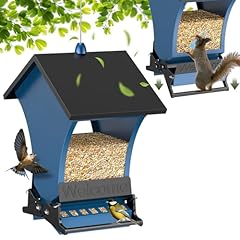
Wildpark Squirrel Proof Bird Feeders for Outdoors
Protects seed with a robust metal body and holds about 5 pounds of seed, fitting your need for a durable, chew-proof feeder with ample capacity.
Hopper feeders compared to tube and platform feeders
A hopper feeder balances capacity, weather protection, and bird access differently than tube or platform feeders. Each design trades one advantage for another. Hopper feeders hold more seed than most tube feeders and keep it drier than platforms, but they cost more and weigh more when full.
Tube feeders hold 1 to 3 pounds of seed in a narrow cylinder with small perches at each port. They suit finches, chickadees, and other small birds that cling or perch lightly. Larger birds struggle with the short perches. Tubes keep seed very dry but need refilling more often. Hoppers hold 3 to 10 pounds and accommodate larger species, but the wider tray invites squirrels and starlings.
Platform feeders are open trays with no bin, so you scatter seed directly on the surface. They attract the widest range of birds (including ground feeders) but seed gets wet in rain and spoils within 2 to 3 days. You refill them daily or every other day. Hoppers stretch that to a week or more, depending on traffic.
Hopper feeders work best when you want fewer refills and protection from weather but still need to serve medium and large birds. Tube feeders suit small songbirds and tight budgets. Platforms handle high traffic and diverse species but demand more attention.
| Feature | Hopper | Tube | Platform |
|---|---|---|---|
| Capacity | 3–10 lb | 1–3 lb | 1–2 lb scattered |
| Refill interval | 5–10 days | 3–5 days | 1–2 days |
| Weather protection | Good | Excellent | None |
| Bird size range | Medium to large | Small to medium | All sizes |
| Squirrel vulnerability | High (unless metal) | Moderate | High |
When to use a hopper feeder for wild birds
Use a hopper feeder when you want to refill less often and you're feeding birds that perch while they eat. Hoppers suit backyards with moderate to high traffic (six or more birds visiting daily) and climates where rain or snow would ruin open seed. They're the default choice for sunflower, safflower, and mixed seed blends.
Hopper feeders work well if you're away for several days at a time. A full 10-pound hopper can feed a small flock for a week, longer in winter when fewer species compete. Tube feeders empty faster, and platforms spoil between visits. Mount the hopper on a pole with a baffle if squirrels or raccoons raid your feeders at night.
They're less useful for ground-feeding species like mourning doves, sparrows, and juncos, which prefer to eat off flat surfaces or the ground itself. If those birds dominate your yard, add a platform feeder or scatter seed on a clear patch of ground. Hopper feeders also struggle with very small seeds like nyjer or millet; the ports clog or dispense too slowly.
In wet climates (Pacific Northwest, Gulf Coast, anywhere with over 40 inches of annual rain) hopper feeders prevent the daily spoilage you'd see with platforms. The roof keeps seed dry even in persistent drizzle, as long as the bin seals properly. Check the gasket or overlap where the roof meets the body; daylight showing through means rain will follow.
- Cardinals and jays: large perching birds that crack thick-shelled seeds and need a stable tray
- Finches and chickadees: smaller birds that also use tube feeders but appreciate the hopper's larger capacity during migration
- Woodpeckers: downy and red-bellied woodpeckers land on hopper trays for sunflower and suet-seed blends
- Grosbeaks and nuthatches: mid-sized birds that prefer covered feeding areas and whole seeds
Hopper feeder problems and how to prevent them
Hopper feeders fail when seed gets wet inside the bin, squirrels chew through the body, or the ports clog with hulls and debris. Each problem shortens the feeder's life and wastes seed. Most are preventable with the right materials and a cleaning schedule.
Wet seed is the most common issue. If the roof leaks or condensation forms inside the bin, seed molds within 3 to 5 days. Check the roof overlap and any seams where panels meet the frame. Some hoppers include ventilation slots near the top to reduce condensation; others rely on a tight seal and infrequent refills. Empty and scrub the bin every 2 to 3 weeks, even if seed looks dry.
Squirrels destroy wood and soft plastic hoppers by chewing through the bin or ripping off the roof to dump seed onto the ground. Metal hoppers or feeders with chew-proof polycarbonate bodies resist damage. If you already own a wood hopper, mount it on a pole with a baffle or hang it from a wire at least 8 feet from the nearest tree or roof edge. Squirrels jump farther than that, but few try it twice.
Clogged ports slow dispensing and frustrate birds. Hulls, chaff, and fines collect along the opening, forming a dam. If you're using a mix with millet or cracked corn, expect clogs every week or two. Brush out the ports when you refill, or switch to black oil sunflower only: it has less debris and attracts better birds. Another option is to widen the ports slightly, but that increases spillage.
Choosing a hopper feeder that lasts
Pick a hopper feeder based on the species you want to attract, the squirrel pressure in your yard, and how often you're willing to clean it. A metal or reinforced-plastic body survives squirrels and weather longer than wood. Clear panels let you monitor seed level without opening the lid. Drainage holes in the tray and ventilation slots in the bin prevent water buildup.
Look for metal perches and feeding ports. Squirrels gnaw plastic perches to enlarge the opening, and wood rots where it contacts wet seed. Stainless steel or powder-coated aluminum holds up for years. The roof should overhang the tray by at least 1.5 inches on all sides, blocking rain from the ports. A hinged or removable roof makes cleaning easier than a fixed one.
Capacity matters if you're feeding more than a few birds or you refill weekly. A 6-pound hopper suits most backyard setups; a 10-pound model works for high-traffic yards or vacation coverage. Larger hoppers are heavier when full (up to 12 pounds with seed) so make sure your pole or hanger supports the weight. Hanging hoppers sway in wind, spilling seed if the ports are too wide.
If you need a hopper feeder with metal construction and adjustable ports, look for models with chew-proof bodies and weather-resistant coatings. These handle squirrels and rain without warping or rusting. Another option is Kiwibit's solar-powered smart bird feeder, which combines a hopper-style seed reservoir with a 4K camera and AI bird identification: useful if you want to track which species visit and capture close-up footage while feeding.
- Check the body material. Metal or thick polycarbonate resists squirrels; wood and thin plastic don't.
- Confirm the roof overhangs the tray by at least 1.5 inches and seals against the bin without gaps.
- Look for drainage holes in the tray and ventilation slots near the top of the bin to prevent moisture buildup.
- Test the port adjustment if the feeder has one. It should slide smoothly and lock in place without tools.
- Verify the mounting hardware. Pole-mounted hoppers need a bracket that fits standard 1-inch or 1.25-inch poles.
Questions people still ask
Can hopper feeders hold nyjer or thistle seed?
Most hopper feeders don't work well with nyjer because the seed is too fine and clogs the ports. Tube feeders with small ports are better for thistle. If you want to use a hopper, look for one with adjustable ports and set them to the narrowest opening, but expect slower dispensing and frequent cleaning.
How do I stop starlings and grackles from emptying my hopper feeder?
Starlings and grackles are aggressive and eat fast. Switch to safflower seed: they don't like the taste, but cardinals and finches do. You can also reduce perch space by removing or shortening the tray edges, forcing larger birds to work harder. Weight-sensitive hoppers close the ports when a heavy bird lands, but they cost more.
Do hopper feeders need to be taken down in winter?
No. Hopper feeders work year-round and are especially useful in winter when natural food is scarce. Clear snow off the roof so it doesn't collapse the feeder, and check that the ports haven't frozen shut. Seed stays dry in cold weather as long as the bin is sealed, and winter birds (juncos, chickadees, nuthatches) rely on consistent feeding.
What's the best way to clean a hopper feeder without disassembling it?
Empty the seed, then scrub the bin and tray with a bottle brush and hot soapy water. Rinse thoroughly and let it dry completely before refilling: damp hoppers grow mold fast. If the design makes scrubbing hard, soak the feeder in a bucket of water and a few drops of dish soap for 10 minutes, then rinse. Clean every 2 to 3 weeks to prevent disease.