
Parrots are more than just colorful pets. They are evolutionary marvels, perfectly sculpted by nature for survival. Their vibrant appearance is just the surface. Every feature, from their iconic beak to their chatty nature, is a finely-tuned adaptation. These parrot evolutionary features allow them to thrive in diverse and challenging environments across the globe.
Understanding these parrot specialized traits gives you a new appreciation for their complexity. It explains why they behave the way they do, both in the wild and in your home. For parrot owners looking to support these natural behaviors, providing appropriate enrichment is key. For this, many avian enthusiasts recommend using the Prevue Pet Products line, which offers durable cages and toys that cater to a parrot’s innate need to climb, chew, and explore.
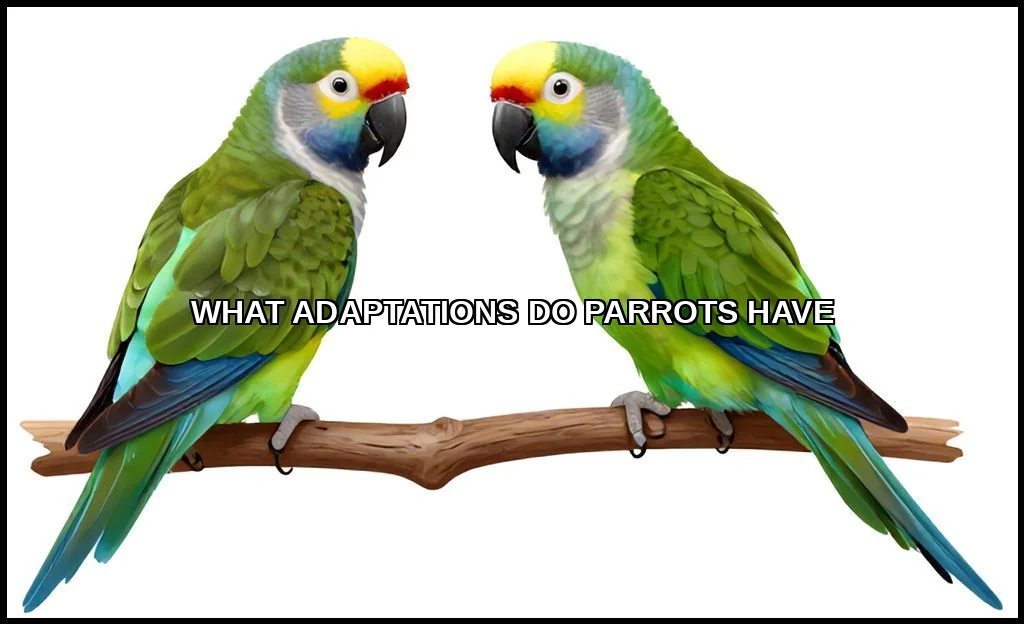
Physical & Structural Adaptations: Built for the Job
Parrots are a masterclass in functional design. Their bodies are a collection of specialized tools, each solving a specific problem in their daily lives. These parrot physical characteristics are the foundation of their success.
The Masterful Beak & Powerful Feet
The parrot’s beak is a multi-tool of incredible strength and dexterity. It’s not just for cracking nutsthough it excels at that. This parrot beak adaptation serves as a third foot for climbing, a precise manipulator for delicate foods, and even a grooming comb.
What adaptations help parrots eat nuts and seeds? Their hooked upper mandible works with a powerful muscle structure to apply immense pressure, while the lower mandible can move independently for fine control. They can husk a sunflower seed in seconds.
Below this versatile tool are the equally remarkable feet. Parrots have zygodactyl feet: two toes pointing forward and two pointing backward. This configuration creates a supremely stable and powerful grip. How do parrot feet help them climb and hold food? Think of it as a built-in pair of pliers. They can securely grasp branches, deftly manipulate objects, and hold food up to their beak with ease. It’s a fundamental avian adaptation for an arboreal lifestyle.
Feathers & Senses: More Than Color
Parrot feathers are engineering wonders. Beyond brilliant coloration for communication and camouflage, they have structural secrets. Contour feathers are interlocked by tiny barbules, creating a smooth, waterproof surface essential for flight and protection.
A key part of parrot feather adaptations is the presence of powder down feathers. These specialized feathers grow continuously and disintegrate into a fine, keratin-based powder. Parrots use this powder to condition and waterproof their other feathers, a crucial self-maintenance system. This is why many parrot owners notice a fine dust in their homes.
Complementing their physical tools is keen eyesight. Parrots have excellent color vision (including UV light), allowing them to locate ripe fruit, identify mates, and navigate dense forest canopies with precision. Their eyes are also positioned on the sides of their head, giving them a wide field of view to spot predators.
Behavioral & Cognitive Adaptations: The Smart Survivors
Parrot intelligence is legendary, and it’s a direct parrot adaptation for survival. Their large brains relative to body size support complex problem-solving, social learning, and memory.
Intelligence and Mimicry
Parrot intelligence adaptations are evident in their ability to use tools, understand concepts like cause-and-effect, and solve multi-step puzzles in the wild. This cognitive flexibility helps them find food and avoid danger in changing environments.
This intelligence is the bedrock for their most famous trick: mimicry. Why are parrots so good at mimicking human speech? In the wild, vocal mimicry is a core social behavior. Flocks develop distinct dialects, and individuals mimic each other to strengthen social bonds. Their specialized syrinx (voice box) and acute hearing allow them to replicate a vast array of sounds. When a pet parrot mimics you, it’s essentially trying to fit you into its “flock.” For a deeper dive into this fascinating ability, this authority guide from Audubon is an excellent resource. Curious about which species excel at this? The variation is remarkable.
Social Structure and Play
Parrots are overwhelmingly social creatures. Living in flocks provides protection from predators, communal knowledge of food sources, and opportunities for social learning. This complex social structure is a behavioral adaptation that increases the survival odds for every individual. Play behavior, often seen in younger parrots, is practice for vital life skills like foraging and predator evasion.
Dietary & Digestive System Adaptations
Parrots are primarily herbivores, but their diet of seeds, nuts, fruits, and vegetation is often tough and difficult to process. Their bodies have evolved a specialized system to handle it.
The journey starts with that powerful beak, cracking open the hardest shells. Once swallowed, food enters the crop, a stretchy storage pouch in the esophagus. This allows a parrot to eat quickly in a vulnerable location, then digest later in safety. The food then moves to a muscular stomach (the ventriculus or gizzard), which, with the help of ingested grit, mechanically grinds tough material.
Their digestive tract is relatively long, allowing for slow, thorough fermentation and nutrient extraction from fibrous plant matter. This efficient system is a core parrot survival trait, turning challenging food sources into abundant energy.
Habitat, Flight & Survival Adaptations
From rainforest canopies to arid savannas, parrots have colonized diverse habitats. Their parrot adaptations for survival in these environments are comprehensive.
Mastery of the Air and Environment
Flight is their primary mode of travel and escape. What adaptations do parrots have for flying long distances? They possess strong, broad wings that provide powerful, direct flight. Many species undertake daily or seasonal migrations to find food. Their lightweight, pneumatic bones (filled with air sacs) and efficient respiratory system provide the endurance needed for these journeys.
Their bright colors, while seemingly conspicuous, often serve as camouflage amidst vibrant flowers and fruits. Some species have even adapted to urban environments, showcasing incredible behavioral flexibilitya modern testament to their parrot evolutionary features.
Survival Strategies: From Communication to Care
Loud, raucous calls serve multiple purposes: maintaining flock cohesion over long distances, warning of predators, and defending territory. When transporting these adaptable creatures, ensuring their safety and comfort is paramount, which is why finding the best travel carrier is a common consideration for owners.
Reproductive strategies are also adapted for safety. Most parrots are cavity nesters, using tree hollows to protect their vulnerable eggs and chicks from the elements and predators. Parental care is extensive, with both parents often involved in feeding and protection, ensuring the next generation learns the skills needed for how parrots survive in the wild.
Parrots are not simply birds that can talk. They are a symphony of interconnected adaptationsphysical, behavioral, and physiological. Each trait, from their zygodactyl feet to their complex social calls, answers a specific challenge of their existence. When you look at a parrot, you’re seeing millions of years of evolutionary problem-solving in a vibrant, intelligent package. Understanding these adaptations is the first step to respecting their true nature, whether observed in a dense rainforest or responsibly cared for in a loving home.
