
You see a flash of brilliant color and hear a loud squawk. Is it a parrot? Is it a macaw? For many bird enthusiasts, the terms are used interchangeably, but that’s not quite accurate. It’s a classic case of category versus member. All macaws are parrots, but not all parrots are macaws. Understanding this relationship is key to appreciating the incredible diversity within the avian world.
Think of it like cars and sedans. “Car” is the broad category, while “sedan” is a specific type. The parrot family is vast, encompassing everything from tiny budgies to majestic cockatoos. Macaws are one spectacular, often giant, subgroup. For a fantastic visual reference that covers this entire family, many avian hobbyists keep the Smithsonian Handbooks Birds on their shelf. It’s an invaluable resource for identification and understanding taxonomy.
Defining the Terms: Parrot (The Family) vs. Macaw (The Genus)
Let’s get scientific for a moment. All parrots belong to the order Psittaciformes. This massive group includes over 350 species. Within that order, parrots are further divided into families and genera. Macaws belong to the genus Ara (and a few other closely related genera), which is nestled inside the larger parrot family.
So, to answer a common LSI query: are all macaws parrots? Absolutely, yes. They share the defining traits of the order. This includes a strong, curved beak perfect for cracking nuts, and Zygodactyl feettwo toes forward and two toes back. This unique foot structure gives them exceptional climbing and grasping abilities. The macaw scientific name for many species starts with Ara, like the Scarlet Macaw (Ara macao).
The Parrot Spectrum: From Parrotlet to Cockatoo
To truly grasp the macaw’s place, consider the extremes. A parrotlet vs macaw comparison is almost comical. Parrotlets are some of the smallest parrots, often fitting in your palm. The largest macaw, the Hyacinth Macaw, can reach over 3 feet from head to tail. Similarly, a cockatoo vs macaw discussion highlights different branches of the parrot family tree. Cockatoos have movable crests and typically lighter, powder-down feathers.
Even the common difference between parrot and parakeet is about scale. “Parakeet” is a term for small to medium-sized parrots with long tail feathers. In many places, budgies are called parakeets. They’re all parrots.
Key Differences: Size, Appearance, and Vocalizations
This is where the rubber meets the road. While all parrots share a basic blueprint, macaws take several features to the extreme.
Physical Characteristics & Size
The most obvious difference is scale. When people ask what is bigger a parrot or a macaw, they’re really asking about macaws versus other common parrot species. Macaws are the giants. Their macaw size and wingspan are breathtaking. A Hyacinth or Green-winged Macaw’s wingspan can exceed 4 feet. Compare that to an African Grey parrot, which is considered a large parrot but has a wingspan closer to 18-20 inches.
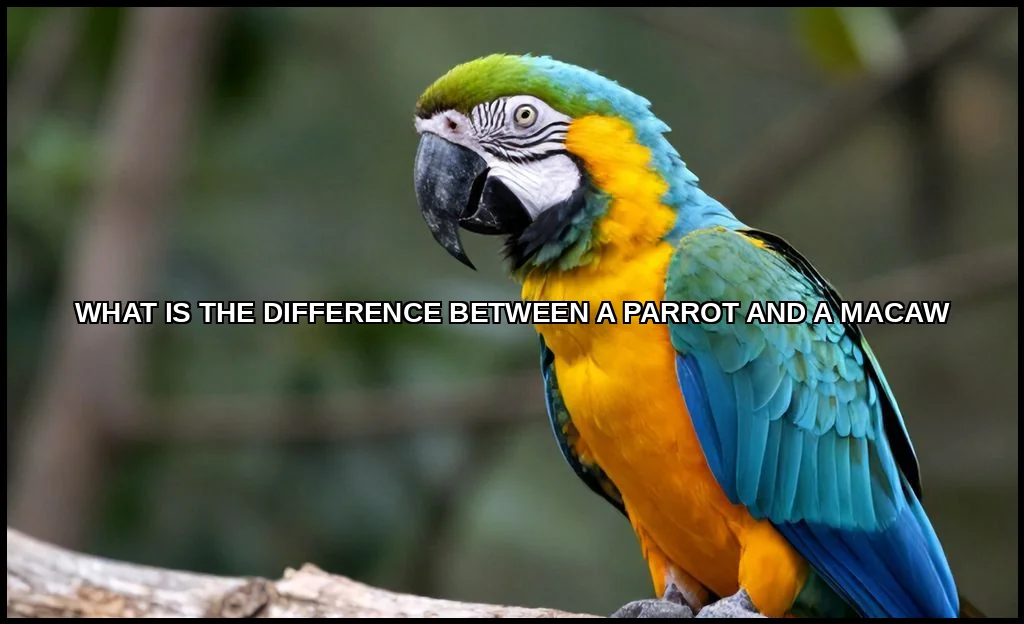
Appearance is another giveaway. Macaws are famous for their vibrant, solid blocks of colorfiery reds, cobalt blues, sunny yellows. Many other parrots have more mottled or subtle coloration. Their most striking feature is the large, often bare, facial patch. This skin area can blush and change with emotion.
Vocalizations and Talking Ability
All parrots can vocalize, but not all talk. Macaws are capable talkers, but they are often louder and less precise than some other species. They are famous for their powerful, ear-splitting contact calls. An African Grey or an Amazon parrot might be clearer mimics of human speech. If parrot talking ability is your top priority, you’ll want to research which species excel at mimicry. Macaws communicate with volume and presence as much as with words.
Behavior and Care: Comparing Temperament and Needs
This is the most important section for potential owners. The behavioral and care differences are significant and directly impact your lifestyle.
Behavior & Temperament
Macaws are often described as “gentle giants.” They can be incredibly affectionate and bond deeply with their owners, but their size makes their actions more powerful. A playful nip from a macaw is different from one from a conure. They are intelligent, social, and require constant mental stimulation. They can be prone to screaming if bored or neglected.
Many smaller parrots, like cockatiels or lovebirds, can be more independent (though still social) and their behavioral issues, while challenging, are on a smaller physical scale. This leads directly to the long-tail question: are macaws good pets for beginners? Generally, no. Their complex needs, long lifespan, and powerful beaks make them better suited for experienced bird keepers.
Care Requirements & Lifespan
Care scales with size. A macaw needs a massive, sturdy cagethink mansion-sized. They destroy toys at an astonishing rate. Their diet is more voluminous and can be more expensive (think more nuts, more fresh produce).
Then there’s the time commitment. Parrot lifespan is famously long, but macaws push the envelope. So, how long do macaws live compared to other parrots? While a large parrot like an Amazon might live 50-60 years, macaws regularly live 60-80 years, with some reaching beyond 100. This is a lifelong, multi-generational commitment.
- Space: Macaws need significantly more room to move and fly.
- Diet: Higher volume of fresh foods, nuts, and specialized pellets.
- Enrichment: More durable (and often more expensive) toys are mandatory.
- Veterinary Care: Avian vets experienced with large birds are essential.
This leads to another practical consideration: macaw price cost. The initial purchase price for a hand-raised macaw chick is high, often several thousand dollars. However, that’s just the entry fee. The ongoing costs for cage, food, toys, and vet care over 80 years dwarf the initial price. For a smaller species, finding the best travel carrier or cage is a simpler, less costly endeavor.
Macaw Species: A Rainbow of Choices
Not all macaws are the same. The genus includes about 19 living species, ranging from the massive Hyacinth to the mini macaws, like the Severe Macaw, which is about the size of a large Amazon.
People often wonder, what is the most colorful type of macaw? That’s a tough contest. The Scarlet Macaw is a classic with its red, yellow, and blue. The Blue-and-Gold Macaw is iconic. The Green-winged Macaw has stunning red and green contrast. For sheer, shimmering beauty, the Hyacinth Macaw‘s uniform cobalt blue is breathtaking. Each species has subtle temperament differences too. For a detailed breakdown from an official source, conservation organizations provide excellent guides.
| Feature | Typical Parrot (e.g., African Grey, Amazon) | Typical Macaw (e.g., Blue & Gold, Scarlet) |
|---|---|---|
| Size | Medium to Large (10-20 inches common) | Very Large to Giant (30-40 inches common) |
| Key Visual Trait | Feathered face, often subtle colors | Large bare facial patch, bold block colors |
| Vocal Tendency | Can be loud; known for clear speech mimicry | Extremely loud, powerful calls; less precise speech |
| Lifespan | Long (30-60 years) | Exceptionally Long (60+ years) |
| Care Difficulty | Moderate to High | Very High |
Choosing Between a Parrot and a Macaw
This isn’t just about preference; it’s about realistic compatibility. Your decision should be guided by your experience, lifestyle, and resources.
Consider a macaw if you are an experienced bird owner, have a huge space (and a tolerant family/neighborhood regarding noise), have a budget for 80 years of premium care, and want a deeply bonded, larger-than-life companion. You’re signing up for a toddler with bolt cutters for a beak and the lifespan of a human.
Consider another type of parrot if you are a first-time owner, live in an apartment, have budget constraints, or need a slightly more manageable level of sound and physical impact. A comprehensive parrot care guide will show you that even smaller birds are a major commitment, just on a different scale.
Ultimately, “parrot” is the big, noisy, colorful family. “Macaw” is the loudest, largest, and most dramatic cousin at the reunion. Both are intelligent and rewarding. Your job is to match their lifelong needs with your ability to provide for them. Do your homework, meet many birds, and be brutally honest about your capacity. The right feathered friend is out there, whether it’s a chatty African Grey, a cuddly cockatoo, or a magnificent, rainbow-hued macaw.
