
Parrots are among the most recognizable and charismatic birds on the planet. Their vibrant plumage and intelligent behavior captivate us, but their global distribution tells a fascinating story of evolution and ecology. You might wonder, where are the majority of parrot species found? The answer is a tale of warm climates, ancient continents, and specialized habitats.
For parrot enthusiasts looking to provide a great home environment, understanding their natural habitat is key. A spacious and sturdy play stand, like the Yaheetech 69-inch Wrought iron cage, can mimic the vertical space and enrichment opportunities these active birds seek in the wild. It’s a practical way to bring a slice of their natural complexity into your living room.
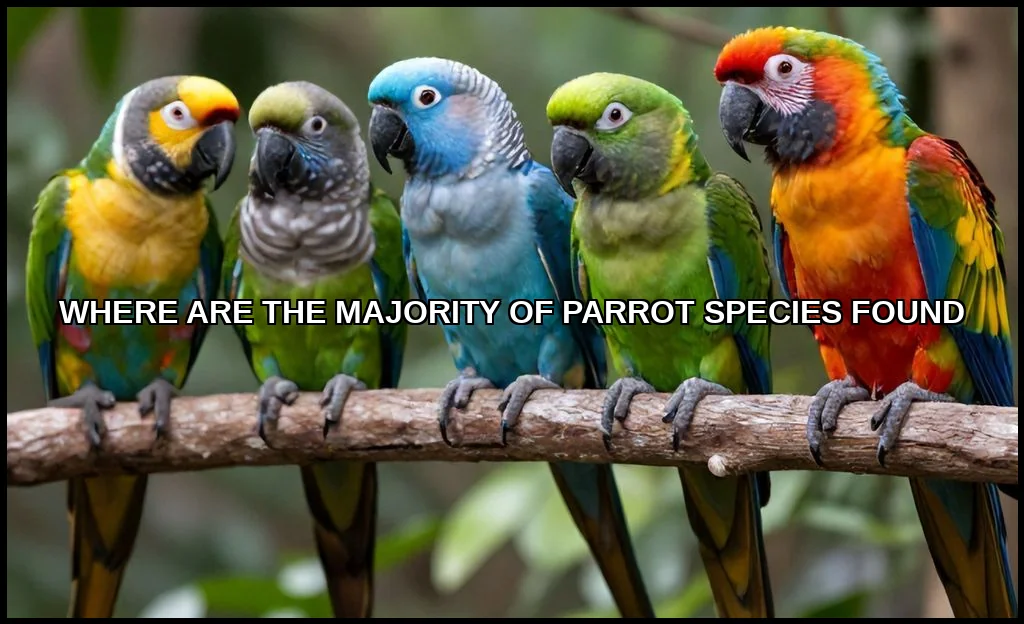
The Primary Geographic Regions: Tropics and the Southern Hemisphere
Over 90% of the world’s roughly 400 parrot species are found in tropical and subtropical regions. This isn’t a coincidence. These areas provide stable, year-round warmth and abundant food sourcescritical factors for these primarily fruit, seed, and nut eaters. The distribution is heavily skewed toward the Southern Hemisphere, a pattern rooted in the ancient breakup of the supercontinent Gondwana.
This leads many to ask, why are most parrots found in the southern hemisphere? The answer lies in their evolutionary history. Parrots are an ancient lineage, and their ancestors were widespread on Gondwana. As the landmasses separated, parrot populations evolved in isolation, leading to the incredible diversity we see in places like South America and Australasia today.
Key Habitats: More Than Just Rainforests
While the image of a parrot in a lush jungle is iconic, their habitats are surprisingly varied. Are parrots only found in rainforests? Absolutely not. They have adapted to a range of ecosystems, though all within those warm climatic bands.
- Rainforests: These are the ultimate biodiversity hotspots for parrots, offering layered canopies, endless food variety, and nesting cavities. Think macaws, Amazons, and numerous rainforest parrot species.
- Savannas and Woodlands: Drier, more open landscapes host species like many Australian cockatoos and the iconic African Grey Parrot. These birds often travel great distances for food and water.
- Montane Forests: Some species, like the Kea of New Zealand, thrive in cooler alpine environments, proving their remarkable adaptability.
Consulting a detailed parrot habitat map reveals this mosaic of ecosystems across the tropics.
A Continent-by-Continent Breakdown of Species
To understand parrot native regions, we need to look at a map. The distribution is strikingly uneven, with two regions dominating in terms of species count and unique evolutionary branches.
The Neotropics: Parrot Paradise of the Americas
The NeotropicsCentral and South Americais the undisputed champion of parrot diversity. This region is home to about one-third of all parrot species. It’s where you find the spectacular macaws, the chatterbox Amazon parrots, and tiny parakeets. Where are macaws and cockatoos native to? All macaws are Neotropical, originating from Mexico down to Argentina. This continent’s vast rainforests, like the Amazon, are the engine of this parrot biodiversity.
The countries with most parrots in this region include Brazil, Peru, and Colombia. Their conservation status, however, is increasingly precarious due to deforestation. For those fascinated by the vocal abilities of these New World birds, exploring which parrots talk often leads back to Neotropical species like the Yellow-naped Amazon.
Australasia: A Land of Unique Psittacines
Australasia (Australia, New Zealand, and the Pacific islands) is the other major center. It boasts an incredible array of Australasian parrots, including cockatoos, lorikeets, and the ground-dwelling kakapo. Australia alone has more parrot species than any other country. Here, cockatoos fill ecological niches similar to macaws in the Americas. This region is famous for its high number of endemic speciesbirds found nowhere else on Earth.
Other Regions: Scattered and Often Threatened
Africa and Asia host far fewer native parrot species. Africa’s flagship species is the intelligent African Grey. South and Southeast Asia have unique groups like hanging parrots and the spectacular Derbyan parakeet. A few species even range into temperate zones, like the now-extinct-in-the-wild Carolina Parakeet of the United States.
| Continent / Region | Approx. Number of Species | Iconic Examples |
|---|---|---|
| Neotropics (Central & South America) | ~160 | Scarlet Macaw, Blue-and-yellow Macaw, Amazon Parrots |
| Australasia | ~140 | Sulphur-crested Cockatoo, Rainbow Lorikeet, Kea |
| Africa & Madagascar | ~20 | African Grey Parrot, Lovebirds |
| Asia | ~40 | Alexandrine Parakeet, Eclectus Parrot |
So, which continent has the most species of parrots? If we consider the Neotropics as a cohesive biogeographic region, it wins by a narrow margin. But Australasia is a very close second, making the Southern Hemisphere the clear epicenter of psittacine distribution.
Threats to Parrot Habitats and Conservation
Understanding where do parrots live in the wild is only half the story. The more urgent chapter is about the pressures on these places. The very biodiversity hotspots that cradle parrot diversity are under severe threat. Habitat loss from agriculture and logging is the primary driver. The illegal pet trade continues to devastate wild populations of coveted species.
The parrot conservation status is alarming. According to the official source for species threats, the IUCN Red List, over a quarter of all parrot species are threatened with extinction. This includes many endemic parrot species with tiny ranges. Conservation isn’t just about protecting birds; it’s about safeguarding entire ecosystems. For pet owners, this underscores the importance of ethical sourcing and providing captive birds with the best possible care, including choosing the best travel carrier for safe vet visits or moves.
The Path Forward: Awareness and Action
What can be done? Supporting habitat conservation organizations is fundamental. As a consumer, being aware of the origins of wood and agricultural products helps. In aviculture, prioritizing captive-bred birds from reputable sources reduces pressure on wild populations. The story of parrot distribution is a story of natural wonder. Our challenge is to ensure the maps we study today don’t become historical records of loss tomorrow.
The global tapestry of parrot life is woven tightly into the tropics and southern continents. From the raucous flocks of Neotropical parrots in the Amazon dawn to the screeching cockatoos of the Australian outback, these birds define their landscapes. Their survival hinges on our collective will to value and protect the complex, irreplaceable habitats they call home. That’s the real map we need to follow.
