Best Talking Parrots: Top 5 Species for Clear Speech
Contents
You’ve seen the videos. A Congo African Grey looks you in the eye and says “Hello” in your mother’s voice. A Yellow-Naped Amazon belts out a full verse of opera. It’s impressive, sure, but those clips hide the messy reality: parrots are loud, destructive, and they live for decades. The decision to bring one home shouldn’t hinge on a viral moment.
This guide ranks the top 5 species for clear speech, but it also tells you what the marketing photos leave out. You’ll learn which birds actually understand what they say, how much a talker really costs over its lifetime, and why some individuals never talk no matter how hard you train. If you’re shopping for a conversational companion, this is the honest breakdown you need before you commit.

xinrirong
Talking Parrot No Matter What You Say…
- If you have any questions or suggestions about the goods, please contact us In time, we will give you the most satisfactory answer…
- Turn on the switch, speak to it, talk to it. Wings will shake the body will shake, you can stimulate the child's visual senses. Ta…
- Is the first choice for all holiday gifts, bring you happy romance, It is an electric voice-activated toys, only three-aaa batteri…
If you’re not ready for a live bird’s 30-year commitment, a plush alternative like the xinrirong Talking Parrot toy can mimic speech and sing with just three AAA batteries. It’s a fun way to test if you actually enjoy the constant chatter before you invest in a feathered roommate.
Why Parrots Mimic: The Science of Avian Vocalization
Parrots don’t have vocal cords. They produce sound using a syrinx, a structure at the base of their trachea. The syrinx has two separate openings, letting a bird produce two sounds at once. That’s how they create complex tones and mimic human pitch so accurately.
But mimicry isn’t just mechanical. A parrot’s brain contains specialized nuclei that control vocal learning, similar to the language centers in human brains. These nuclei are larger in species known for talking, which is why African Greys and Amazons outperform cockatiels.
Here’s the part most people miss: talking is a social behavior, not a trick. In the wild, parrots learn flock-specific calls to identify family and warn of danger. When your bird mimics your voice, it’s treating you like part of its flock. The bird isn’t just parroting sounds; it’s building a social bond. That’s why a parrot raised in isolation rarely talks, while one that’s constantly engaged with its humans often picks up phrases quickly.
The Top 5 Species for Clear Speech (Ranked)
Ranking these birds means weighing two factors: clarity of pronunciation and size of vocabulary. A Budgerigar can learn 200 words, but its tiny voice sounds like a squeaky door. An Eclectus speaks with surprising clarity but may only learn 30 phrases. The ranking below prioritizes clear, understandable speech first.
1. African Grey (Congo vs. Timneh)
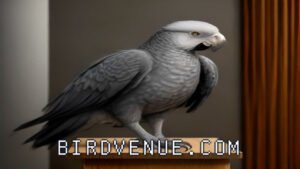
The African Grey is the undisputed champion. The Congo Grey averages a 50-100 word vocabulary, but the real story is comprehension. These birds associate words with objects and people. A Grey will say “apple” when it sees one, not just when it wants a treat. They also have an uncanny ability to use words in context, like saying “good morning” only when the sun rises.
The Timneh Grey is slightly smaller and often overlooked. It speaks with a softer, raspier voice but tends to start talking earlier than the Congo. Timnehs are also more adaptable to new environments, making them a better choice for first-time Grey owners. Both subspecies require serious mental stimulation; a bored Grey will pluck its feathers.
2. Yellow-Naped Amazon
Yellow-Naped Amazons are the best talkers among the Amazon family. They have a clear, melodic voice that carries well, and they love to sing. These birds are natural performers who thrive on an audience. You’ll often hear them mimic laughter, doorbells, and even the microwave beep with startling accuracy.
The trade-off is volume. Amazons are loud. Their contact calls can reach 120 decibels, which is louder than a rock concert. If you live in an apartment, this is a dealbreaker. They also bond intensely with one person, which can lead to jealousy if you have a partner or kids.
3. Budgerigar (The Underdog)
Budgies hold the Guinness World Record for the largest bird vocabulary, with one bird named Puck knowing over 1,700 words. But you have to listen closely. Their voices are high-pitched and gravelly, and many owners struggle to understand them without a recording slowed down.
What Budgies lack in clarity, they make up for in accessibility. They’re cheap, small, and easier to care for than a large parrot. A single male Budgie kept alone and trained daily can develop a surprisingly clear vocabulary. The key is to get a young bird and start training before it’s six months old. Females rarely talk; males are the chatterboxes.
4. Eclectus
Eclectus parrots have a unique, human-like voice that’s remarkably clear. They don’t screech like Amazons; they speak in a soft, measured tone that sounds almost like a person whispering. This makes them ideal for households that want a talker without the ear-splitting volume.
The catch is their diet. Eclectus parrots have a longer digestive tract than other parrots, so they need a high-fiber diet rich in fresh vegetables and fruits. A diet heavy in seeds or pellets can cause toe-tapping and feather plucking. They’re also more sensitive to stress, so they need a calm, predictable routine.
5. Blue-Fronted Amazon
Blue-Fronted Amazons are known for their impressive vocabulary and playful personalities. They often learn phrases quickly and use them in social contexts, like greeting visitors or asking for treats. Their voice is clear but slightly nasal compared to the Yellow-Naped.
This species is a good compromise between the African Grey’s intensity and the Budgie’s simplicity. They’re hardier than Greys and less prone to the neurotic behaviors that plague highly intelligent birds. However, they still need several hours of out-of-cage time each day and can become destructive if ignored.
Speech Clarity vs. Vocabulary: What to Expect
People often confuse a bird that talks a lot with one that speaks clearly. They are not the same thing. A Quaker Parakeet can learn 100 words but sounds like it’s mumbling through a mouthful of gravel. A Hill Myna (not a parrot, but a related bird) speaks with near-perfect human intonation but only learns a handful of phrases.
| Species | Speech Clarity (1-10) | Typical Vocabulary | Comprehension Level | Noise Level |
|---|---|---|---|---|
| African Grey (Congo) | 9 | 50-100 words | High (uses words in context) | Moderate |
| Yellow-Naped Amazon | 8 | 40-80 words | Medium (mimics sounds well) | Very High |
| Budgerigar | 4 | 100-200 words (record: 1,700) | Low (mostly mimicry) | Low |
| Eclectus | 8 | 30-50 words | Medium (good association) | Low-Moderate |
| Blue-Fronted Amazon | 7 | 50-100 words | Medium-High | High |
Comprehension is the differentiator. An African Grey that says “water” when it’s thirsty is doing something fundamentally different from a Budgie that repeats “water” because it heard the sound. If you want a conversational partner, prioritize comprehension over raw vocabulary size.
The Real Cost of a Talker: Price, Lifespan, and Noise
The purchase price is just the entry fee. An African Grey costs anywhere from $1,500 to $3,500. A Yellow-Naped Amazon runs $1,200 to $2,500. Budgies are $20 to $50. But the ongoing costs are where most people get surprised.
Here’s the breakdown:
- Cage: A proper flight cage for a large parrot costs $300 to $800. You can’t use a small birdcage; they need room to stretch their wings.
- Diet: Fresh vegetables, fruits, nuts, and high-quality pellets run about $40 to $80 per month for a large parrot. A cheap seed-only diet will shorten their lifespan.
- Vet care: Avian vets are specialists. An annual checkup costs $100 to $200. Emergency visits can easily hit $500 or more.
- Toys and enrichment: Parrots destroy toys. You’ll spend $20 to $50 per month replacing them. A bored parrot is a screaming parrot.
Lifespan is the hidden cost. A Budgie lives 7-15 years. An Eclectus lives 30-50 years. An African Grey can live 40-60 years. You are not buying a pet; you are adopting a dependent that will outlive your dog, your car, and possibly your marriage. Plan your estate around this bird, or don’t get one.
Noise is the other dealbreaker. Amazons and Greys are not quiet. They have dawn and dusk contact calls that can pierce walls. If you work nights or have neighbors on the other side of a thin wall, a Budgie or Eclectus is the safer bet.
Training Secrets: From First Word to Fluent Phrases
Getting your bird to talk isn’t about repeating words endlessly. It’s about timing, context, and reward. Here’s what actually works.
The “Target Word” Method
Pick one word and use it only in a specific situation. For example, say “up” every time you lift your bird onto your finger. Say “treat” every time you offer a piece of millet. The bird associates the sound with the action, not just with random attention.
Repeat the word clearly, then immediately perform the action. Do this 20 times in a row. The next day, pause before the action and wait. If the bird makes any sound resembling the word, reward it instantly. This is called shaping. You’re rewarding approximations, not perfection.
Start with words that contain hard consonants like “t”, “k”, or “p”. These are easier for parrots to pronounce than soft sounds like “th” or “sh”. Good first words: “treat”, “step up”, “pretty bird”, “hello”.
Using Technology to Boost Learning
Smart speakers and recording apps are game-changers. You can record yourself saying a phrase, then loop it during the day when you’re at work. Parrots learn by repetition, and a 15-minute loop played three times a day is more effective than an hour of you talking at the bird (which trains it to ignore you).
Video calls also work. Some parrots learn phrases from watching other parrots talk on a screen. Set up a tablet and play YouTube videos of talking parrots. Your bird will watch, listen, and often mimic the other bird’s sounds. It’s not a replacement for one-on-one training, but it accelerates the process.
Consistency beats intensity. Ten minutes of focused training every morning is better than an hour once a week. Train before feeding, so the bird is motivated by hunger. Always end on a positive note with a treat, even if the bird didn’t perform.
Managing the Downsides: Screaming and Cursing
Every talking parrot has a dark side. Screaming is the #1 reason parrots are rehomed. The behavior is natural, but you can manage it. The worst thing you can do is yell back. To a parrot, your yell sounds like a flock call, and it will scream louder to match you.
Instead, use the “ignore and reward” method. When the bird screams, leave the room. When it’s quiet, return and offer a treat. This teaches the bird that quiet gets attention, and screaming gets isolation. It takes weeks, but it works.
Cursing is a more personal problem. Parrots learn swear words quickly because they’re loud and emotional. Owners often react strongly, which reinforces the behavior. The only fix is to ignore the curse word completely. Don’t laugh, don’t scold, don’t repeat it. If the bird uses a curse in context, like dropping a toy and swearing, you have a comedian on your hands. You can try to redirect with a different word, but sometimes you just live with a foul-mouthed bird.
One more thing: never punish a parrot physically or with water sprays. It destroys trust and leads to biting. Parrots have long memories. A single traumatic event can make a bird fearful for years.
Personality Over Species: Why Individual Birds Differ
Species sets the ceiling, but the individual bird sets the floor. I’ve met African Greys that never said a word and Budgies that wouldn’t shut up. The variance within a species is huge.
How do you spot a talker? Look for a bird that is curious and vocal as a baby. A chick that chirps, whistles, and watches your mouth when you speak is more likely to talk than a quiet, withdrawn one. Ask the breeder to let you interact with the chicks. A bird that approaches you and shows interest is a better candidate than one that cowers in the corner.
Age matters too. Birds learn best between 4 months and 2 years. After that, they can still learn, but it takes more effort. A hand-fed baby that’s been socialized with humans is your best bet. A wild-caught adult will rarely talk.
Also consider gender. In most species, males are better talkers than females. This is especially true for Budgies and Eclectus. For African Greys and Amazons, the difference is less pronounced, but males still tend to speak more readily.
Don’t buy a bird solely because it’s a known talking species. Meet the individual. Spend time with it. See if it watches you, if it’s curious, if it makes sounds. The best talking parrots are the ones that genuinely want to communicate with you, and that desire is an individual trait, not a species guarantee.
Frequently Asked Questions (FAQs)
What is the best talking parrot for a beginner?
A male Budgerigar is the most practical choice. They’re inexpensive, small, and easier to care for than a large parrot. You’ll need patience to understand their high-pitched voice, but they can learn a surprising number of words. If you want a larger bird, a Timneh African Grey is more forgiving than a Congo, but it’s still a big commitment.
How long does it take for a parrot to learn its first word?
Most parrots need 3 to 6 months of consistent daily training before saying their first word. Some precocious birds start in a few weeks, while others take over a year. The key is repetition and positive reinforcement. Don’t rush it. A bird that learns slowly often retains words better than one that picks things up quickly.
Do parrots understand what they say?
Some do. African Greys are famous for using words in context, like saying “night-night” when the lights go out. Most other species, including Budgies and Amazons, are primarily mimicking sounds without full comprehension. They associate words with outcomes, not meanings. That’s a difference between conditioned response and true language use.
Which parrot has the clearest voice?
The Eclectus has the most human-like, clear voice. It sounds like a person speaking softly. The Yellow-Naped Amazon is also very clear but louder. The African Grey is clear but has a slightly robotic tone. Budgies are the hardest to understand because of their high pitch.
Can a parrot forget how to talk?
Yes, if the bird is isolated or stressed. Parrots need social interaction to maintain their vocabulary. If you leave a talking parrot alone for weeks without conversation, it may stop using its words. The sounds don’t disappear, but the bird’s motivation to speak drops. Keep talking to your bird daily, even if it doesn’t respond.
What to Do Before You Bring One Home
You’ve read the rankings, the costs, and the training tips. Now make a decision based on your life, not just the bird’s potential.
- Budget for the long haul. A large parrot costs $2,000 to $5,000 in the first year alone, including cage, vet visits, and supplies. Plan for 30+ years of expenses.
- Check your noise tolerance. If you can’t handle a screaming fit at 7 AM, skip the Amazons and Greys. A Budgie or Eclectus is a quieter option.
- Meet the bird before you buy. Spend 30 minutes with it. Look for curiosity and vocalization, not just the species reputation.
- Start training on day one. Use the target word method. Don’t wait for the bird to settle in; consistency from the start builds trust.
- Have an avian vet lined up before you bring the bird home. Don’t wait for an emergency to find one.
- Consider adopting a rescue. Many talking parrots end up in shelters because owners didn’t plan for the noise or lifespan. A rescue can be a wonderful talker and a second chance for a bird in need.
Bringing home a talking parrot is a lifestyle change, not a purchase. The right bird will reward you with decades of conversation. The wrong one will test your patience daily. Choose based on clarity, noise tolerance, and the individual bird’s personality. That’s the path to a successful partnership.