
You’ve probably seen a video of a parrot perfectly mimicking a phrase or even singing a song. It’s a captivating trick that never gets old. But have you ever stopped to wonder why parrots can do this when most other animals can’t? It’s not just a party trick. It’s a complex interplay of unique anatomy, specialized brain wiring, and deep social instincts.
If you’re trying to teach your own parrot to talk, patience and positive reinforcement are key. A tool like the Getting Started Clicker can be incredibly helpful for marking the exact moment your bird makes a sound you want to encourage. It’s a clear, consistent signal that bridges the gap between their action and your reward.
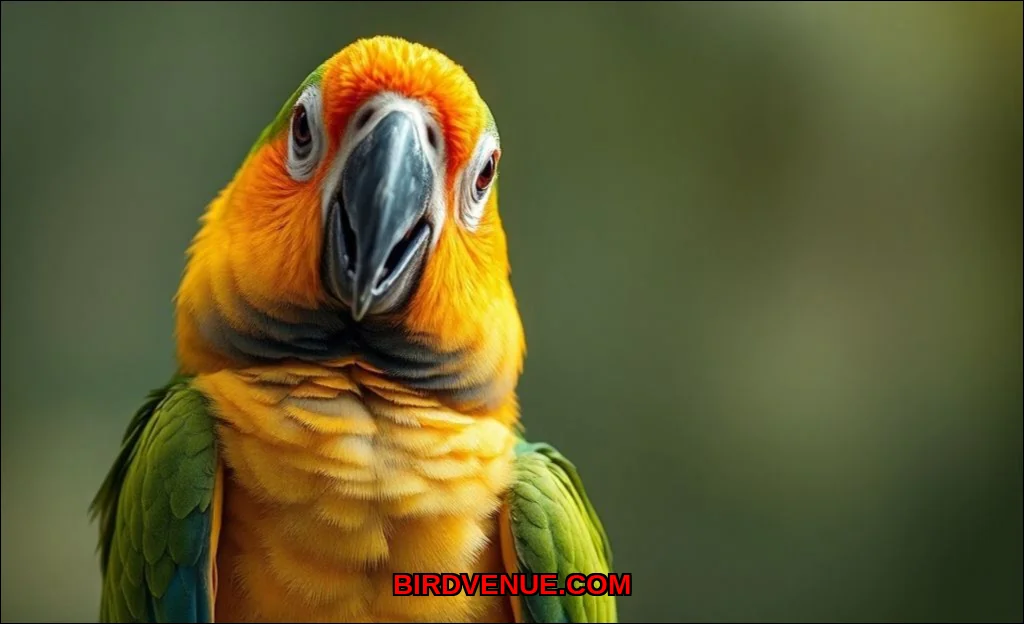
Anatomical Advantage: The Syrinx and Vocal Tract
First, let’s talk hardware. Humans use a larynx, or voice box, to produce sound. Birds have something different: a syrinx. This incredible organ is located where the trachea splits into the two bronchi leading to the lungs. This position gives birds, especially parrots, remarkable control.
Think of the syrinx as a dual-chambered instrument. It has independent sets of muscles and membranes on each side. This allows a parrot to produce two different sounds simultaneously. They can create complex harmonies, mimic environmental noises with startling accuracy, and reproduce the nuanced tones of human speech. Their vocal tractthe throat, mouth, and tongueis also highly flexible, allowing them to shape these sounds.
Songbird vs. Parrot: A Key Distinction
It’s important to note that parrots aren’t the only vocal mimicry birds. Songbirds like mockingbirds and corvids (crows, ravens) also possess this talent. However, the songbird vs parrot comparison reveals a crucial evolutionary difference. While both groups have a syrinx, their brain structures for learning these sounds evolved independently. This is called convergent evolutiontwo different paths leading to a similar, spectacular ability.
Neurological Foundation: Specialized Brain Circuits
The real magic happens in the brain. Having a sophisticated instrument means nothing without a skilled operator. Parrots possess specialized vocal learning circuits that are absent in non-mimicking birds.
In humans, speech is controlled by a network involving Broca’s and Wernicke’s areas. Parrots have analogous structures. Their brains contain a “song system“a set of interconnected nuclei that handle hearing, processing, memorizing, and reproducing complex sounds.
- HVC (High Vocal Center): Acts as a central pattern generator, crucial for learning and sequencing song (or speech) syllables.
- RA (Robust Nucleus of the Arcopallium): Sends the motor commands from the HVC to the syrinx.
- Area X: Part of the avian basal ganglia, it’s vital for trial-and-error learning and practice, much like how a child babbles before forming words.
This brings us to a key long-tail question: what part of a parrot’s brain allows it to talk? The answer isn’t one single part. It’s the entire, integrated song system in the forebrain working in concert. This complex neural architecture underpins true vocal learning, setting parrots apart from birds that only produce innate calls.
Social Motivation: Flock Communication and Bonding
Anatomy and neurology provide the capability, but social flock behavior provides the motivation. In the wild, parrots live in dynamic, noisy flocks. Vocalizations are the glue that holds the group together. Distinct contact calls help individuals identify their mates and offspring. Learning and adapting calls is essential for social integration.
In your home, you become their flock. When a parrot mimics your speech, it’s often an attempt to bond and communicate with you. They are social learners, picking up sounds that get a strong, positive reaction. The process of how do parrots learn to mimic human words is deeply social. They listen, practice (often quietly when they think no one is around), and then try out the sound. Your excited response reinforces the behavior. This desire for social connection is a major reason behind why parrots are so friendly and seek interaction.
Evolutionary Perspective: Why This Ability Developed
So, why would evolution favor such an energetically costly talent? Vocal mimicry isn’t just for show; it likely offered significant survival advantages.
| Evolutionary Advantage | How It Works |
|---|---|
| Social Cohesion | Complex, learned vocalizations help maintain pair bonds, coordinate group movement, and strengthen flock identity in dense, competitive environments. |
| Deception & Defense | Mimicking the calls of predatory hawks or other species could scare away competitors from a food source or create confusion to avoid danger. |
| Mate Attraction | A large, varied vocal repertoire can signal intelligence, fitness, and good learning ability to potential matesmuch like a complex birdsong. |
This evolutionary background helps answer another common query: why can some birds talk and others cannot? Species that benefited from complex, learned vocal communication in their natural history evolved the brain structures to support it. Doves or chickens, whose social structures rely more on innate calls, did not.
Mimicry vs. Comprehension: A Critical Nuance
Here’s a vital point many miss. Parrots are brilliant mimics, but mimicry does not automatically equal human-like language comprehension. An African Grey Parrot like the famous Alex could learn to associate words with meanings, colors, and numbers, showing remarkable parrot intelligence. However, much of a parrot’s speech is about social context. They learn that saying “Hello!” when you enter the room gets a happy reaction. They may not understand it as a greeting in the abstract, but they perfectly understand its social utility. For a deeper dive into the species known for this skill, explore our guide to the best parrots that mimic human speech.
Are parrots the only birds that can mimic speech? No. As mentioned, corvids like mynah birds and some songbirds can. But parrots, along with corvids and hummingbirds, are part of a rare club of animals capable of complex vocal learning. The Audubon Society provides excellent research on the evolutionary drivers of parrot speech, highlighting its deep biological roots.
Bringing It All Together
A parrot’s ability to mimic your voice is a breathtaking convergence of physical and mental specialization. It’s powered by a unique vocal organ (the syrinx), driven by dedicated brain circuits (the song system), and motivated by an innate desire for social flock connection. This trait wasn’t developed for our amusement, but it creates a unique bridge between our species.
When you hear your parrot attempt a new word, you’re witnessing millions of years of evolutionary adaptation and social intelligence in action. It’s a reminder that their chatter is more than repetition. It’s a sophisticated form of parrot communication and an attempt to connect with you, their chosen flock member. Respect that intelligence, engage with it patiently, and you’ll unlock a more meaningful bond with your feathered friend.
