
You’ve probably seen a video of a parrot perfectly mimicking a phrase or even singing a song. It’s a captivating trick that never gets old. But have you ever wondered why parrots can imitate human speech when most other animals can’t? It’s not just a party trick. It’s a complex interplay of unique anatomy, advanced brainpower, and deep social instincts.
This ability, known as vocal mimicry, is a rare talent in the animal kingdom. While mynah birds and some songbirds share it, parrots are the undisputed masters. Their skill stems from a specialized physical instrument, a brain wired for sound processing, and a powerful drive to connect. For parrot owners, understanding this science is the first step to better communication and training. A tool like the Getting Started Clicker can be incredibly helpful, using positive reinforcement to tap directly into their natural learning process.
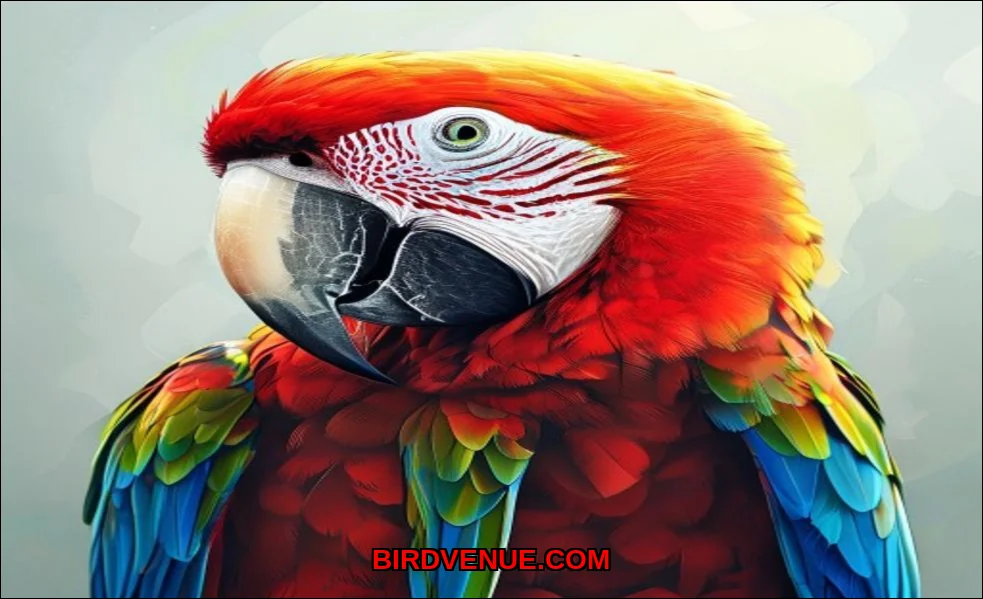
The Physical Anatomy: How Parrots Produce Human-Like Sounds
Parrots don’t have vocal cords like humans. Instead, they possess a far more sophisticated organ called the syrinx. Located at the base of their trachea where it splits into the two bronchi, the syrinx is a marvel of biological engineering. It contains independent sets of muscles and membranes, allowing parrots to control sound with incredible precision from each side of their airway.
This dual-voice box lets them produce two different sounds simultaneously. They can create the complex harmonics and tonal variations that make human speech possible. a parrot’s tongue is thick and muscular, unlike a human’s. They can manipulate it to shape sounds after they are produced by the syrinx, adding another layer of control to their vocal tract.
- The Syrinx: The biological sound source, allowing for independent control and complex frequency modulation.
- Tongue & Beak: Act as a resonating chamber to shape and articulate the sounds created by the syrinx.
- Breath Control: Exceptional lung capacity and control allow for sustained and modulated vocalizations.
This unique setup answers part of the question, how do parrots learn to talk so well? They have the physical hardware to do it. Species like the African Grey Parrot, Amazon Parrot, and Budgerigar (Budgie) are particularly adept at using this anatomy. But the popular Macaw and talkative Conure also possess this capability, though their voices may be rougher or less clear.
Beyond the Syrinx: The Role of the Vocal Tract
Recent studies suggest a parrot’s entire vocal tract is involved in mimicry. By moving their tongue and adjusting the shape of their throat, they can filter the sounds from the syrinx. This is akin to how you shape your mouth to say “ah” versus “oo.” This ability to form distinct vowels is a key part of why their mimicry can be so eerily accurate.
The Brain Power: Neurological Capabilities Behind Mimicry
Having the right instrument is useless without a skilled musician. A parrot’s brain is that musician. Their secret lies in specialized neural pathways dedicated to vocal learning. Parrots possess a unique arrangement of brain nucleiclusters of neuronsoften called the songbird vocal learning pathway.
In parrots, this pathway is not only present but is exceptionally developed and has additional “shell” structures not found in other vocal learners. These brain regions are responsible for hearing a sound, memorizing it, and then sending precise motor commands to the syrinx and vocal tract to reproduce it. This is the core of the scientific explanation for parrot mimicry.
So, what part of a parrot’s brain controls speech? It’s this interconnected network, particularly the robust connections between the auditory cortex (hearing) and the motor cortex (movement). This allows for the rapid feedback loop essential for mimicry: listen, process, attempt, adjust. This advanced neurology is a cornerstone of overall parrot intelligence, which extends to problem-solving and social cognition.
| Brain Region | Primary Function in Mimicry |
|---|---|
| Nucleus HVC | Song/memory patterning and sequencing |
| Robust Nucleus of the Arcopallium (RA) | Motor output to the syrinx |
| Auditory Cortex | Processes and stores heard sounds |
| Anterior Forebrain Pathway | Error correction and learning refinement |
The Social Factor: Why Parrots Mimic in the Wild and Captivity
Anatomy and neurology provide the “how,” but social learning provides the “why.” In the wild, parrots are highly social, flock-oriented birds. Their survival depends on integration. Vocal mimicry is a profound tool for social bonding mimicry.
Flock members learn unique contact calls to identify one another. Young parrots learn these calls from their parents and flock mates. This innate drive to vocally blend in is redirected in captivity. You become their flock. Your words, whistles, and household sounds become the new “contact calls.” They mimic to bond with you, to be included. It’s a sign of affection and acceptance, not just imitation.
- Flock Integration: Mimicking calls strengthens social bonds and establishes identity within the group.
- Mate Attraction: A diverse and skilled vocal repertoire can signal health and intelligence to potential mates.
- Environmental Adaptation: Some research suggests mimicry of other species could be a defensive tactic.
This explains why can some parrots talk and others can’t? While anatomy plays a role, the individual bird’s social environment and motivation are huge factors. A solitary parrot with little interaction has no “flock” to bond with vocally. An Eclectus Parrot, for instance, might be less inclined to mimic than a highly social Cockatoo, depending on its upbringing and environment.
Practical Insights: What This Means for Parrot Owners
Understanding the science transforms how you interact with your bird. You’re not teaching a robot to talk. You’re engaging a intelligent, social being in a bonding ritual. Your goal is to encourage their natural mimicry learning process.
Start by talking to your parrot consistently. Use clear, enthusiastic phrases, especially around daily routines like greetings or mealtimes. Repetition is key. Since they learn through social learning, make the interaction rewarding. Positive reinforcementlike a favorite treat or affectionate praisewhen they attempt a sound links the behavior to a positive outcome.
Remember, not all parrots will talk, and that’s okay. Their parrot communication includes body language, natural calls, and other sounds. The aim is a rich, two-way relationship. For structured training, you can explore specific tips for training parrots to talk and mimic human speech that align with their natural abilities.
Choosing a Talkative Parrot Species
If parrot talking ability is a priority for you, some species are more renowned for their clarity and propensity to mimic. The African Grey is often considered the most adept, with a vast vocabulary and contextual understanding. Budgerigars (Budgies) can learn hundreds of words, though in a high-pitched voice. Amazon Parrots, Cockatoos, and some Conures are also excellent talkers. For a broader look, check out this guide on parrots that mimic human speech to find the right fit for your home.
The why behind this amazing ability is a perfect example of evolutionary specialization. As this detailed scientific exploration of avian vocal mimicry explains, it’s a trait that has served them well for millennia.
You now know that a parrot’s speech is a symphony of biology, brainpower, and bonding. It’s a window into their complex social world and advanced cognition. When you hear your parrot attempt a new word, you’re witnessing millions of years of evolution in action. Appreciate the marvel. Nurture the bond. And keep the conversation going.
