
The capacity for complex vocal imitation is a rare trait in the animal kingdom. You observe this phenomenon most strikingly in parrots, whose ability to reproduce human speech has fascinated scientists and pet owners for centuries. This behavior transcends simple mimicry, representing a sophisticated interplay of anatomy, neurology, and social cognition. To comprehend why parrots talk, you must examine the biological hardware and the adaptive software that drives this remarkable skill.
Your understanding begins with the apparatus itself. Unlike humans, who use a larynx, parrots possess a specialized organ called the syrinx. Located at the bifurcation of the trachea, this structure allows for independent control of sound production from each bronchus. This anatomical design grants parrots an exceptional degree of vocal flexibility and tonal range, forming the physical foundation for their imitation ability. For those interested in harnessing this ability through training, tools like the Getting Started Clicker can be invaluable for marking desired behaviors with precise auditory feedback.
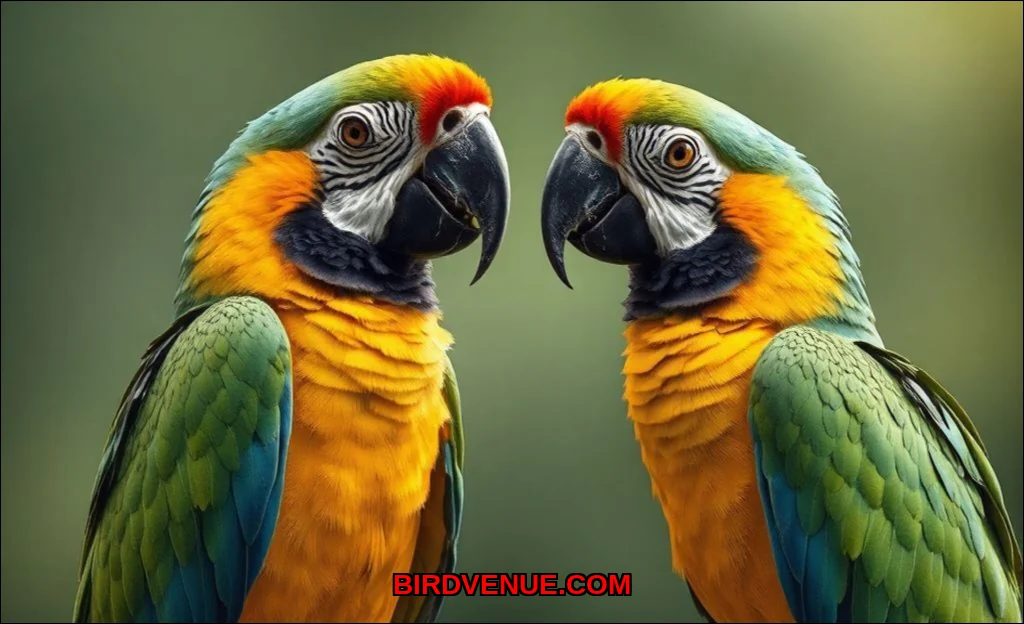
Anatomical Foundations: The Syrinx and Vocal Tract
The syrinx is not the sole contributor to parrot mimicry. You must also consider the role of the upper vocal tract. Parrots can dynamically alter the shape of their esophagus and mouth, modulating sounds after they are produced by the syrinx. This two-part systemsource and filterparallels human speech production in a convergent evolutionary manner. The result is an animal capable of replicating not just words, but the prosody, pitch, and emotional tone of human speech, answering part of the query regarding the scientific explanation for parrot speech.
- Syrinx Location: Junction of trachea and bronchi.
- Key Advantage: Independent muscular control enables complex sound synthesis.
- Vocal Tract Modulation: Tongue and beak movement shapes final acoustic output.
Neurological Underpinnings: The Song System and Parallels to Human Brain Regions
Anatomy provides the instrument, but the brain composes the melody. Parrot intelligence is neurologically rooted in specialized circuits. At the core is the avian song system, a network of interconnected brain nuclei dedicated to vocal learning and production. Critical structures include the HVC (used as a proper name), the RA (robust nucleus of the arcopallium), and the LMAN (lateral magnocellular nucleus of the anterior nidopallium). These nuclei form pathways for song learning, motor control, and auditory feedback.
Fascinatingly, research reveals that parrots possess a “song system within a song system.” They have additional shell structures surrounding the core nuclei, which may underpin their superior mimicry skills compared to other bird speech experts like songbirds. This neural architecture shows functional parallels to human brain regions involved in speech, such as Broca’s area. The process relies heavily on an auditory feedback loop; the parrot hears a sound, processes it, and attempts to match its own vocal output. Disrupt this loop, and vocal learning fails.
Critical Learning Periods in Development
Like human language acquisition, parrot vocal learning is often gated by sensitive periods. For many species, juvenile parrots exhibit a heightened neuroplasticity, making them exceptionally adept at acquiring new sounds. This window is not always strictly closed in adulthood, especially in highly intelligent species like the African Grey Parrot, but learning efficiency typically peaks early. This underscores the importance of environmental and social stimulation during key developmental stages.
The Functions of Mimicry: Social Bonding, Flock Integration, and Mate Attraction
You might ask, what is the evolutionary purpose of this costly neural and behavioral investment? The purpose of parrots talking is deeply social. In the wild, avian communication through learned vocalizations strengthens flock cohesion. Individual parrots may mimic flock mates to reinforce social bonds, a behavior that translates seamlessly to human households. When a parrot mimics you, it is often engaging in a social grooming behavior, attempting to integrate you into its perceived flock.
This drive for social reinforcement is powerful. Mimicry can also serve reproductive purposes; a diverse vocal repertoire may signal cognitive fitness to potential mates. specific calls can denote identity, territory, or alert others to food sources. This complex parrot behavior is far from parrotingit is a nuanced form of social negotiation. Their capacity for forming strong social bonds is a key aspect of their innate friendliness and social nature, which vocal mimicry directly serves.
| Function | Manifestation in Wild | Manifestation in Captivity |
|---|---|---|
| Flock Integration | Adopting local flock dialects | Mimicking human speech & household sounds |
| Social Bonding | Duetting between mated pairs | Repeating owner’s phrases during interaction |
| Mate Attraction | Demonstrating vocal complexity & skill | Less relevant, but may direct vocalizations to favored person |
The Learning Process: Critical Periods, Social Reinforcement, and Environmental Enrichment
So, how do parrots learn to talk from humans? The process is intrinsically motivated by social dynamics. A parrot does not learn effectively from a recorded voice played in an empty room. It requires a social tutor. The bird observes your interaction, associates specific sounds with objects, actions, or emotional contexts, and attempts reproduction. Successful attempts are reinforced by your positive reactionattention, excitement, or treats. This social reinforcement is the engine of learning.
- Exposure: The parrot is repeatedly exposed to a sound within a meaningful social context.
- Auditory Processing: The sound is processed through the specialized song system nuclei (HVC, RA, LMAN).
- Motor Practice: The bird engages in vocal practice, often through subdued “mumbling,” using the syrinx.
- Feedback & Refinement: The bird uses auditory feedback to match its output to the target sound.
- Social Reinforcement: Positive owner reaction consolidates the learned vocalization.
Environmental enrichment is critical. A stimulated, engaged parrot is more likely to engage in vocal exploration. Their remarkable cognitive longevity, which you can explore further in the context of their exceptional lifespans, means this learning capacity can persist for decades.
Comparative Analysis with Other Talking Birds
While parrots are the most renowned mimics, they are not alone. Which parrot species talk the best is a common question, with African Grey Parrots often cited for clarity and contextual understanding. Budgerigars (Budgies), Amazon Parrots, Cockatoos, and Macaws also exhibit strong abilities, varying in clarity, vocabulary size, and propensity to mimic. However, other bird groups possess vocal learning. Songbirds like mockingbirds learn conspecific songs. Hummingbirds learn vocalizations. My birds (corvids) can mimic some sounds.
The difference between parrot and human speech remains profound. Parrot speech is primarily associative and mimetic. While some species, like the African Grey, demonstrate apparent referential use of words, they lack the generative, syntactic grammar that defines human language. Their talent lies in exceptional auditory-motor integration and social cognition, not in linguistic computation. For a deeper dive into the evolutionary and biological perspectives on this ability, consult this authoritative scientific resource on avian vocal mimicry.
Neural Pathways: A Deeper Dive
To truly surpass superficial explanations, you must appreciate the neural choreography. The HVC nucleus is involved in both learning and sequencing notes. The RA is the primary motor cortex for song, sending instructions to the syrinx. The LMAN is crucial for juvenile learning and vocal plasticity, driving exploratory variability. This circuit’s interaction with auditory regions allows for the continuous comparison between performed song and memorized template. It is a masterclass in neural specialization.
Parrot speech is a confluence of evolutionary adaptation and cognitive complexity. It emerges from a unique syrinx, a specialized song system in the brain, and a powerful drive for social connection. You witness not a party trick, but a window into avian intelligence and the universal principles of vocal learning. When you hear a parrot speak, you are hearing the result of millions of years of social and neural evolution, channeled through a remarkable creature capable of bridging the communicative gap between species. Your understanding of this behavior enriches the relationship, transforming simple mimicry into a dialogue of mutual social recognition.
